





Antique Tortoiseshell Box
An antique tortoiseshell box brings a warm, amber-mottled lustre to a dressing table, drawing the eye with its translucent depth and tactile weight.
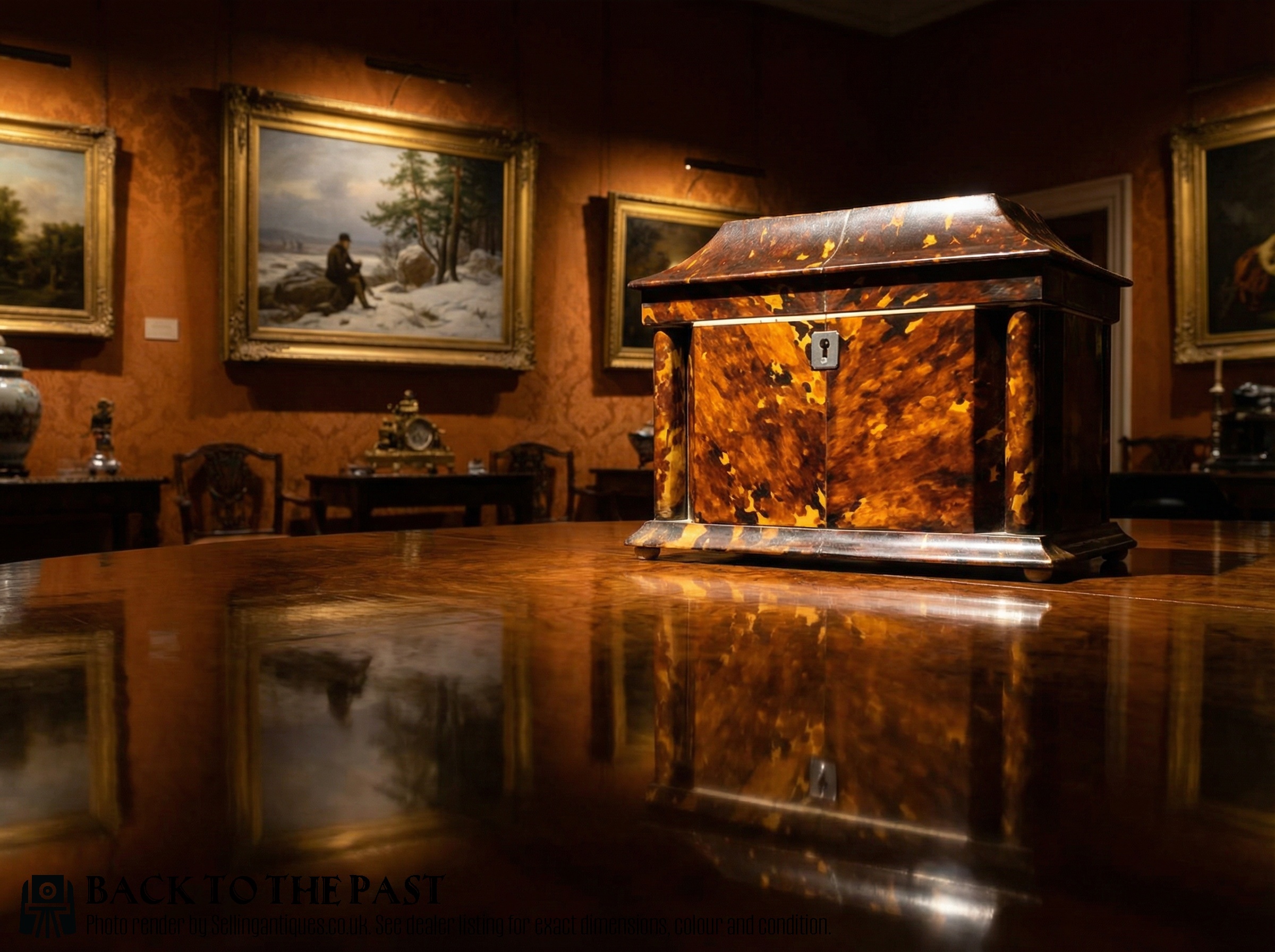
Antique Tortoiseshell Box
An antique tortoiseshell box encompasses small portable receptacles, vanity containers, and larger tea caddies produced across the Georgian, Victorian, and Edwardian periods. These objects served utilitarian purposes for wealthy households, housing snuff, tea leaves, jewellery, or writing implements. Buyers encounter everything from pocket-sized snuff boxes to substantial dressing table caskets lined with silk or velvet.
The material itself derives from the carapace of the hawksbill turtle, offering natural patterns of dark brown and golden amber that makers prized for decorative containers. Artisans shaped these translucent plates over wooden or metal cores, often employing contrasting veneers and metals to highlight the mottled figure. Examples range from simple blonde tortoiseshell card cases to elaborate nineteenth-century pieces designed for polite society.
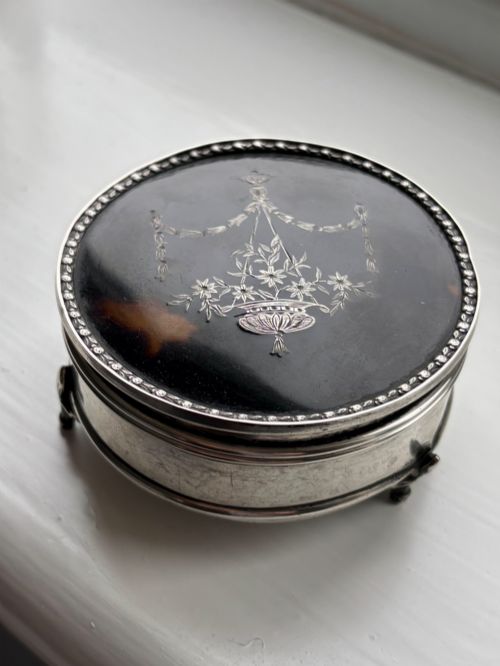
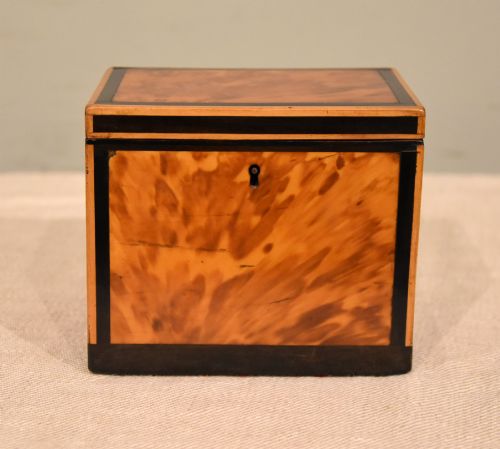
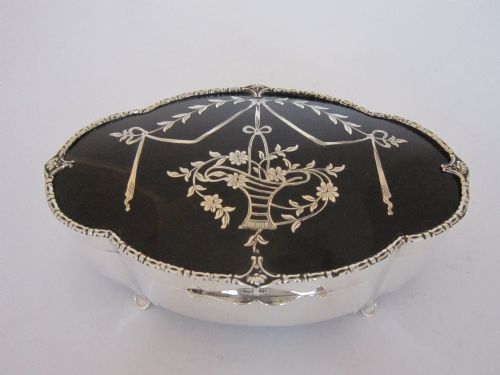
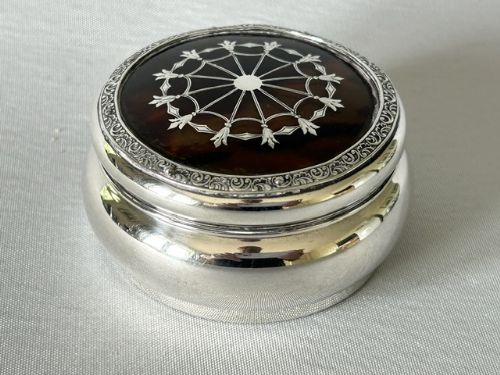
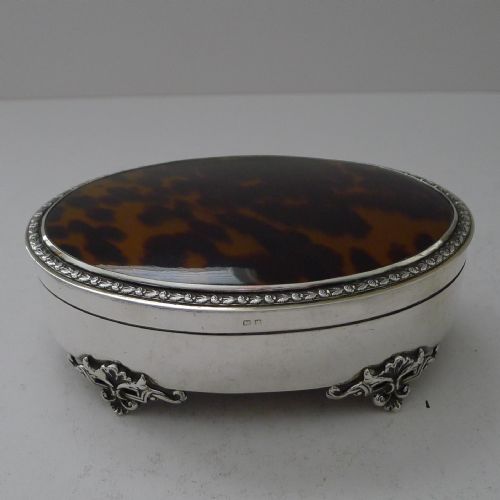
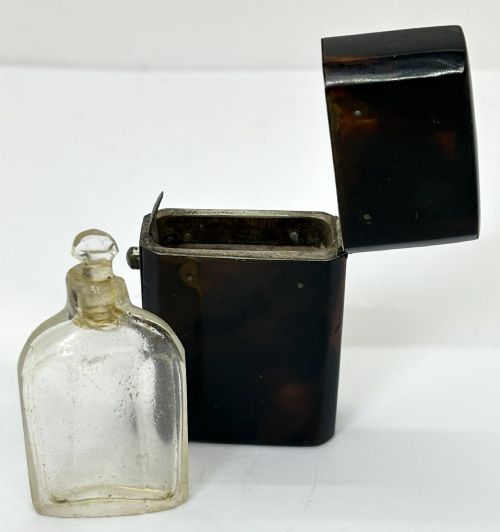
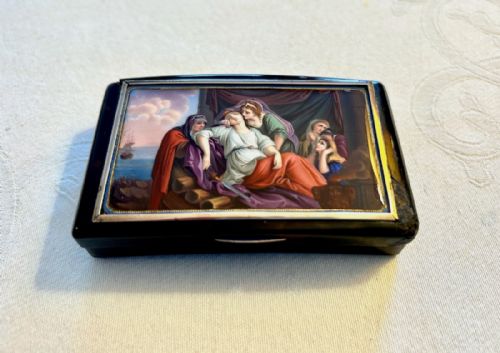
On this page, domestic trinket boxes mounted in sterling silver from the early twentieth century appear alongside eighteenth-century tea caddies and mid-nineteenth-century desk accessories. The diversity of forms reflects shifting social rituals, moving from Georgian tea storage and snuff taking to Edwardian vanity sets and dressing table storage.
Materials and construction methods
Makers constructed these containers by applying thin plates of natural shell over a supportive core of wood, brass, or papier-mâché, securing the delicate material with fine pins or hidden adhesives. Because individual shell scutes were limited in size, craftsmen used a thermal process of heat and pressure to weld overlapping pieces together seamlessly for larger surfaces like tea caddies.
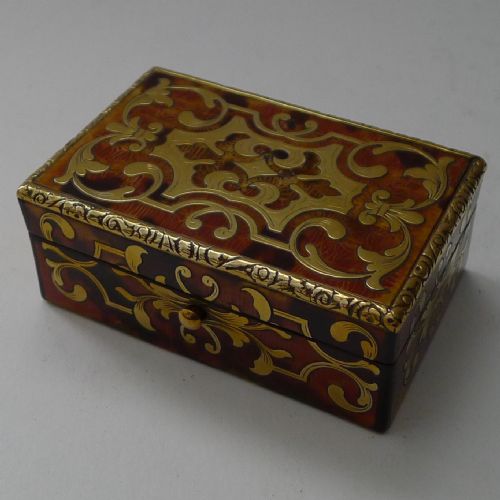
Metal mounts in sterling silver, gold, and brass reinforce the edges and provide hinges, while decorative techniques such as piqué work embed tiny gold or silver pins into the shell surface in geometric or floral motifs. Boullework pieces incorporate inlaid brass and tortoiseshell together in intricate scrolling patterns, often backed with red tortoiseshell or stained horn to enhance the visual depth.
Antique Tortoiseshell Box Retail Price Guide 2026
Typical asking prices for tortoiseshell box among the pieces listed under this phrase on Sellingantiques today, from the lower quarter to the upper quarter. They describe what is for sale here now, not the wider market.
Object forms on this page include tea caddies, snuff boxes, card cases, desk stands, and fitted jewellery caskets.
Assessing quality and craftsmanship
Quality rests on the depth of the figure and the natural colour variation within the shell, where rich amber translucency commands greater appreciation than opaque or heavily clouded sections. Superior pieces display meticulous alignment where the shell plates meet at the corners, maintaining a continuous pattern across the lid and sides.
The integrity of the internal fittings, original velvet or silk linings, and functioning locks with matching keys distinguish finer examples from altered survivors. Metal mounts that sit flush against the contoured shell without gaps indicate superior cabinet work and careful hand-fitting by the maker.
Ollivant & Botsford·Asprey & Co.·Lund Of Cornhill·Mappin & Webb·William Comyns·Charles Boyton
The Antique Tortoiseshell Box Glossary
- Piqué
- A decorative technique involving tiny gold or silver pins or strips inlaid directly into the surface of tortoiseshell or ivory to form delicate patterns. Artisans heated the metal before pressing it into the softened shell.
- Boulle
- A method of marquetry using contrasting materials, principally tortoiseshell and brass, cut together from a master template and reversed to create matched positive and negative panels. French craftsmen popularised this opulent technique during the seventeenth century and revived it in later periods.
- Tea caddy
- A lidded container designed to store dry tea leaves securely under lock and key when tea was an expensive luxury. Early forms frequently featured multiple internal compartments and mixing bowls.
- Treen
- Small handmade wooden domestic objects and wares produced by turners and woodworkers. While distinct from solid shell construction, treen cores often received tortoiseshell veneer.
- Snuff box
- A small pocket-sized container manufactured with a tight-fitting lid to keep powdered tobacco dry and aromatic. These portable pieces often incorporated secret hinges and hidden interior compartments.
Antique Tortoiseshell Box: Frequently Asked Questions
How do I clean an antique tortoiseshell box?
Dust the exterior gently with a dry microfibre cloth, avoiding harsh chemical sprays, alcohol, or immersion in water which can loosen the underlying wooden core.
Apply a micro-crystalline wax sparingly if the surface appears dry, buffing it lightly with a soft cloth to restore the natural lustre of the shell.
How can I tell real tortoiseshell from celluloid?
Natural tortoiseshell exhibits irregular mottled patterns with varying degrees of translucency and warm amber depths that synthetic substitutes fail to replicate accurately.
Under magnification, real shell reveals natural growth lines rather than the uniform dots or printed patterns characteristic of early plastics and celluloid.
Why do some tea caddies have two compartments?
Two internal compartments allowed wealthy households to store and blend different tea varieties, such as green tea and black tea, in a single secure container.
A central recess often held a small glass or crystal mixing bowl where the host prepared the preferred blend before serving.
What is piqué work?
Piqué work is a decorative embellishment where artisans press heated gold or silver pins into softened shell to create intricate geometric or floral designs.
This painstaking technique requires immense skill to avoid cracking the brittle shell while securing the metal pins in precise formations.