
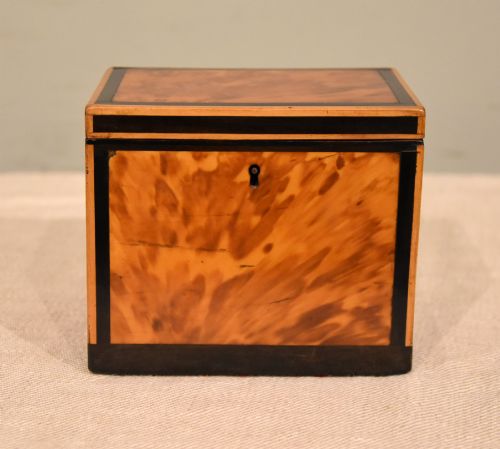


Tortoiseshell Tea Caddy
These Georgian and Regency tortoiseshell tea caddy examples combine tactile luxury with functional elegance for period interiors.
Tortoiseshell tea caddy forms and periods
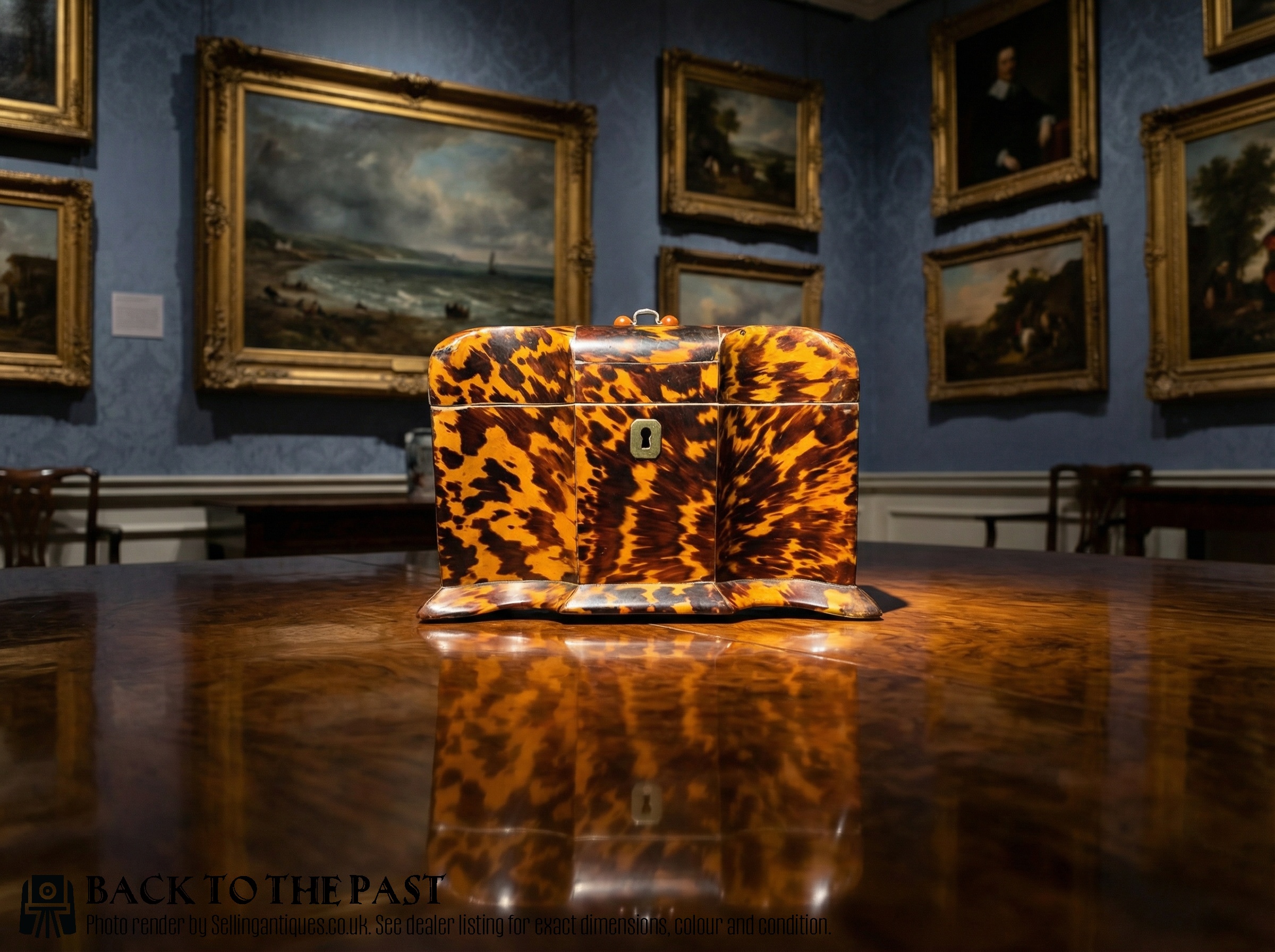
A tortoiseshell tea caddy is a small lidded box designed to store precious tea leaves safely under lock and key during the Georgian and Regency eras. Buyers searching for a tortoiseshell tea caddy encounter geometric shapes such as octagonal, decagonal, hexagon, bow-fronted, and casket forms dating from the eighteenth and nineteenth centuries.
The most common examples on this page hail from the Regency period, often constructed as double or single containers complete with internal compartments, bone, or ivory elements. Pieces span from mid-eighteenth-century origins through to later nineteenth-century interpretations, including miniature dimensions and French Restoration styles.
The survival of these boxes demonstrates their enduring appeal as desktop or table objects. Makers often shaped them with flattened lids, gently curved fronts, or panelled sides that showcase the mottled amber and brown patterns of the shell.
Materials and construction techniques
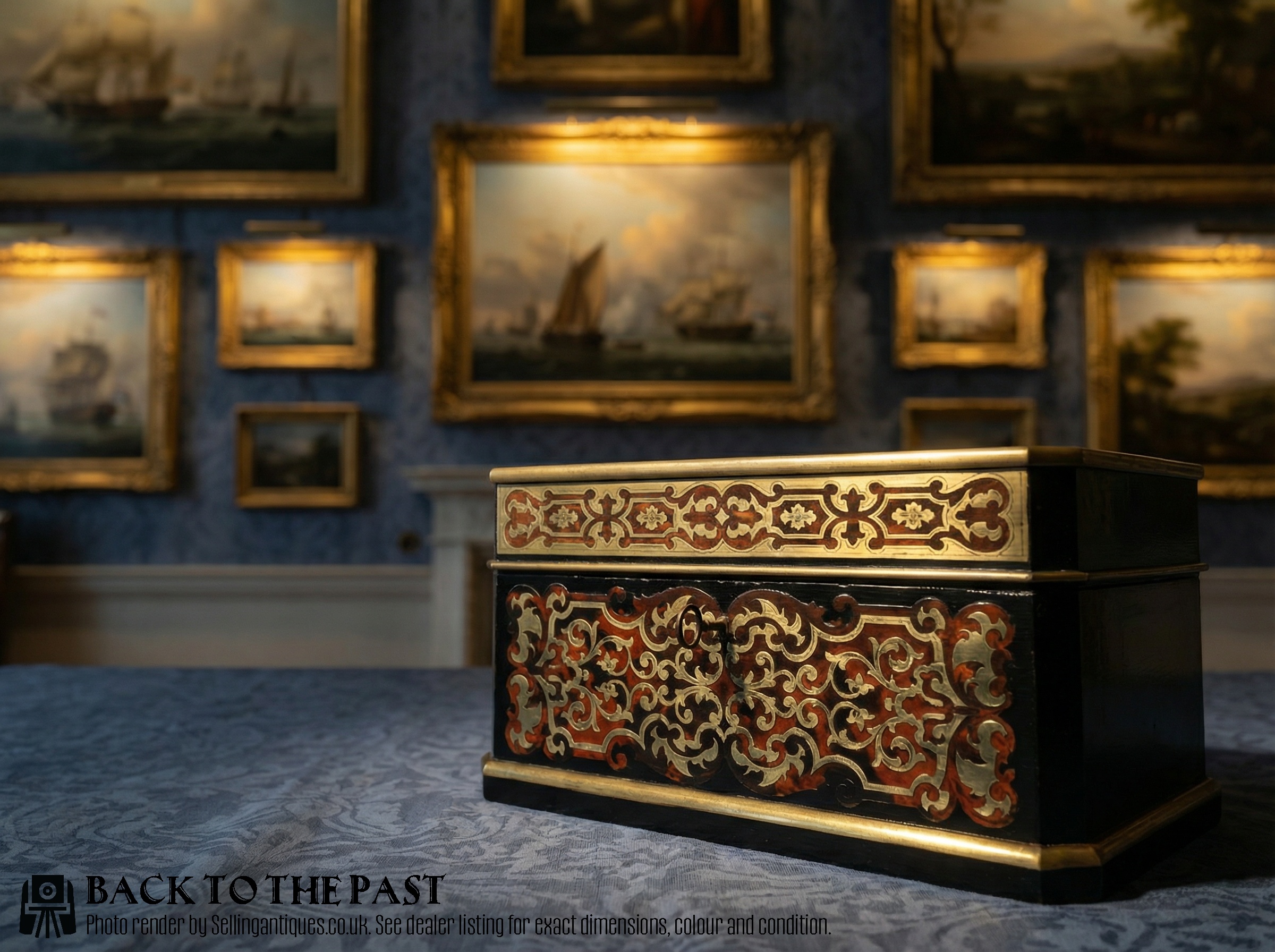
Craftsmen built these containers by applying thin translucent plates of tortoiseshell over a structural carcase of wood or ebonised wood. The organic plates were painstakingly heated and pressed to conform to complex shapes like octagons and bow-fronts before being smoothed and polished.
Makers embellished the tortoiseshell with contrasting framing materials including silver mounts, brass stringing, ebony, and bone. Interiors frequently reveal turned wooden or ivory canisters, sometimes paired with engraved mother of pearl inlay and tiny working locks with matching keys.
Retail Price Guide 2026
Typical UK retail prices for tortoiseshell tea caddy, calculated from the Sellingantiques database of over a million retail prices indexed since 2003. This retail price guide relies exclusively on Sellingantiques data; no external sources or auction records are used, so the figures do not describe the wider market.
Listings feature Georgian and Regency periods, utilising tortoiseshell, wood, silver, bone, ebony, and brass.
Distinguishing quality and execution
Quality rests upon the natural figuring of the tortoiseshell plates and the precision of the underlying carpentry. Superior pieces display vibrant blonde or deeply mottled amber patterning that remains well-aligned across the sharp angles of octagonal and decagonal carcases.
The refinement of the metal mounts, silver hinges, and internal bone or ivory fitments separates standard production from finer workshop output. Well-executed boxes maintain tight joints between the delicate shell panels and retain their original internal canisters or sugar dishes.
Thomas Lund
The Tortoiseshell Tea Caddy Glossary
- Tortoiseshell
- A warm, mottled material derived from the shell of certain marine turtles, historically utilised as a decorative veneer on luxury boxes. Its translucent quality allows gold or silver foil liners placed underneath to intensify the amber tones.
- Caddy
- A small container or chest originally intended for holding dry tea leaves securely. The word derives from catty, the Chinese pound weight.
- Decagonal
- Having ten sides and ten angles. This geometric plan requires exceptional precision when applying thin tortoiseshell veneers to a wooden carcase.
- Bow-fronted
- A convex curved front elevation popular on case furniture and boxes during the Regency period. This shape softens the rigid lines of storage chests.
- Ebonised
- Wood treated with a dark stain or finish to imitate ebony. Makers used this technique to provide dark structural contrast against amber tortoiseshell panels.
Frequently Asked Questions
What is a tortoiseshell tea caddy?
A tortoiseshell tea caddy is a luxury storage box made to keep expensive dry tea leaves fresh and secure during the eighteenth and nineteenth centuries. These boxes typically feature hinged lids, internal compartments, and small locks.
Craftsmen applied thin plates of figured shell over wooden carcases, often embellishing the exteriors with silver, ivory, and brass stringing to create decorative objects for the dining or drawing room.
How do I date a tortoiseshell tea caddy?
Dating relies on examining the overall silhouette, construction methods, and secondary woods used within the interior carcase. Georgian examples often lean towards simpler rectangular or octagonal forms, whilst Regency pieces favour bow-fronts and intricate internal canisters.
Hardware such as hinges, escutcheons, and locks also offer clues, as does the presence of blonde tortoiseshell versus darker varieties favoured in different decades.
Why did they have locks?
Tea was an extraordinarily costly commodity imported from Asia, making it one of the most valuable dry goods in a Georgian or Regency household. Servants were generally restricted from accessing the leaves directly.
A small brass key ensured the head of the household retained strict control over the daily rationing of black and green teas.
How do I care for tortoiseshell?
Tortoiseshell is an organic material that reacts to extremes in humidity, temperature, and direct sunlight. Keep these boxes away from bright windows and radiators to prevent warping or shrinkage of the veneer.
Dust gently with a dry, soft cloth and avoid chemical polishes or excessive moisture that might damage the underlying wood or metal mounts.