
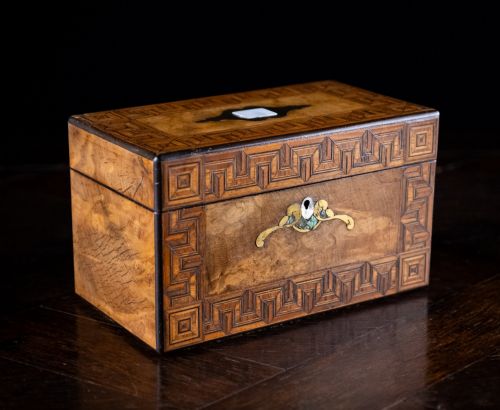
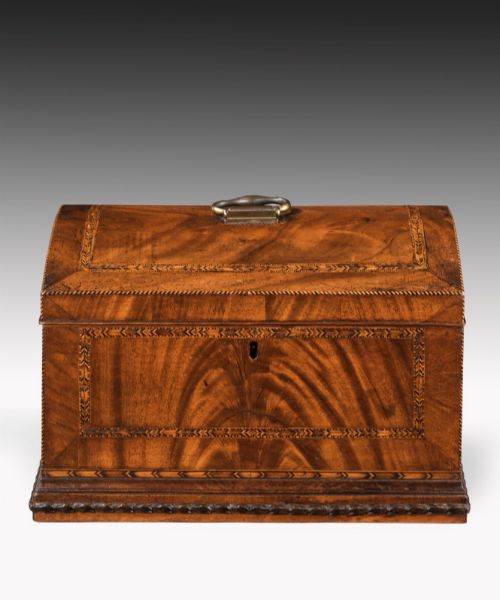


Brass Inlaid Tea Box
These brass inlaid tea box pieces bring period craftsmanship into the home, offering fitted storage for loose leaf leaves and dry goods.
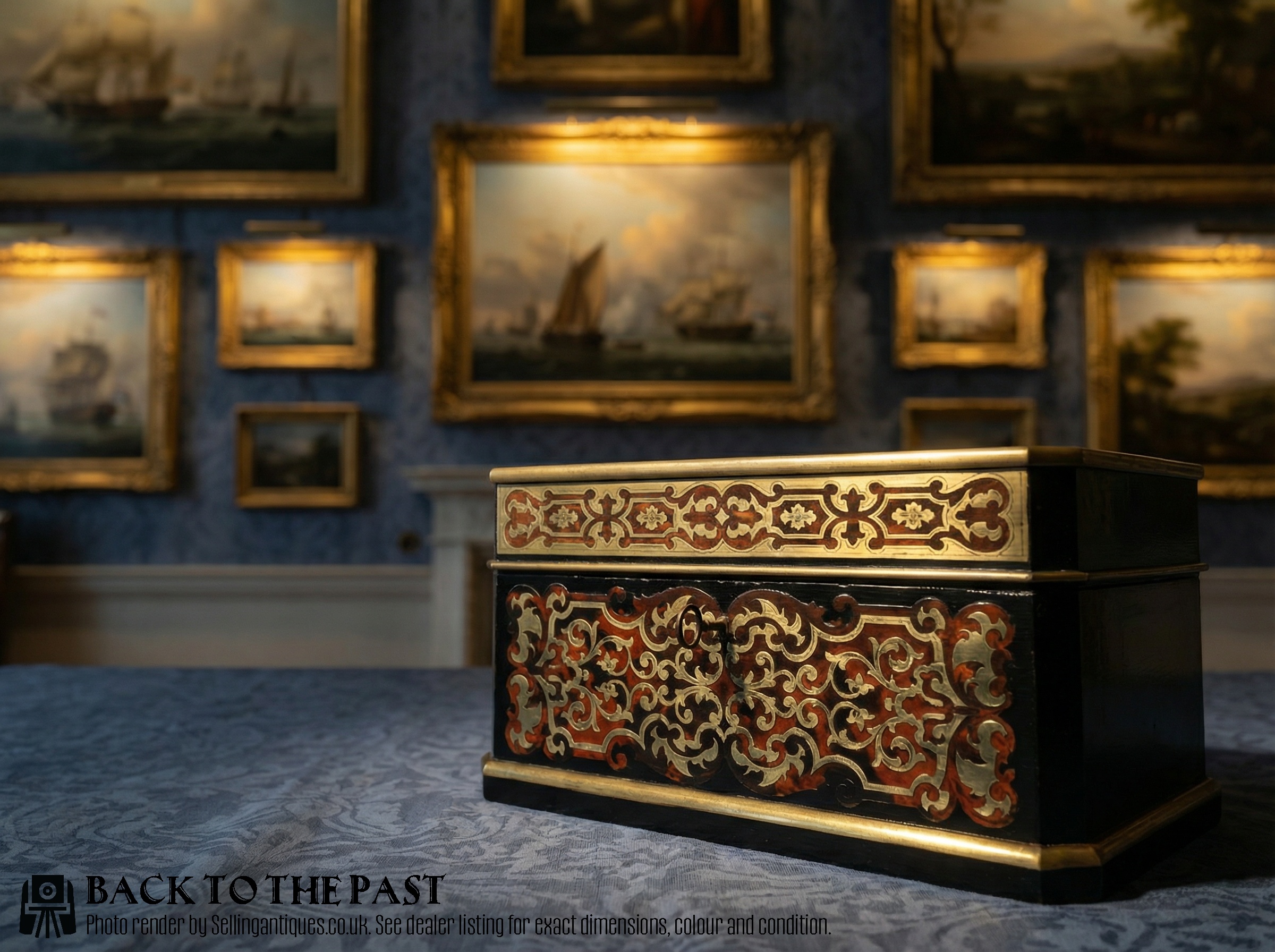
What the brass inlaid tea box is
A brass inlaid tea box is a lidded container designed for storing and preserving dried tea leaves, which were once an expensive luxury commodity. These boxes take the form of tea caddies and related storage chests, often featuring fitted interior compartments for separate blends and a mixing bowl.
The examples gathered here span from the nineteenth century through the Victorian era and the Regency period. Buyers encounter forms ranging from traditional rosewood and coromandel caddies to French tortoiseshell boxes and Anglo-Indian campaign pieces.
How they were made
Cabinet makers constructed the bodies of these boxes using dense timbers such as rosewood, coromandel, ebonised wood, and teak, frequently pairing them with contrasting boxwood and bone stringing. Artisans channelled the wood surfaces to recess thin strips and geometric motifs of sheet brass into the grain.
Interior fittings often included inner cannisters made of metal or matching wood, alongside glass sugar dishes and lock mechanisms operated by matching keys. Surface finishing relied on hand-applied polish that brought out the natural figure of the underlying timber.
Retail Price Guide 2026
Typical UK retail prices for brass inlaid tea box, calculated from the Sellingantiques database of over a million retail prices indexed since 2003. This retail price guide relies exclusively on Sellingantiques data; no external sources or auction records are used, so the figures do not describe the wider market.
Listings feature woods including rosewood, coromandel, teak, boxwood, and ebonised wood alongside tortoiseshell.
What varies in quality
Quality rests in the precision of the brass inlay work and the selection of the primary timber veneers, such as richly figured rosewood or coromandel. Superior pieces maintain tight joints and flush metalwork where the brass meets the surrounding wood without gaps.
The presence of complete original interiors, including inner cannisters and working locks with keys, distinguishes better examples from those missing their fitted components. The intricacy of auxiliary details like boxwood stringing and bone accents further elevates the refinement of the piece.
The Brass Inlaid Tea Box Glossary
- Tea caddy
- A small box or chest designed for the safe storage of tea leaves. The word derives from catty, a traditional unit of weight.
- Regency
- An architectural and design style spanning the early nineteenth century. It is characterised by classical restraint and decorative metal mounts.
- Coromandel wood
- A dense, dark timber featuring striking contrasting grain patterns. It was frequently utilised for high-end nineteenth-century decorative boxes.
- Stringing
- Thin inlay lines of contrasting wood or metal used to outline panels. This technique highlights the geometric edges of box lids and sides.
Frequently Asked Questions
What is a brass inlaid tea box?
A brass inlaid tea box is a lidded wooden chest built to store dried tea leaves securely. These containers typically feature partitioned interiors for different varieties of tea.
They reflect the historical value of tea by providing decorative and secure storage within the period home.
How were tea caddies used historically?
Tea caddies served to protect valuable tea leaves from moisture and loss in the household. The master of the house usually kept the box locked, dispensing the leaves personally.
Interior compartments allowed separate blends to be stored side by side. Some examples included a central bowl for mixing the leaves before brewing.
How do I tell Regency from Victorian pieces?
Regency pieces often display cleaner classical lines and specific brass inlay motifs typical of the early nineteenth century. Timbers like rosewood are common in this earlier phase.
Victorian items frequently utilise denser woods such as coromandel and teak. They can also reflect later design influences, including campaign styles.
How do I care for antique wood and brass?
Antique wood requires stable indoor humidity levels and protection from direct sunlight to prevent timber movement. Occasional gentle dusting preserves the surface polish.
Brass inlay benefits from dry cleaning to avoid moisture seeping into the surrounding wood grain. Chemical polishes should be avoided near vulnerable veneers.