




Rosewood Tea Box
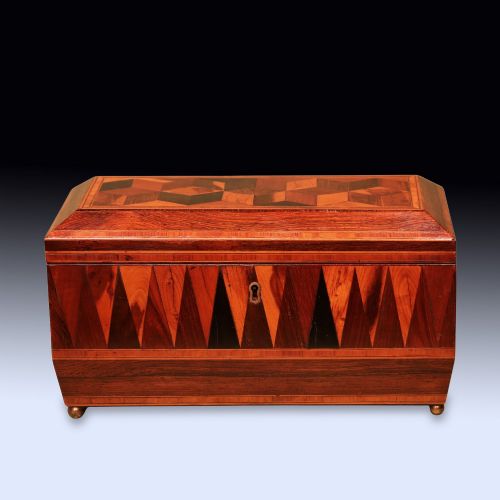
A rosewood tea box is a dense, finely grained container built to preserve precious dry leaves, appearing here in Georgian, Regency, and Victorian forms.

Rosewood Tea Box
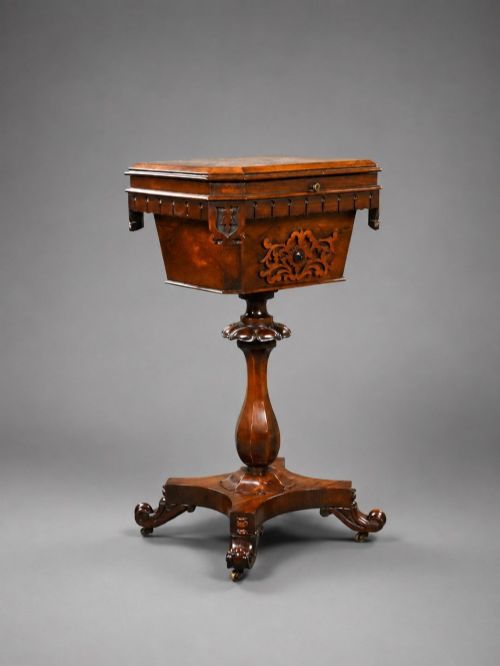
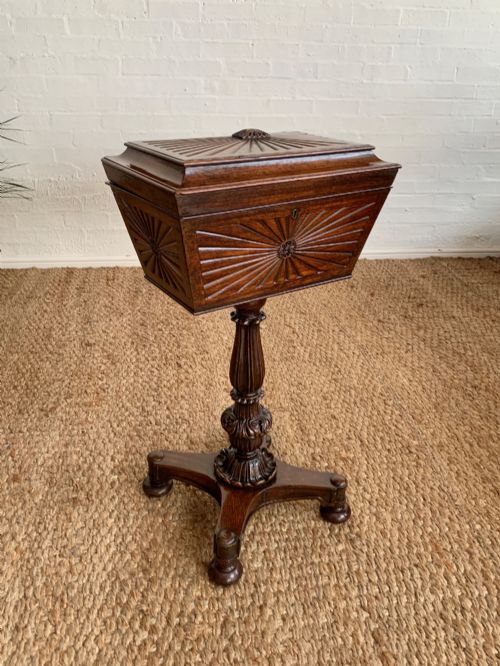
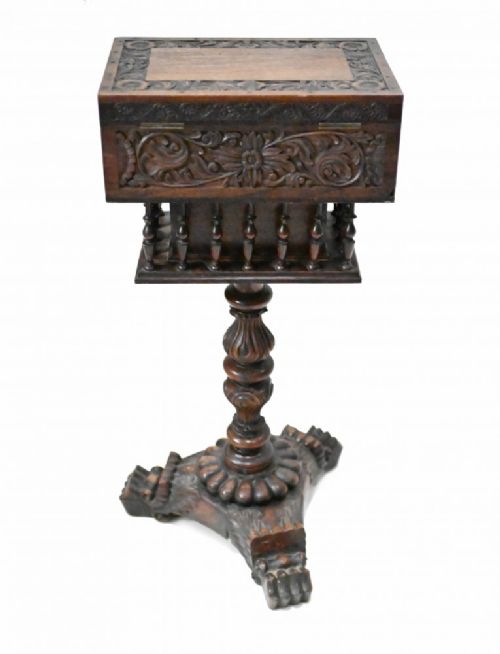
A rosewood tea box encompasses distinct portable caddies, sarcophagus shapes, and standing teapoys originating from the Georgian, Regency, and Victorian periods. Buyers seeking this phrase encounter domestic containers designed to sit upon tables alongside larger work tables and occasional furniture fitted for the drawing room.
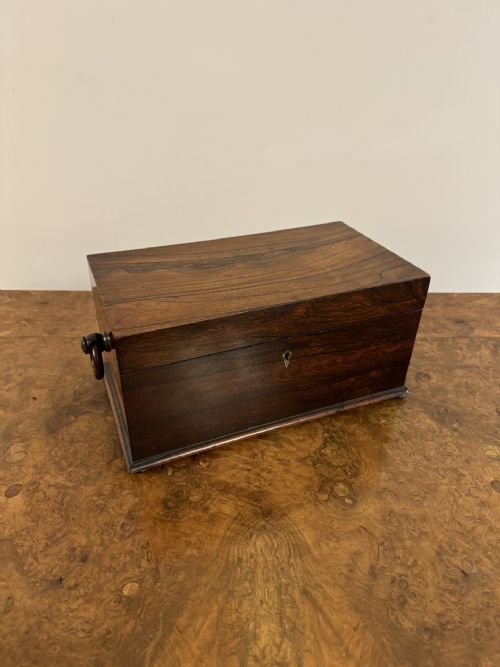
The prevailing form on this page is the lidded box, often constructed in a sarcophagus profile with ring handles, resting upon bun feet. Interior compartments commonly house removable canisters and mixing bowls, reflecting the social ritual of hospitality in nineteenth-century households.
Originating predominantly from English workshops, these items also include Anglo-Indian colonial pieces and French examples utilising contrasting timbers. The selection spans straightforward oblong tapered caddies to elaborate specimens decorated with marquetry and parquetry.
How they were made
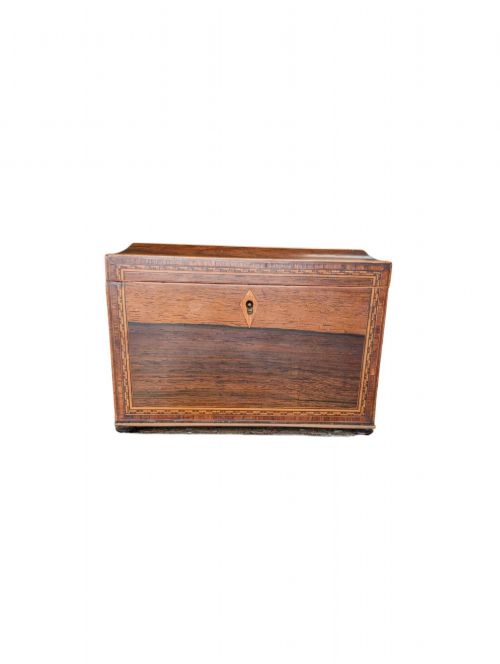
Cabinetmakers constructed these pieces using solid rosewood or thick veneers laid over a secondary timber carcase, reinforced with mitred joints to resist warping. Brass stringing, mother-of-pearl, boxwood, and bone were inlaid into the polished surfaces to create geometric patterns and borders.
Tunbridge Ware examples incorporated intricate mosaic woodwork assembled from thousands of tiny tinted wood blocks to form pictorial panels. Interior compartments frequently featured secondary linings of foil or mahogany, paired with functional brass locks and escutcheons.
Rosewood Tea Box Retail Price Guide 2026
Typical asking prices for rosewood tea box among the pieces listed under this phrase on Sellingantiques today, from the lower quarter to the upper quarter. They describe what is for sale here now, not the wider market.
Inlay materials appearing across the inventory include brass, bone, boxwood, walnut, and mother-of-pearl.
What varies in quality
The calibre of a rosewood tea box rests upon the crispness of its parquetry inlay, the precision of its brass stringing, and the integrity of its carcase construction. Superior specimens display tightly fitted interior lids, original mixing bowls, and well-figured grain preserved beneath a deep polish.
Later or lesser examples exhibit simpler veneering with minimal decorative banding and replaced interior elements. The presence of specialised craft techniques, such as micro-mosaic Tunbridge Ware panels by known makers, distinguishes exceptional pieces from standard domestic containers.
Henry Hollamby
The Rosewood Tea Box Glossary
- Sarcophagus form
- A box design featuring a steep, sloping lid and a flared rectangular body resembling a classical stone coffin. This profile enjoyed widespread popularity during the Regency and William IV periods.
- Teapoy
- A pedestal table or heavy stand fitted with a lidded compartment for storing multiple varieties of tea. They often incorporate internal mixing bowls and work table elements.
- Tunbridge Ware
- A type of decorative woodwork characterised by mosaic designs made from numerous tiny blocks of naturally coloured woods. These panels depict landscapes, floral motifs, or geometric borders.
- Parquetry
- A geometric mosaic of wood pieces used for decorative veneering on floors and furniture surfaces. Artisans arranged contrasting timbers like boxwood and satinwood to form intricate patterns.
- Crossbanding
- A border veneer applied around the primary panels of a box where the grain runs at right angles to the central field. This technique frames the top and sides of the piece.
Rosewood Tea Box: Frequently Asked Questions
What is inside a rosewood tea box?
Interior layouts typically feature two or three lidded compartments intended to keep different leaf varieties separate and dry. Many also contain a central circular recess designed to hold a glass mixing bowl.
Finer versions retain their original ivory or bone knobs and secondary rosewood lids inside the main enclosure. These fittings were essential for protecting the aroma of expensive imported leaves.
How do I date a tea caddy?
Dating relies upon stylistic markers such as cabinet shapes, brass inlay techniques, and foot types. Sarcophagus profiles with bold lion mask handles point toward the Regency period.
Simpler oblong boxes with line stringing often belong to the Georgian era. Meanwhile, profuse floral marquetry and Tunbridge Ware decoration generally indicate mid-Victorian production.
Were these boxes locked?
Tea was a costly commodity in the eighteenth and nineteenth centuries, making security a priority in the domestic household. Most boxes were fitted with working brass locks and keys.
Housemistresses kept the key close at hand to ration the supply and prevent domestic staff from accessing the valuable leaves. Surviving boxes frequently retain these original brass mechanisms.
Can I use an antique tea box for modern tea?
These containers make practical storage units for modern loose leaf tea when the internal foil linings or wooden compartments are clean and dry. The tight-fitting lids help preserve freshness.
Care should be taken to avoid placing damp items inside unlined wooden sections. Collectors often prefer to display them empty to protect the fragile interior veneers.