




Rosewood Sarcophagus Box
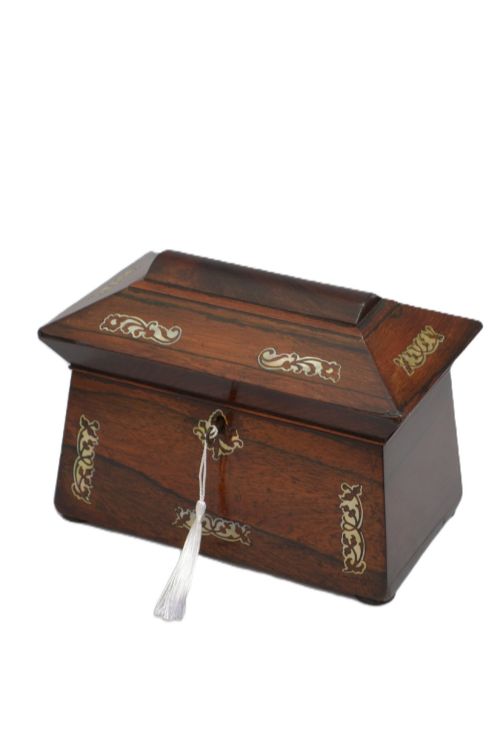
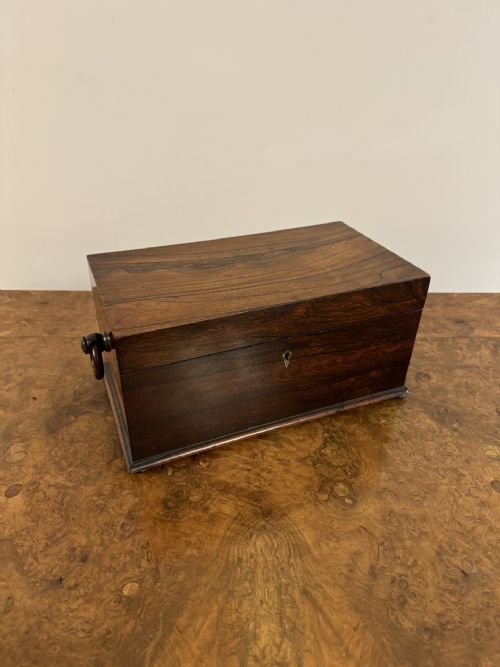
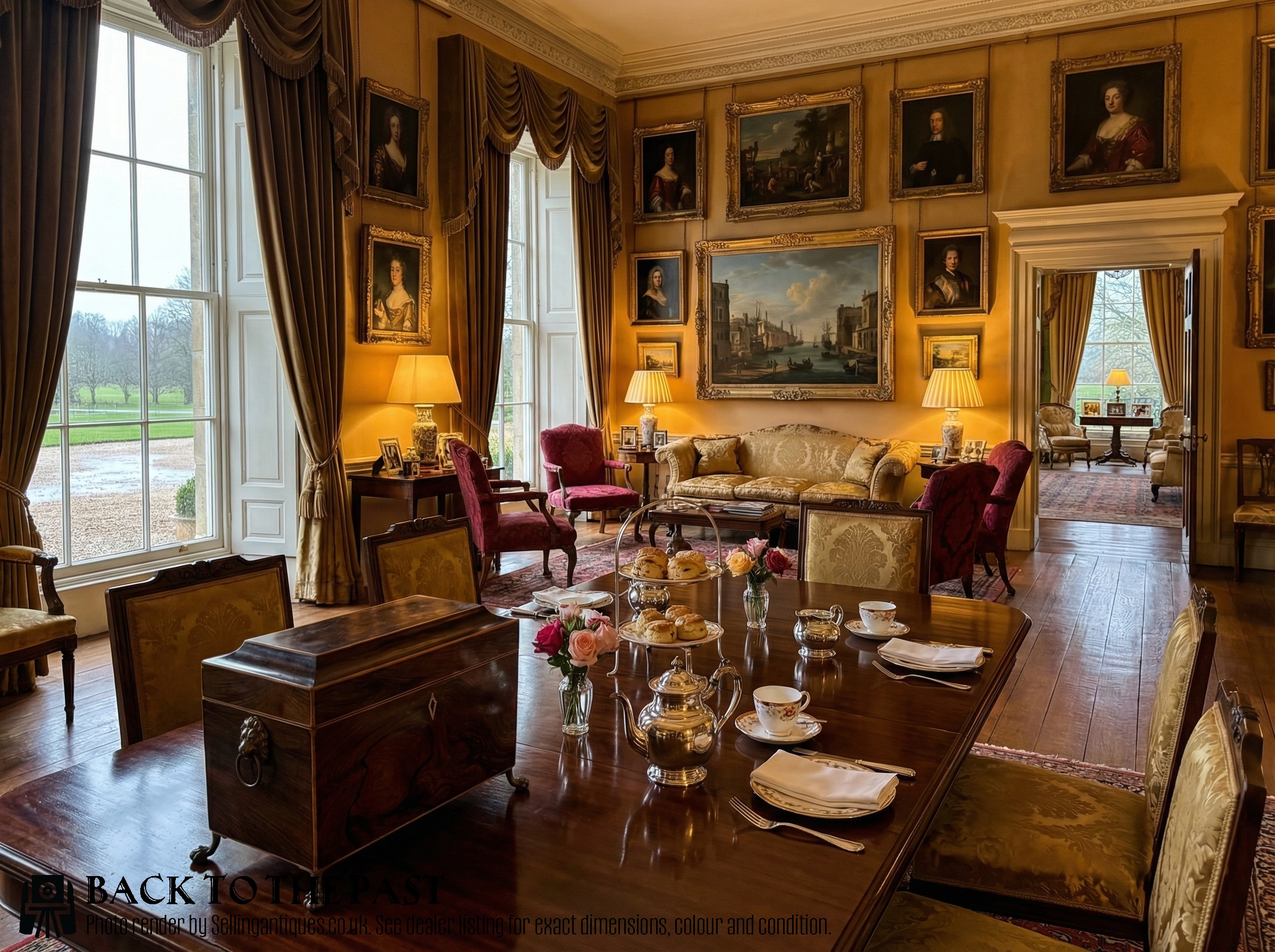
A rosewood sarcophagus box offers a heavy, domed silhouette that holds tea, jewellery or sewing implements with architectural gravity.
Materials and Construction
Makers utilised dense rosewood veneers laid over a secondary timber carcase, often selecting stock with pronounced grain patterns for the exterior surfaces. This dark tropical wood accepted precision inlay work exceptionally well.
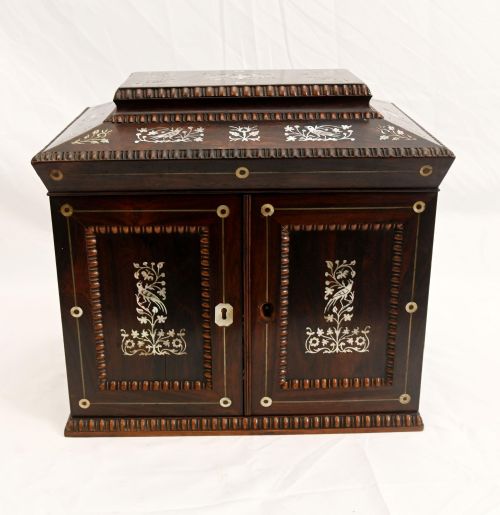
Decoration relied on contrasting details, incorporating brass stringing and brass inlays alongside mother-of-pearl, bone, boxwood and parquetry. Internal fittings frequently combined turned native woods, silk linings and compartmentalised lift-out trays.
Assessing Quality
Quality rests on the crispness of the architectural moulding and the precision of the brass or mother-of-pearl inlay. Superior examples display seamless mitre joints and timber selection that aligns the grain across the lid and sides.
Internal completeness separates standard utilitarian boxes from high-status drawing room pieces. Retained mixing bowls, original silk linings, functioning locks with working keys and intact internal caddy lids elevate a piece significantly.
Rosewood Sarcophagus Box Retail Price Guide 2026
Typical asking prices for rosewood sarcophagus box among the pieces listed under this phrase on Sellingantiques today, from the lower quarter to the upper quarter. They describe what is for sale here now, not the wider market.
Several boxes still hide tiny secret compartments beneath their tea canisters, designed for stashing small notes or spare keys.
Henry Hollamby
The Rosewood Sarcophagus Box Glossary
- Sarcophagus
- A box form featuring a stepped or sloping lid reminiscent of a stone coffin from antiquity. This silhouette defined luxury container design during the Regency and William IV periods.
- Teapoy
- A small pedestal table fitted with a lidded storage box on top for holding tea leaves. These containers often lifted off their central pillar to serve directly on a table.
- Tunbridge Ware
- Small wooden objects decorated with mosaic patterns created from thousands of tiny tinted wood blocks. This mosaic work frequently appeared on rosewood boxes from Victorian workshops.
- Caddy
- A small container designed to store dry tea leaves safely away from moisture and light. Many surviving examples include internal lidded compartments for blending different leaves.
Rosewood Sarcophagus Box: Frequently Asked Questions
What were rosewood sarcophagus boxes used for originally?
These containers served specific domestic functions in nineteenth-century reception rooms, primarily storing expensive dry tea leaves under lock and key. Others functioned as portable writing desks, sewing boxes or velvet-lined repositories for precious jewellery.
Because tea was a costly commodity, the caddy stayed in the parlour under the control of the host. Jewellery boxes and workboxes similarly sat on dressing tables or drawing-room side tables for daily use.
How do I tell a Regency box from a Victorian one?
Regency and early nineteenth-century pieces lean heavily on classical architectural proportions, often featuring bold brass inlay, lion mask ring handles and crisp carved paw feet. The rosewood used in this era tends to show deep, reddish-brown tones with strong grain contrast.
Victorian iterations, particularly those from the middle and late decades, frequently incorporate mother-of-pearl floral motifs or Tunbridge Ware mosaic bands. The overall shaping can feel slightly more compact or embellished with varied native wood banding.
Are the interior fittings usually original?
Many surviving boxes retain their original internal partitions, mixing bowls or secondary lidded canisters, though centuries of use mean some linings and trays have been replaced. Velvet pincushions and silk pockets in sewing boxes often show expected wear or modern re-lining.
Inspecting the glue blocks, hinges and base timbers helps confirm whether the internal layout matches the exterior age. A complete set of matching internal caddy lids represents a particularly desirable survival.
How should I care for antique rosewood furniture?
Rosewood benefits from stable environmental conditions away from direct sunlight, central heating vents and sudden humidity shifts to prevent veneer lifting. Dusting with a dry, soft cloth is sufficient for routine maintenance.
Occasional application of microcrystalline wax helps nourish the timber and protect the polished finish without building up heavy residues. Avoid liquid polishes or silicone-based sprays entirely.