
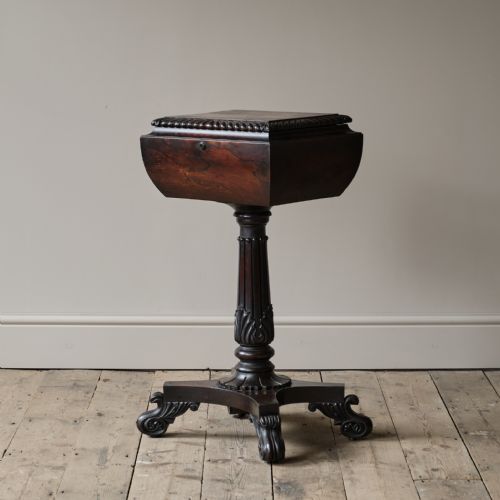
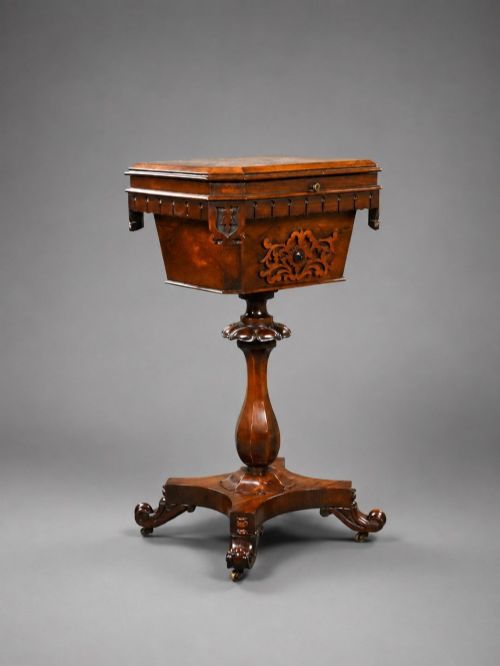
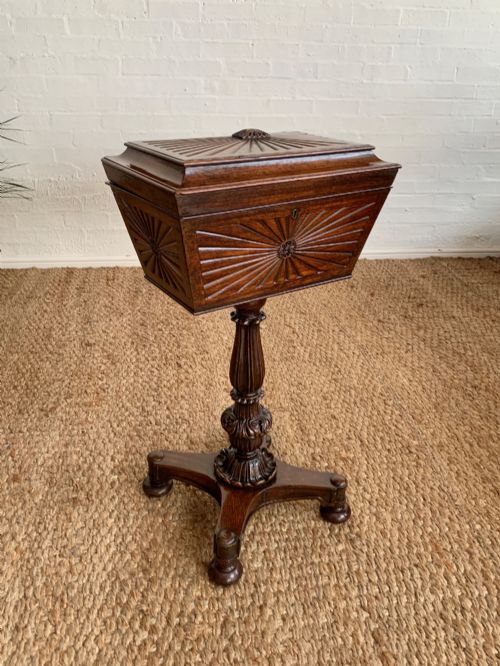


William IV Tea Caddy
A william iv tea caddy is a compact domestic chest designed for storing loose tea leaves, prized for its architectural form and rich timbers.
William IV Tea Caddies
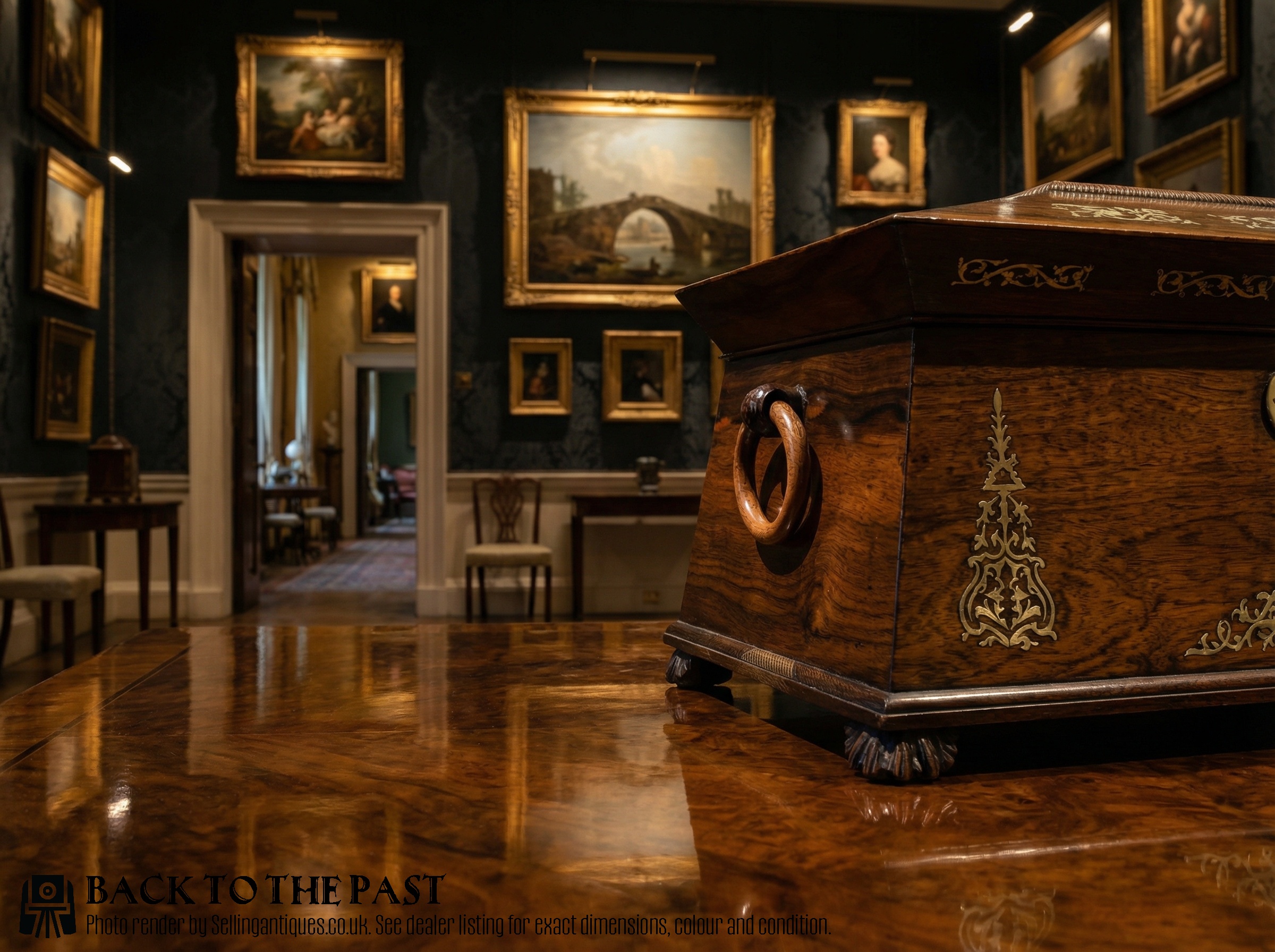
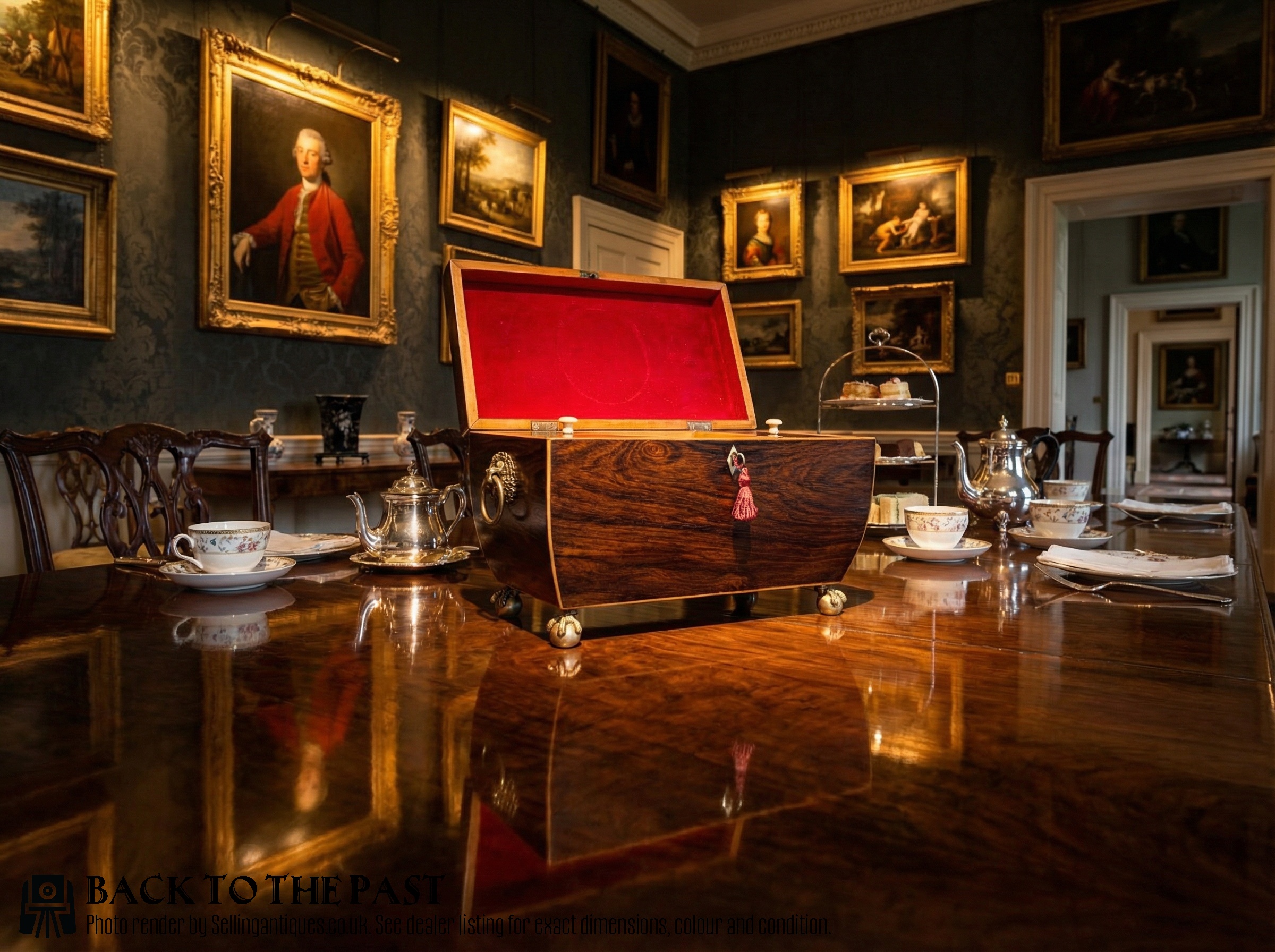
A william iv tea caddy embodies the transitional style between Regency elegance and early Victorian mass production. These boxes take specific architectural forms, most notably the sarcophagus shape with distinct footed bases or ring handles.
The material record shows a strong preference for rosewood and mahogany over older timbers. Interiors typically retain fitted compartments, mixing bowls, and internal lids designed to keep dry leaves fresh.
Collectors encounter variations ranging from plain polished wood surfaces to elaborate examples featuring mother of pearl inlay. Some pieces expand in scale to become tea poys, standing on substantial pedestals rather than resting on tables.
Construction and Materials
Cabinetmakers built these caddies using dense tropical hardwoods like rosewood and mahogany over sturdy softwood or hardwood carcases. Surfaces received careful polishing to highlight the natural grain patterns of the timber.
Decoration relied on contrasting materials applied directly into the wood surface. Inlayers used mother of pearl, bone, boxwood, and brass to create floral motifs, geometric lines, and pictorial subjects.
Internal elements involved fine joinery for compartment lids, often fitted with tiny bone or ivory knobs. Metal hinges, escutcheons, and mixing bowls of glass or silver provided functional and decorative accents.
Retail Price Guide 2026
Typical UK retail prices for william iv tea caddy, calculated from the Sellingantiques database of over a million retail prices indexed since 2003. This retail price guide relies exclusively on Sellingantiques data; no external sources or auction records are used, so the figures do not describe the wider market.
Recorded forms range from standard tabletop boxes to large pedestal tea poys and converted containers.
Judging Quality
The hierarchy of quality rests primarily on the choice of timber and the precision of the cabinetwork. Heavily figured rosewood and substantial proportions command greater attention than plain, thinner constructions.
Decorative ambition separates standard boxes from exceptional examples. Finely executed mother of pearl inlay depicting birds and foliage represents a higher tier of craftsmanship than simple stringing or unadorned surfaces.
The integrity of the interior compartments and the presence of original mixing bowls and matching internal lids strongly influence the desirability of a piece.
The William IV Tea Caddy Glossary
- Sarcophagus
- A burial-vault shape with a domed lid and sloping sides that became highly popular for tea caddies during the Regency and William IV periods. This form gives the box a substantial, monumental presence on a sideboard.
- Teapoy
- A larger tea storage chest mounted on a central pillar and pedestal base rather than sitting directly on a tabletop. These pieces often include internal mixing bowls and compartments for multiple tea varieties.
- Escutcheon
- A small protective plate surrounding the keyhole of a tea caddy, usually formed from brass or mother of pearl. It prevents the key from damaging the surrounding wood during daily use.
- Mixing Bowl
- A glass or ceramic vessel fitted inside the centre of the caddy. It allowed the user to blend different loose tea leaves before brewing.
Frequently Asked Questions
What was inside a tea caddy?
These boxes contained lidded compartments for holding different varieties of loose tea leaves, protecting expensive dry goods from moisture and odours.
Many examples also housed a central glass or crystal bowl used for blending teas before they went into the teapot.
How do I care for rosewood?
Rosewood requires stable humidity levels and protection from direct sunlight to prevent the timber from drying out or fading over time.
Apply occasional specialist wax polish and buff gently with a soft cloth to maintain the natural lustre of the polished grain.
How do I identify William IV style?
William IV pieces sit between the Regency and Victorian eras, combining heavy classical proportions with restrained decorative flourishes.
Look for sarcophagus silhouettes, rosewood veneers, and subtle inlay work featuring mother of pearl or brass details.
Were these kept on display?
Tea was an expensive commodity, so caddies remained locked in prominent reception rooms such as the dining room or drawing room.
Hosts kept the key close at hand, overseeing the preparation of tea as a mark of household hospitality and status.