
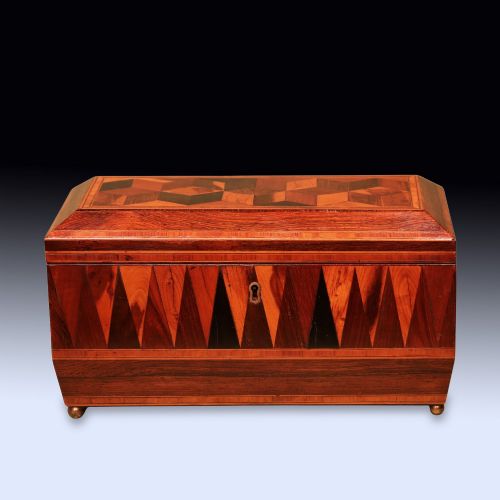


Nineteenth Century Tea Caddy
A nineteenth century tea caddy is a refined wooden or papier-mâché storage box designed to keep precious loose leaves secure under lock and key.

Nineteenth Century Tea Caddy
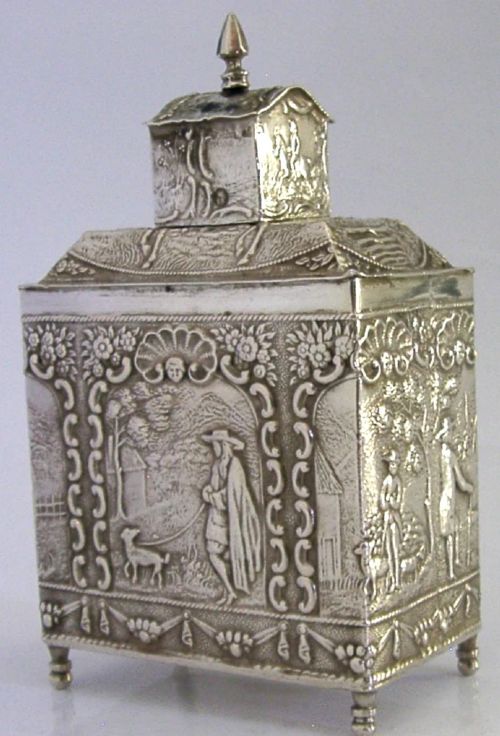
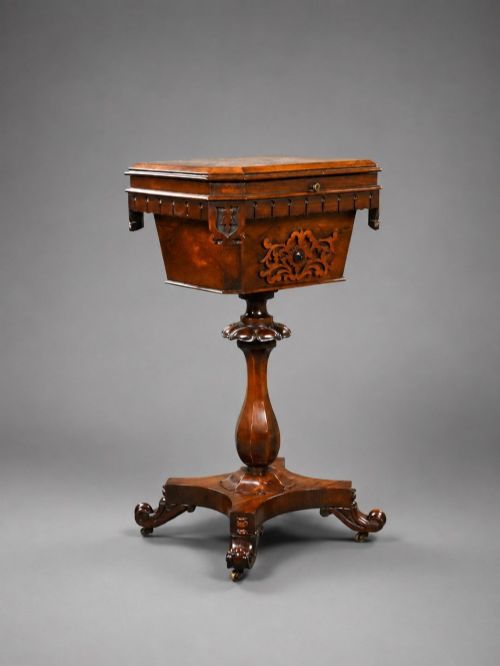
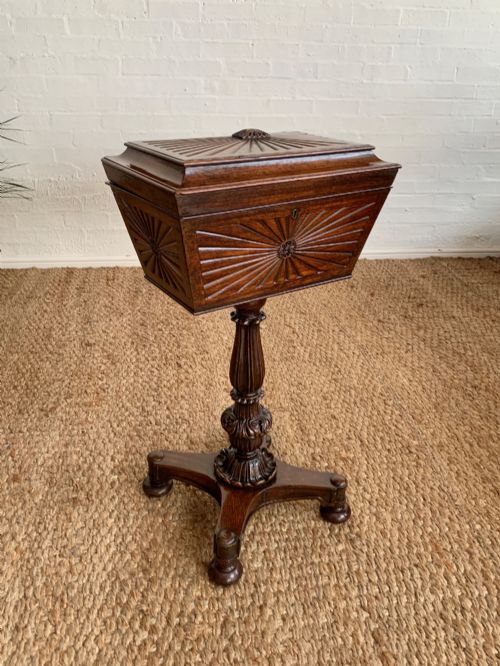
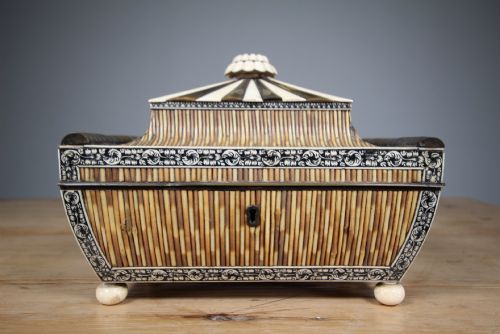
When you search for a nineteenth century tea caddy, you encounter domestic receptacles built to preserve the aroma of expensive black and green teas. These pieces range from compact sarcophagus boxes to elaborate pedestal teapoys fitted with internal compartments.
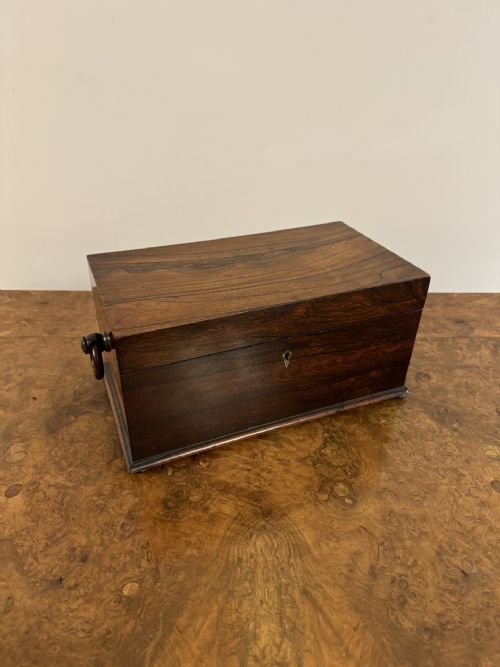
The most common examples on this page are rosewood and mahogany chests from the Regency and Victorian eras. Many feature fitted interiors with mixing bowls and lidded canisters for different leaf varieties.
Makers shaped these boxes to sit proudly on parlour sideboards or occasional tables, reflecting a time when tea was a heavily taxed luxury commodity guarded by the household.
How they were made
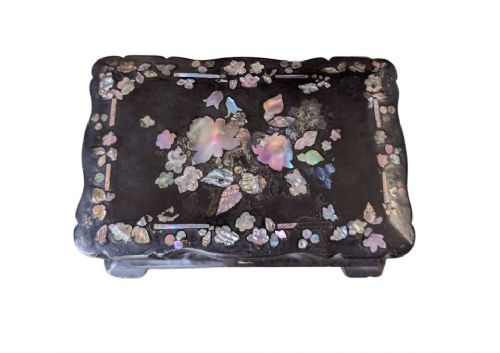
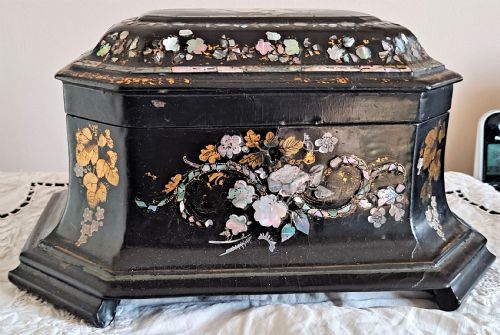
Cabinetmakers built nineteenth century tea caddy bodies from dense tropical timbers like rosewood and mahogany, often applying dramatic veneers such as flame mahogany, burr walnut, and burr yew-wood. These wooden foundations were frequently embellished with brass inlay, mother-of-pearl, bone, or intricate penwork.
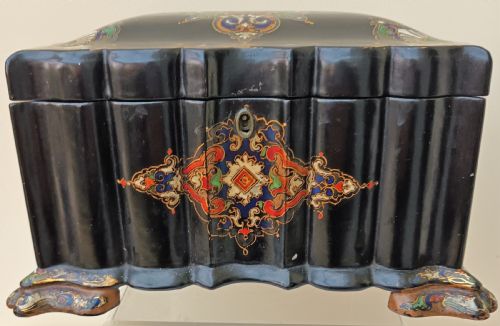
Alternative forms utilise papier-mâché and painted toleware, sometimes finished with rich lacquer or boullework. Artisans shaped these diverse materials into sarcophagus, bombé, and pagoda silhouettes before installing working brass locks and crystal or ceramic mixing bowls.
Nineteenth Century Tea Caddy Retail Price Guide 2026
Typical asking prices for nineteenth century tea caddy among the pieces listed under this phrase on Sellingantiques today, from the lower quarter to the upper quarter. They describe what is for sale here now, not the wider market.
Listings feature rosewood, mahogany, burr walnut, and papier-mâché across the Regency, Victorian, and William IV periods.
What varies in quality
The distinction between ordinary and exceptional boxes lies in the selection of timbers and the precision of the decorative inlay. Master cabinetmakers used highly figured veneers that matched symmetrically across the lid and panels, whereas simpler pieces relied on plain grain.
Internal architecture also dictates standard, with finer caddies retaining their original glass mixing bowls, ivory or bone knobs, and functioning brass lever locks. The delicacy of the parquetry, penwork, or mother-of-pearl work separates standard production boxes from truly outstanding examples.
Gillows
The Nineteenth Century Tea Caddy Glossary
- Teapoy
- A freestanding tea caddy mounted on a central pillar or legs, often functioning as a small occasional table in the parlour.
- Sarcophagus form
- A distinctive box shape featuring a steep, sloping lid and inverted base, mimicking the classical stone coffin style popular during the Regency period.
- Penwork
- A decorative surface technique using fine ink lines to create intricate pictorial or geometric motifs on a light wood background.
- Boulle
- An elaborate marquetry technique combining tortoiseshell and brass inlaid into intricate floral or scroll patterns.
- Toleware
- Enamelled and painted sheet metal, frequently formed into cylindrical canisters for storing dry tea leaves.
Nineteenth Century Tea Caddy: Frequently Asked Questions
What was inside a nineteenth century tea caddy?
These boxes typically contained two or three lidded canisters to separate different tea leaves, alongside a central glass mixing bowl.
Wealthy households kept black and green teas locked away to prevent theft and preserve the delicate aromas from household dampness.
How do I tell Regency from Victorian pieces?
Regency caddies often favour clean architectural lines, brass inlay, and sarcophagus forms executed in rosewood or mahogany. Victorian versions frequently lean towards heavier burr walnut veneers, elaborate mother-of-pearl work, and papier-mâché construction.
Examining the internal fittings and secondary woods helps confirm the exact manufacturing period.
Are original keys common?
Original working keys are scarce because these small brass keys were easily misplaced over generations of domestic use.
Many boxes retain their original locks even if the matching key has been lost to time.
Where should I display a tea caddy?
These boxes suit placement on sideboards, desks, or occasional tables where their figured wood veneers can be admired from above.
Keep them away from direct sunlight and strong heat sources to protect the delicate wooden veneers and interior linings.