


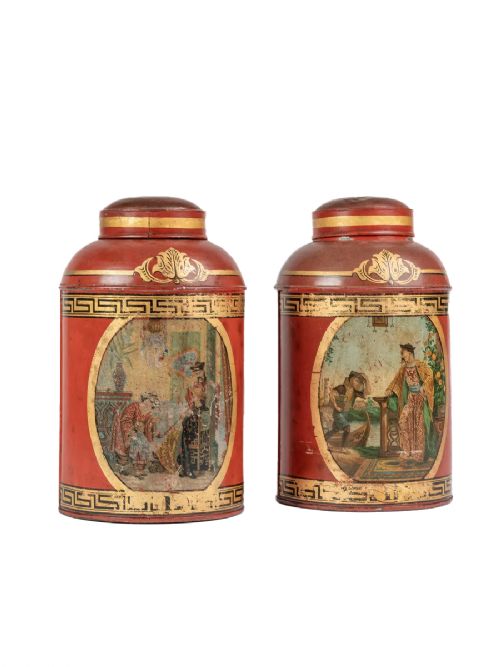


Decorative Tea Canister
A decorative tea canister stores dried leaves securely while bringing texture and period style to a room.
Decorative Tea Canister
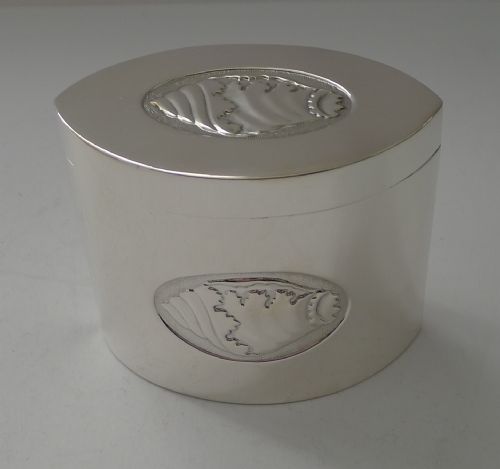
A decorative tea canister is a receptacle designed originally to hold dry leaf tea safely away from light and air. The pieces gathered here span the eighteenth, nineteenth and early twentieth centuries, encompassing Georgian, Regency, Victorian and Edwardian examples. Forms range from small boxes and caddies to larger toleware cylinders, pairs of lamps and converted waste paper bins.
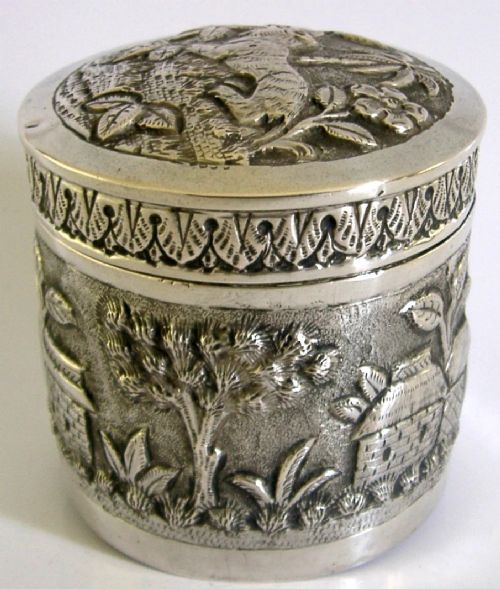
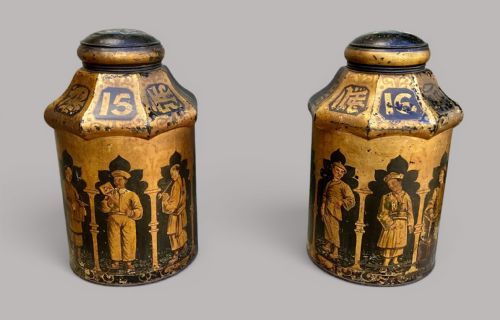
The version most commonly met on this page is the nineteenth century toleware or tinplate canister bearing original painted or gilded decoration. Alongside these tin examples, timber boxes surface frequently, constructed from mahogany, satinwood, rosewood, coromandel and tortoiseshell. Metal vessels in solid silver, brass and ottoman silver sit beside ceramic and china items.
Geographic origins extend across England, Scotland, India, Turkey and China, demonstrating diverse regional tastes in storage. Buyers encounter simple domestic caddies alongside elaborate architectural forms, such as pagoda style china vessels. Many retain original interior fittings, including glass bowls, mixing sticks and multiple metal canisters.
How they were made
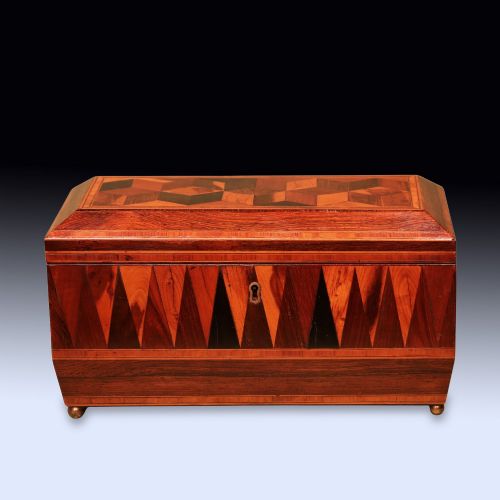
Makers utilised a range of hard and exotic woods, applying parquetry, shell inlays, gold leaf and brass banding to enrich timber surfaces. Satinwood, mahogany and burr maple formed the structural carcasses for box caddies, often polished to accentuate natural grain patterns. Tortoiseshell veneers required delicate application over a supportive backing.
Tinplate and toleware vessels relied on sheet metal manipulation, finished with layers of black, green or maroon paint. Artisans applied hand painted Chinoiserie motifs, japanning and gilt decoration directly onto the painted metal surfaces. Ceramic and china canisters employed fired clay bodies finished with glaze and pigment.
Silver items required silversmithing techniques, including hammering, casting and engraving, seen in solid sterling pieces from English and Ottoman workshops. Brass components provided structural reinforcement and decorative feet, handles and escutcheons across wooden and leather covered examples.
The selection includes Georgian, Regency, Victorian and Edwardian periods, alongside regional Ottoman and Anglo-Indian silver pieces.
What varies in quality
The grade of a decorative tea canister rests primarily on the preservation of its original surface finish and ornamentation. Hand painted Chinoiserie, japanning and gilt decoration retain higher value when intact, showing minimal rubbing or later overpainting. Timber examples demonstrate quality through the selection of figured veneers, precise parquetry and intact shell inlays.
Internal completeness distinguishes superior specimens from altered ones. Pieces retaining original glass mixing bowls, internal lids, fitted metal canisters and working locks command greater appreciation. The sophistication of joinery, the weight of solid silver or brass mounts, and the crispness of engraving further separate standard production from master craftsmanship.
Goldsmiths and Silversmiths Co
The Decorative Tea Canister Glossary
- Toleware
- Lacquered or enamelled metalware, typically tinplate, decorated with painted or gilded motifs. This technique became popular in the eighteenth and nineteenth centuries for household accessories.
- Chinoiserie
- European artistic interpretation of Chinese and East Asian artistic traditions. Artisans applied these whimsical painted scenes to furniture, tin canisters and ceramics.
- Padouk
- A dense tropical timber valued for its durability and rich reddish hue. Cabinet makers utilised this wood for fine furniture and decorative boxes.
- Parquetry
- Geometric mosaic woodwork formed by fitting small veneer pieces together. This technique creates patterned surfaces on the lids and panels of storage boxes.
Decorative Tea Canister: Frequently Asked Questions
What were tea canisters originally used for?
Tea was an expensive commodity during the eighteenth and nineteenth centuries, kept under lock and key to prevent pilfering by servants. Canisters and caddies stored the precious leaves securely, protecting them from moisture and aromatics in the dining or drawing room.
Wealthy households utilised fitted boxes with multiple compartments to blend different varieties of black and green tea. The integral mixing bowls allowed the host to combine leaves before transferring them to the teapot.
How can I tell a Georgian tea caddy from a Victorian one?
Georgian examples, dating from the mid eighteenth to early nineteenth century, frequently exhibit refined satinwood, mahogany or tortoiseshell veneers with delicate shell inlays and clean classical proportions. They often contain internal crystal bowls and subtle brass stringing.
Victorian pieces, produced after eighteen thirty-seven, tend towards heavier construction, bolder rosewood or coromandel graining, and more robust brass binding. Toleware canisters from the mid nineteenth century often display denser japanning and brighter painted floral or Chinoiserie motifs.
How do I live with an antique tea canister at home?
These pieces integrate easily into modern interiors as sculptural objects on bookshelves, sideboards or mantelpieces. Wooden caddies serve as jewellery boxes or desk tidies, while larger toleware cylinders function as umbrella stands or decorative accents.
Converted lamp versions provide ambient lighting while retaining their historic character. Position them away from direct sunlight and excessive heat sources to protect delicate painted surfaces, gilt highlights and natural timber veneers.
Why do some tea caddies have multiple internal compartments?
Multiple canisters or foil lined compartments allowed owners to store distinct grades of tea, such as Bohea, Hyson or Souchong, within a single portable chest. Guests could then be offered a choice of blend according to their personal preference.
The central well often held a glass mixing bowl where these dry leaves were combined with sugar before brewing. This arrangement kept the valuable dry stock secure while facilitating preparation in the presence of company.