
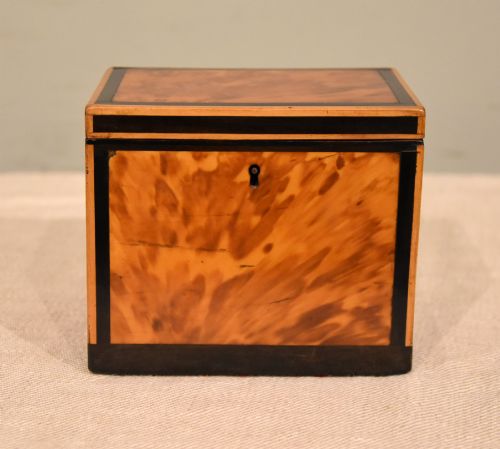


Tortoiseshell Tea Box
These tortoiseshell tea box examples bring genuine Georgian and Regency elegance into a room, offering tactile warmth and rich natural pattern.
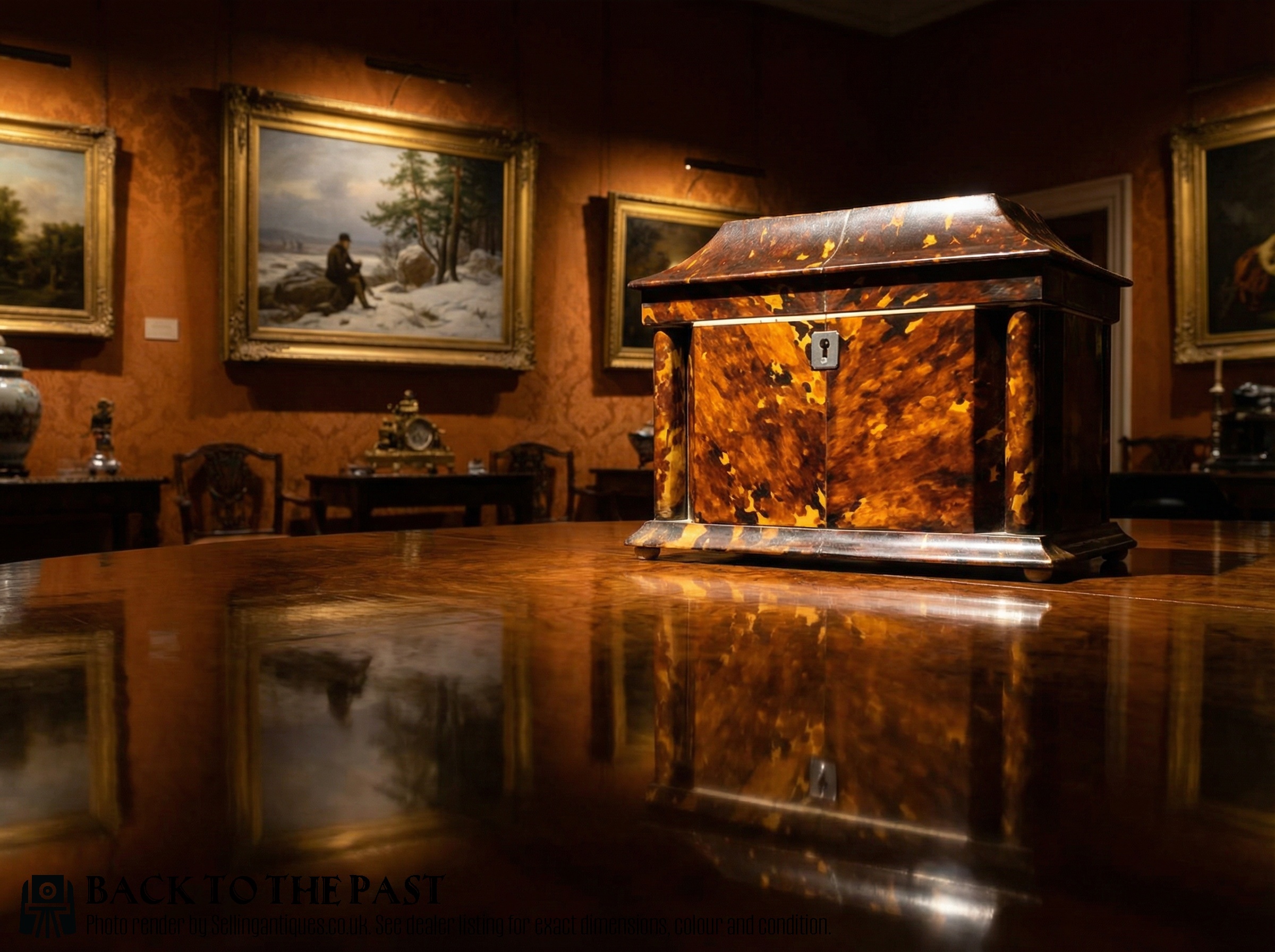
Tortoiseshell Tea Box
A tortoiseshell tea box represents a refined vessel created to store valuable tea leaves during the eighteenth and nineteenth centuries. The pieces found here span the Georgian, Regency, and Victorian periods, including French Napoleon III, French Restoration, and Dutch Continental styles.
Most examples take the form of tea caddies or tea caddy boxes, whilst related items such as a cutlery box or spoon box also appear. These objects often display geometric forms like decagonal, octagonal, or bow-fronted shapes.
Buyers frequently encounter single and double tea caddy variants, sometimes accompanied by internal cannisters or a sugar dish. The construction relies on natural tortoiseshell combined with secondary materials like wood and ebony.
How they were made
The makers constructed these pieces by applying thin plates of tortoiseshell over a rigid carcase of wood or ebonised wood. They secured the delicate shell using fine adhesives and pins, often pairing the translucent amber material with ebony framing.
Boulle technique appears in certain French examples, integrating tortoiseshell with brass inlay to create intricate decorative patterns across the surface.
Tortoiseshell Tea Box Retail Price Guide 2026
Typical asking prices for tortoiseshell tea box among the pieces listed under this phrase on Sellingantiques today, from the lower quarter to the upper quarter. They describe what is for sale here now, not the wider market.
Miniature double tea caddies exist solely to prove that Regency artisans enjoyed making big things very, very small.
What varies in quality
The depth and warmth of the natural tortoiseshell figure set the standard for visual appeal, with blonde variations and rich mottled patterns commanding attention. Superior execution shows seamless application of the shell plates across complex geometric angles like decagonal or bow-fronted shapes.
The integration of secondary materials defines the tier of craftsmanship, where substantial silver mounts or precise metal stringing elevate an object beyond basic veneering. Internal completeness, such as surviving inner cannisters or matching sugar dishes, separates standard boxes from exceptional examples.
The Tortoiseshell Tea Box Glossary
- Tortoiseshell
- A natural material obtained from the shell of certain marine turtles, prized for its translucent amber and dark brown mottled patterns. Makers heated and pressed thin plates of this material to fit wooden box structures.
- Caddy
- A small container or box originally designed for storing loose tea leaves. The term derives from catty, a traditional Chinese unit of weight.
- Boulle
- A decorative marquetry technique associated with French furniture and boxes, combining tortoiseshell and brass. It creates a rich contrast of metallic gleam against dark organic patterns.
- Escutcheon
- A small protective plate surrounding a keyhole, frequently fashioned from brass or silver on these containers. It prevents the key from damaging the surrounding tortoiseshell surface.
- Cannister
- A small internal container fitted within the main box to separate different varieties of tea leaves. These inserts often feature matching tortoiseshell or metal lids.
Tortoiseshell Tea Box: Frequently Asked Questions
What were tortoiseshell tea boxes used for?
These containers stored expensive loose tea leaves safely under lock and key in wealthy households. Tea was a precious commodity in the Georgian and Regency periods, requiring secure storage.
Servants or the master of the house kept the key to control access to the valuable leaves. The inner compartments allowed different blends to be kept separate within the same box.
How do I date a tortoiseshell tea box?
Dating relies on observing the overall architectural form, the profile of the box, and the accompanying hardware styles. Georgian and Regency pieces often display clean geometric lines like octagonal or bow-fronted shapes.
Later Victorian and Napoleon III examples introduce different decorative accents and French influences. Examining the construction methods and interior fittings helps confirm the period of origin.
How should I care for tortoiseshell?
Keep the box away from direct sunlight and extreme temperature fluctuations to prevent the natural material from warping or drying out. Gentle dusting with a soft, dry cloth is sufficient for routine maintenance.
Avoid using harsh chemical polishes or excessive moisture on the shell and metal mounts. Maintaining a stable indoor environment preserves the integrity of the adhesive beneath the tortoiseshell.
Why are some boxes called double tea caddies?
Double tea caddies contain two separate internal compartments designed to hold two different types of tea, such as green and black. A central mixing section sometimes sits between the two lidded cannisters.
This layout allowed hosts to blend teas to individual taste directly at the table. The exterior form often mirrors this internal division with symmetrical bow-front or multi-sided designs.