


Tortoiseshell Caddy Box
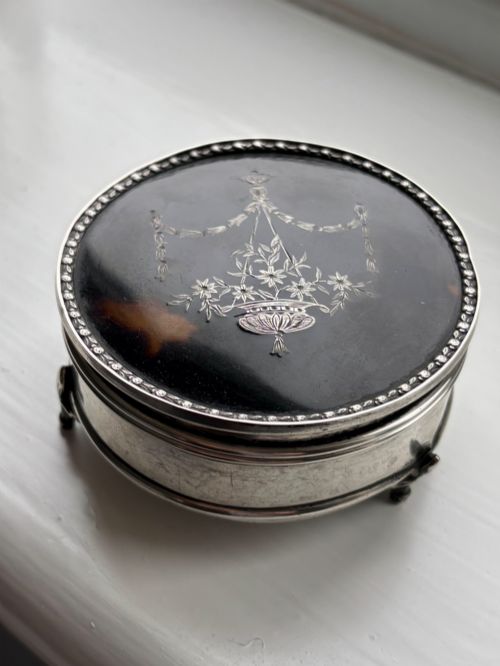
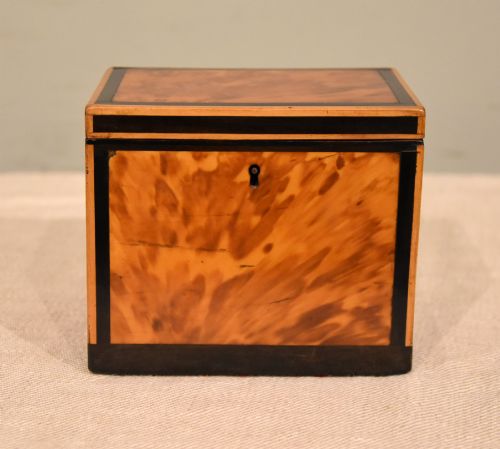
These tortoiseshell caddy box pieces are small domestic chests shaped for tea and dressing tables, offering warmth and pattern that catch the eye instantly.
Tortoiseshell Caddy Box
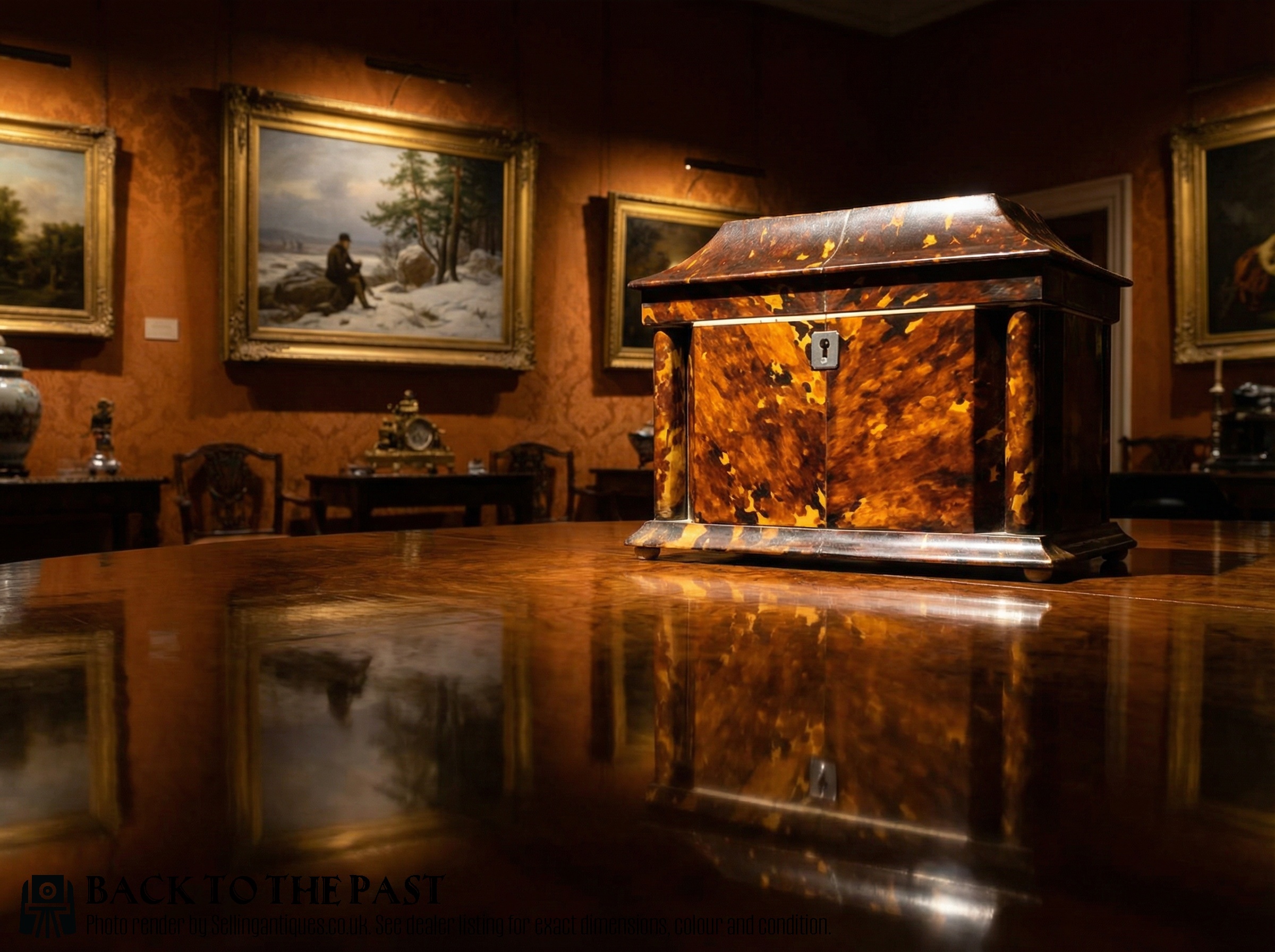
A tortoiseshell caddy box is a lidded container designed originally to store tea or dressing table items safely. These items emerge mostly from Georgian, Regency, and Victorian workshops.
The form appears as tea caddies, double tea-caddies, miniature caddies, and dressing table boxes. Octagonal, decagonal, bow-fronted, and rectangular shapes recur across the selection.
Buyers meet examples fashioned from blonde tortoiseshell, faux tortoiseshell, and tortoiseshell combined with ebony, silver, or bone. French Napoleon III and Dutch Continental variants also appear.
How they were made
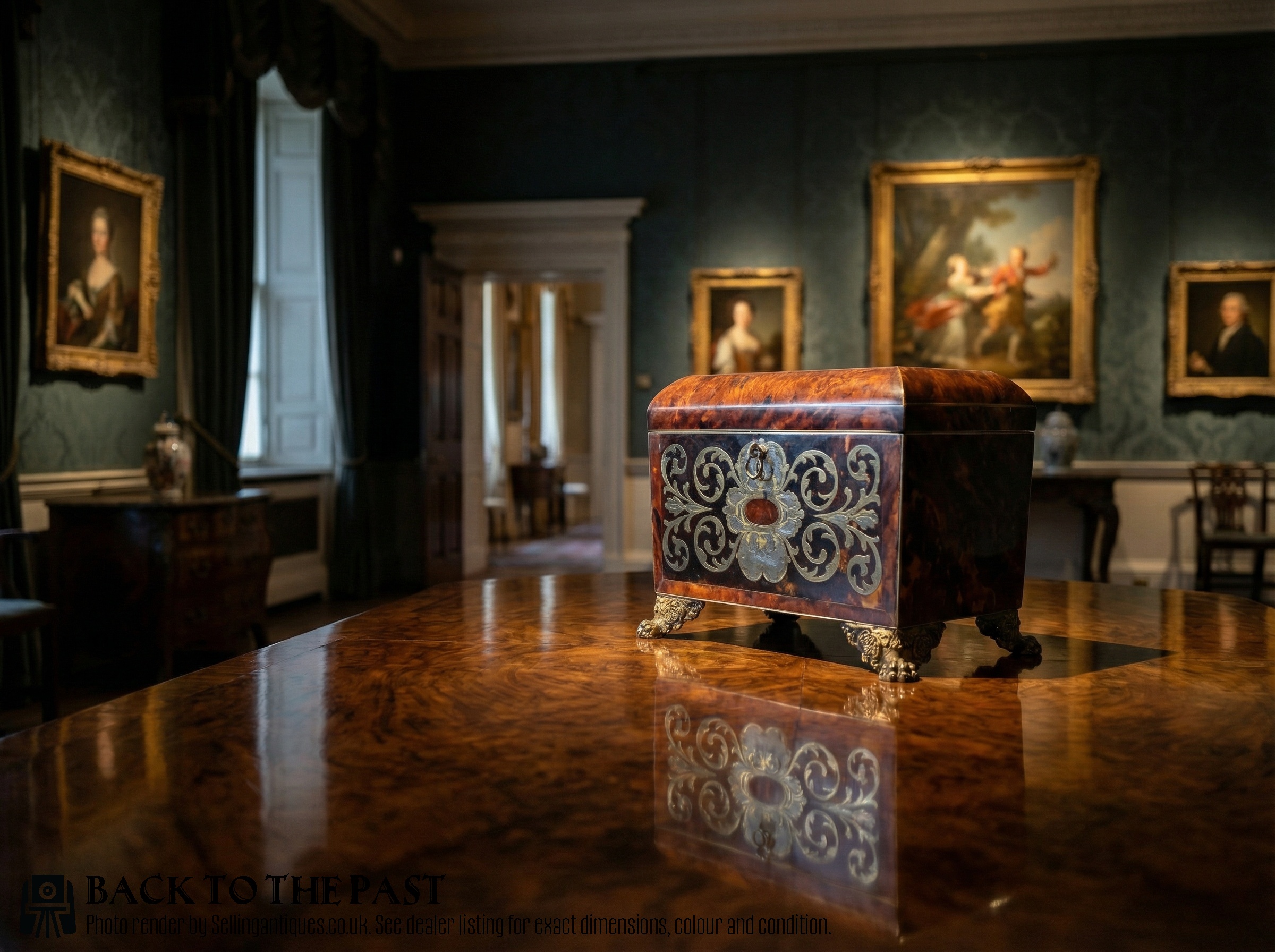
Maker's workshops built these boxes using thin plates of tortoiseshell applied over a wooden carcass. Brass stringing, silver mounts, and bone details frequently accentuate the exterior.
Interiors often feature fitted compartments, inner cannisters, and sometimes a central sugar dish. Boullework inlay incorporates brass and tortoiseshell patterns into the wooden surfaces.
Miniature caddies exist because Regency makers occasionally fashioned tiny versions to display their skill in tight, demanding geometries.
What varies in quality
Quality rests upon the richness of the shell's natural mottling and the precision of the underlying woodwork. Superior pieces display seamless application of the shell plates over complex shapes like bow-fronts and decagonal sides.
The survival of original internal fittings, keys, and contrasting veneers dictates distinction within this group. Finer boxes maintain crisp metal stringing and secure hinges without distortion to the natural material.
Ollivant & Botsford
The Tortoiseshell Caddy Box Glossary
- Tortoiseshell
- A mottled brown and amber material derived from the shell of certain marine turtles, historically utilised for decorative box veneers. It provides a translucent quality when laid over pale metallic foils.
- Boulle
- An elaborate form of marquetry utilising brass and tortoiseshell inlay developed in seventeenth-century France. This technique creates contrasting metallic patterns across the box surfaces.
- Tea Caddy
- A small lidded container designed to hold loose tea leaves securely. Early forms included internal cannisters and locking lids.
- Cannister
- A small vessel fitted inside a tea caddy to separate different varieties of tea leaves. These containers usually possess their own matching lids.
Tortoiseshell Caddy Box: Frequently Asked Questions
What were tortoiseshell caddies used for?
These boxes stored precious tea leaves securely under lock and key in affluent households.
Tea was an expensive commodity in Georgian and Regency times, requiring dedicated wooden and shell caddies to protect the leaves from dampness and theft.
How do I care for a tortoiseshell box?
Keep the box away from direct sunlight and heat sources to prevent the natural shell from warping or shrinking.
Apply a light touch of specialist wax occasionally to maintain the lustre of the wood and shell surfaces without sealing the material.
How can I tell a Regency caddy apart?
Regency examples frequently display distinct geometric shapes such as octagonal or bow-fronted silhouettes.
Cabinetmakers of this period favoured crisp lines and precise brass stringing over the more rounded forms seen in later Victorian boxes.