



Marquetry Tea Caddy Box
A marquetry tea caddy box holds dry leaves safely behind intricate wood patterns that display considerable craftsmanship from Georgian and Victorian parlours.
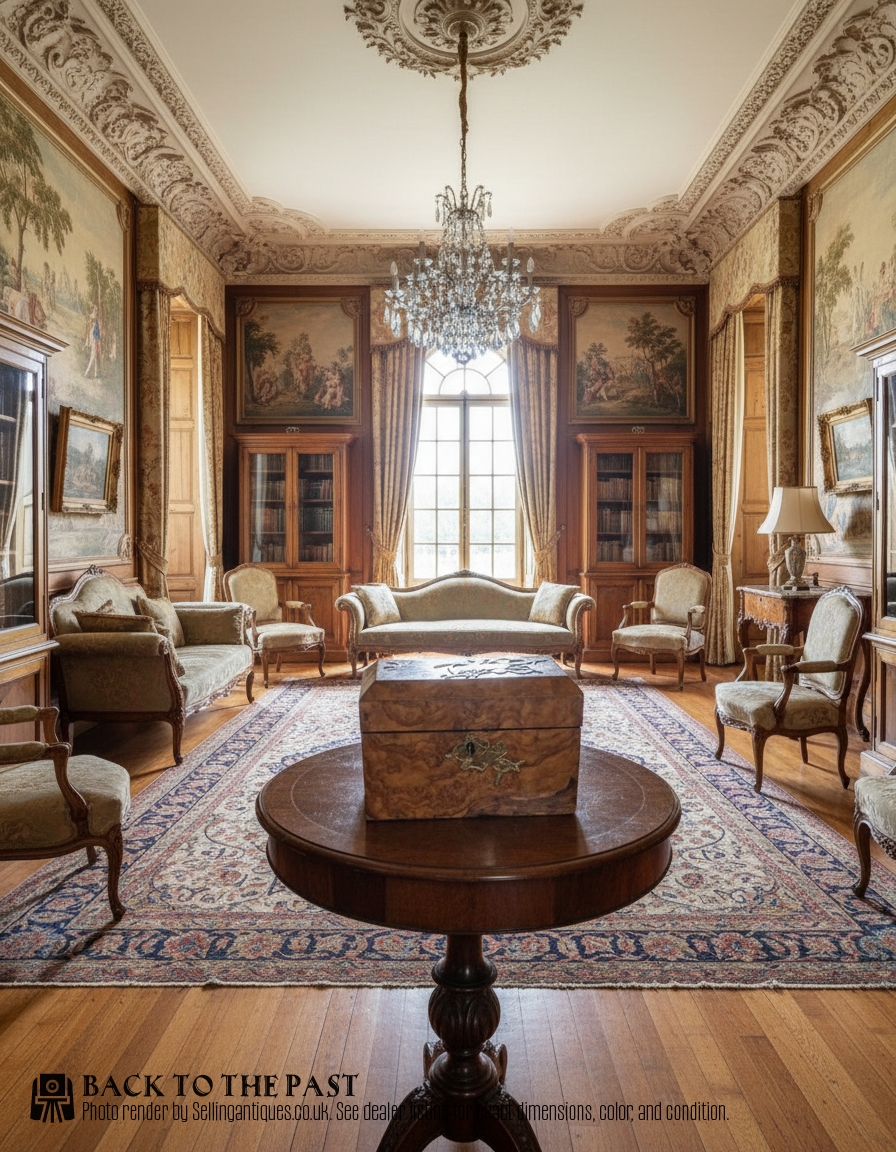
Marquetry Tea Caddy Box
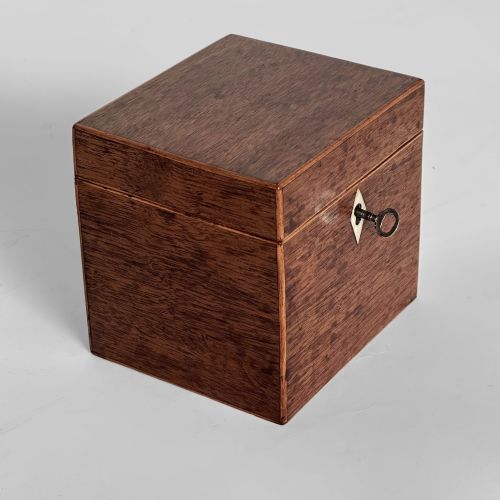
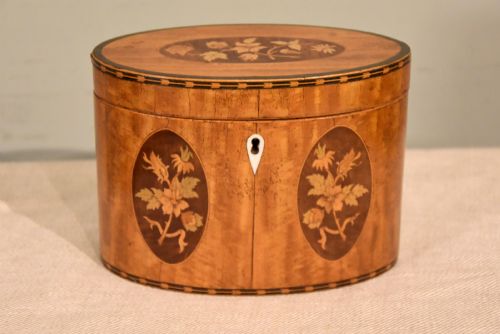
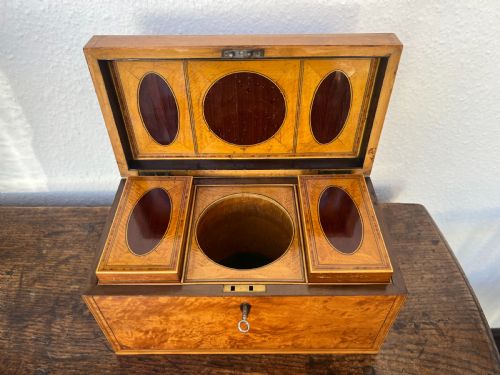
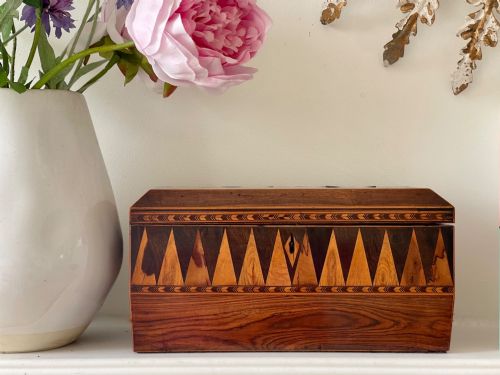
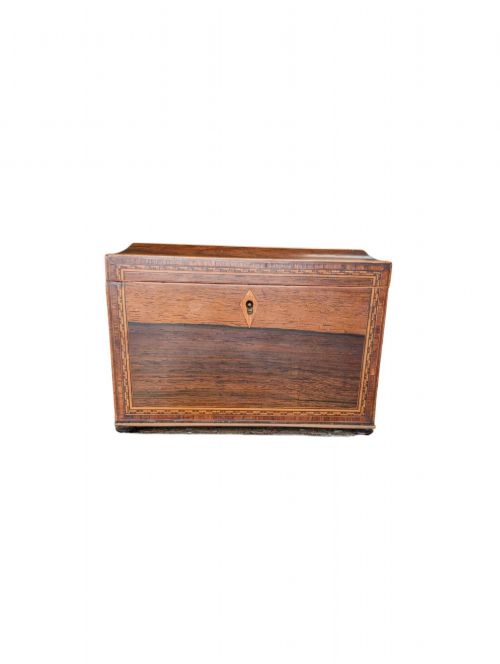
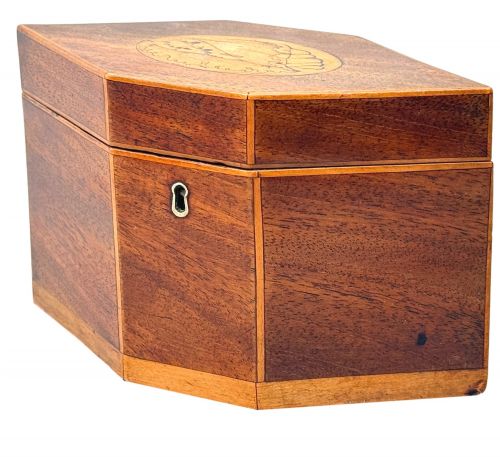
A marquetry tea caddy box is a small lidded container designed to hold dried leaves securely, often featuring compartmentalised interiors and sometimes fitted with glass sugar dishes or inner canisters. Buyers searching for a marquetry tea caddy box encounter containers shaped as ovals, octagons, cubes, hexagons, and sarcophagus forms.
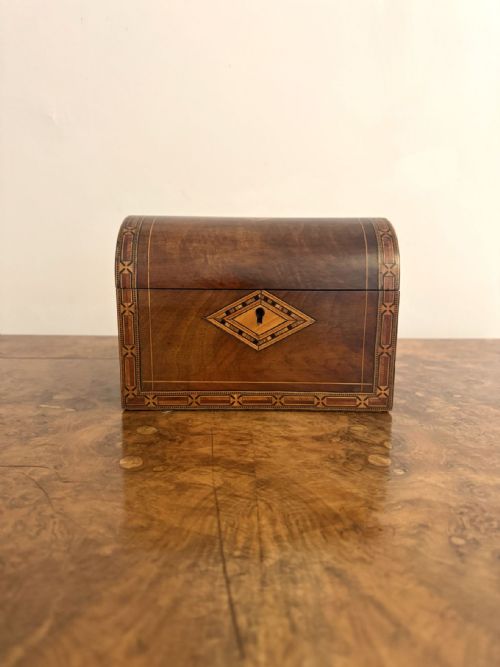
The pieces appearing on this page span the 18th century, Georgian era, 19th century, Regency period, and Victorian era. Examples range from simple geometric boxes to elaborate Tunbridge Ware and French boulle or tortoiseshell specimens.
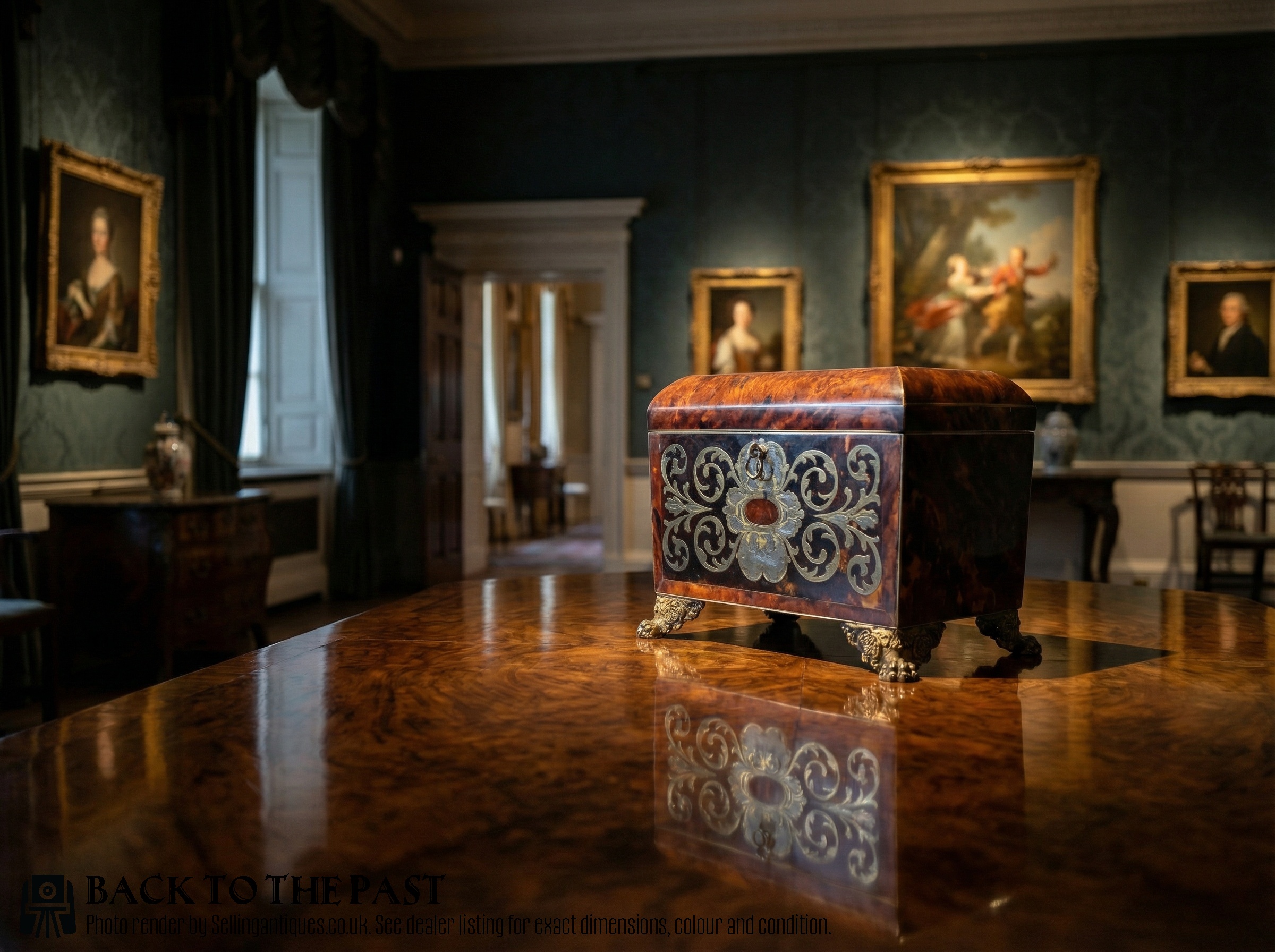
Materials and construction
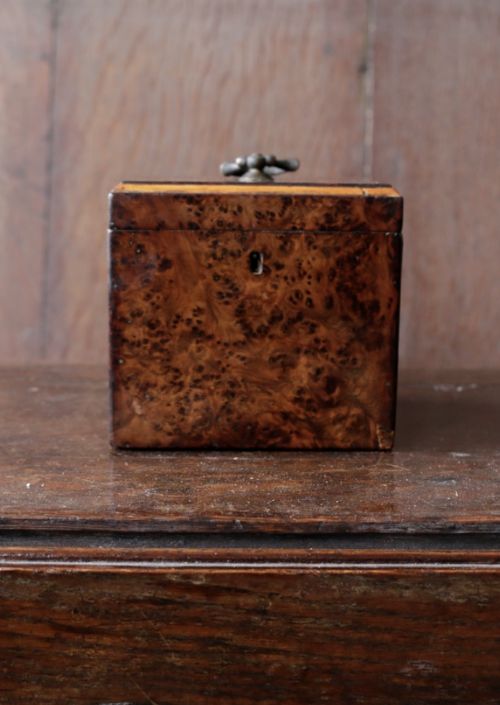
Maker workshops construct these vessels using foundational timbers like mahogany, rosewood, walnut, satinwood, harewood, partridge wood, yew, gonçalo alves, and amboyna. Surfaces receive decorative treatment through wood inlay, marquetry, parquetry, and Tunbridge inlay.
Detail work incorporates brass, bone, boxwood, mother-of-pearl, tortoise shell, and buelle, creating pictorial or geometric motifs such as butterflies, stars, and sunrays.
Judging quality
Quality rests upon the precision of the wood inlay and the selection of figured timbers such as burr yew, satinwood, and gonçalo alves. Finer examples display meticulous alignment in geometric parquetry and pictorial marquetry without gaps in the contrasting veneers.
Interior appointments also separate standard boxes from superior pieces, particularly those retaining original fitted compartments, inner canisters, keys, and functional locks.
Henry Hollamby
The Marquetry Tea Caddy Box Glossary
- Marquetry
- Decorative veneer work assembled in pictorial patterns using various coloured woods, metals, or shells. This technique creates complex surface imagery across box lids and panels.
- Tea caddy
- A container built specifically for storing tea leaves safely away from moisture and light. Early varieties often included internal partitions and locking lids.
- Teapoy
- A pedestal table fitted with a box top designed to hold tea canisters. These pieces served a central role in formal entertaining rooms.
- Tunbridge Ware
- Woodworking characterised by tiny mosaic tiles formed from differently coloured woods to create mosaic pictures. Originating in Kent, this technique adorned many Victorian boxes.
- Parquetry
- Geometric mosaic woodwork arranged in repeating patterns such as cubes or zigzags. It differs from marquetry by relying on regular geometric shapes rather than pictorial designs.
Marquetry Tea Caddy Box: Frequently Asked Questions
What is a marquetry tea caddy box?
A marquetry tea caddy box is a lidded wooden container decorated with patterned wood veneers, used historically to store expensive tea leaves under lock and key.
These boxes often contain fitted internal compartments and canisters to keep different tea varieties separated.
How do I date a tea caddy?
Dating relies upon timber selection, hardware style, and construction methods. Georgian examples frequently utilise mahogany and satinwood with shell or butterfly inlays, while Victorian pieces often feature walnut or rosewood with Tunbridge work.
Shape also indicates period, such as the distinctive sarcophagus forms popular during the Regency and George IV eras.
What is the difference between marquetry and parquetry?
Marquetry employs veneers cut into pictorial scenes, scrolls, or floral motifs using various tinted woods and materials. Parquetry constructs geometric, repeating patterns like cubes and diagonals from small uniform wood blocks.
Both techniques appear across these boxes alongside other inlays like brass and mother-of-pearl.
Where were these boxes used?
Tea caddies stood in the drawing rooms or parlours of wealthy homes where tea was an expensive commodity controlled by the head of the household. Because tea held high monetary value, the containers themselves featured secure locks and keys.
Today, they function as decorative accent pieces on tables or shelves and serve to store small personal items.