


Regency Wooden Tea Chest
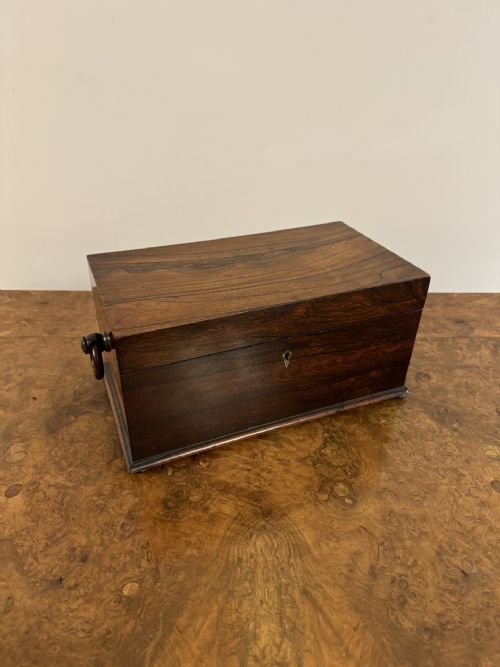
A regency wooden tea chest holds dry leaves securely while sitting on a drawing room table, offering a glimpse into domestic life.
Regency Wooden Tea Chest
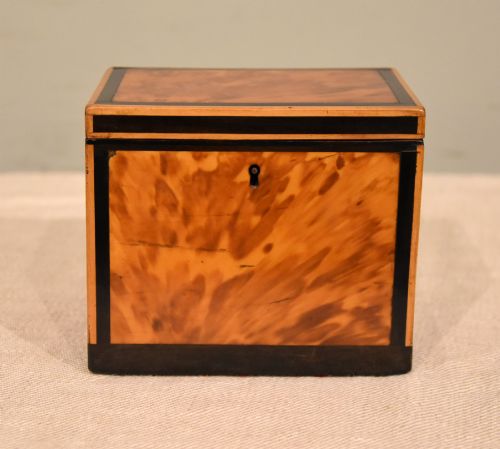
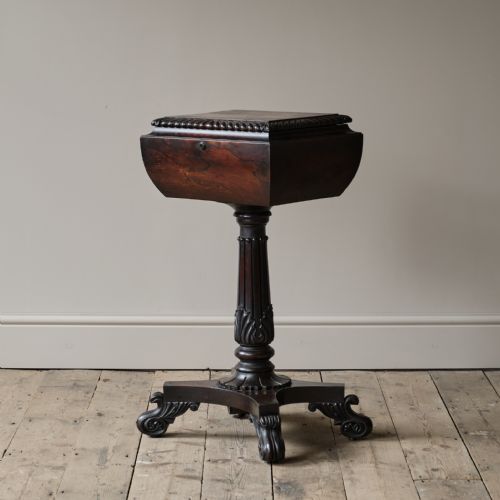
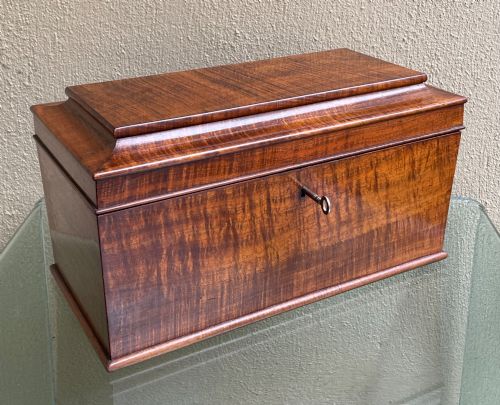
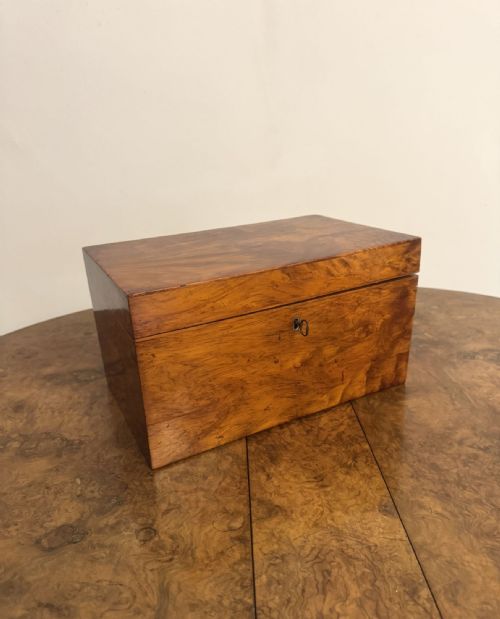
Buyers seeking a regency wooden tea chest encounter lidded boxes and sarcophagus-shaped caddies designed to store valuable leaves safely under lock and key. The listings on this page span the Regency, Georgian, and Victorian periods, with pieces appearing in forms such as tea caddies, teapoys, and miniature sideboards.
Mahogany and rosewood dominate the selection, often accompanied by exotic veneers like satinwood, amboyna, and burr yew-wood. These specimens range from modest tabletop receptacles to larger standing teapoys fitted with interior compartments and mixing bowls.
Materials and construction methods
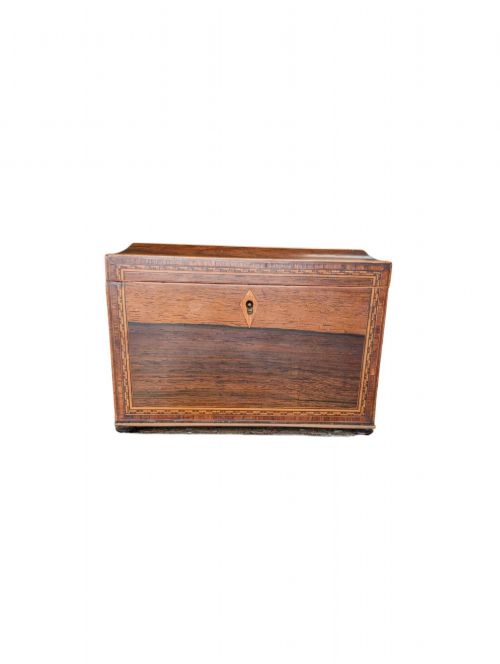
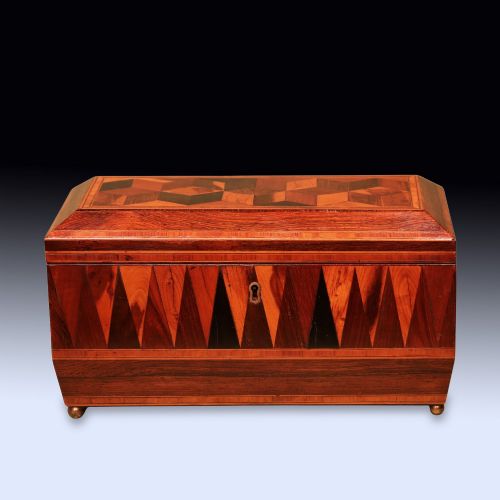
Cabinetmakers constructed these chests using solid timber frames overlaid with fine veneers, applying brass inlay, parquetry, and marquetry to create decorative geometric or floral patterns. Boxwood, ebony, and bone frequently supply contrasting stringing and escutcheons around the keyholes.
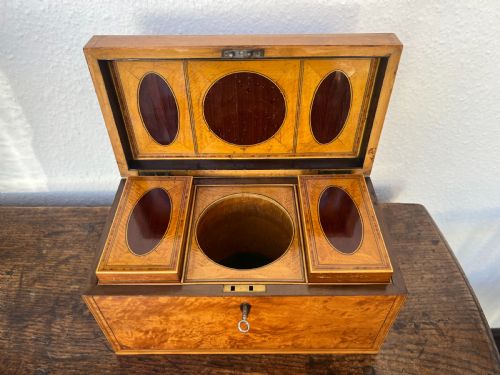
Interior architecture typically includes lidded canisters for different leaf varieties alongside glass mixing bowls and slender wooden sticks. Linings of foil or paper preserve the aroma of the contents, while brass lion mask handles allow for lifting the heavy wooden bodies.
Some caddies include tiny internal compartments specifically sized for locking away expensive sugar loaves alongside the tea.
Distinguishing quality across examples
Evaluation rests upon the selection of timber figures, such as flame mahogany or burr yew-wood, paired with the precision of brass stringing and inlay work. The crispness of carved details like paw feet or sarcophagus curves separates standard boxes from higher-grade pieces.
Completeness of internal fittings, including original glass bowls, mixing sticks, and working locks with keys, elevates an example. The harmony between exterior veneers and internal compartment lids indicates the original maker's skill.
The Regency Wooden Tea Chest Glossary
- Sarcophagus form
- A box design featuring a steep, sloping lid and a rectangular or faceted body reminiscent of a stone coffin, popular during the Regency era.
- Teapoy
- A freestanding table or caddy supported on a central pillar or legs, designed to hold tea canisters and a mixing bowl.
- Parquetry
- A geometric mosaic of wood pieces used for surface decoration, frequently employing contrasting timbers like satinwood and rosewood.
- Mixing bowl
- A glass vessel housed inside the caddy, used for blending different loose leaf teas before brewing.
Regency Wooden Tea Chest: Frequently Asked Questions
What is the difference between a tea caddy and a teapoy?
A tea caddy is a lidded box designed to sit upon a table or sideboard for storing loose leaves.
A teapoy is a larger version supported on its own stand or pedestal, sometimes functioning as a small piece of furniture in the drawing room.
How were these wooden chests used originally?
Tea was a costly commodity in the Georgian and Regency periods, requiring secure storage under lock and key to prevent pilfering by household staff.
The containers kept different varieties of leaves dry and aromatic, while the central glass bowl served for combining the blends.
How do I identify a Regency period piece?
Regency examples frequently display classical architectural motifs, brass inlay, and exotic timbers such as rosewood and coromandel wood.
Forms lean towards the sarcophagus shape with heavy brass ring handles and lion mask mounts.
What woods are common in these boxes?
Mahogany and rosewood appear most frequently, utilised both as solid timbers and as decorative surface veneers.
Cabinetmakers also employed satinwood, yew-wood, amboyna, and ebony for contrast and inlay work.