




Decorative Walnut Box
A decorative walnut box brings warmth and refined timber grain to a room, serving as a handsome home for letters, jewellery or keepsakes.
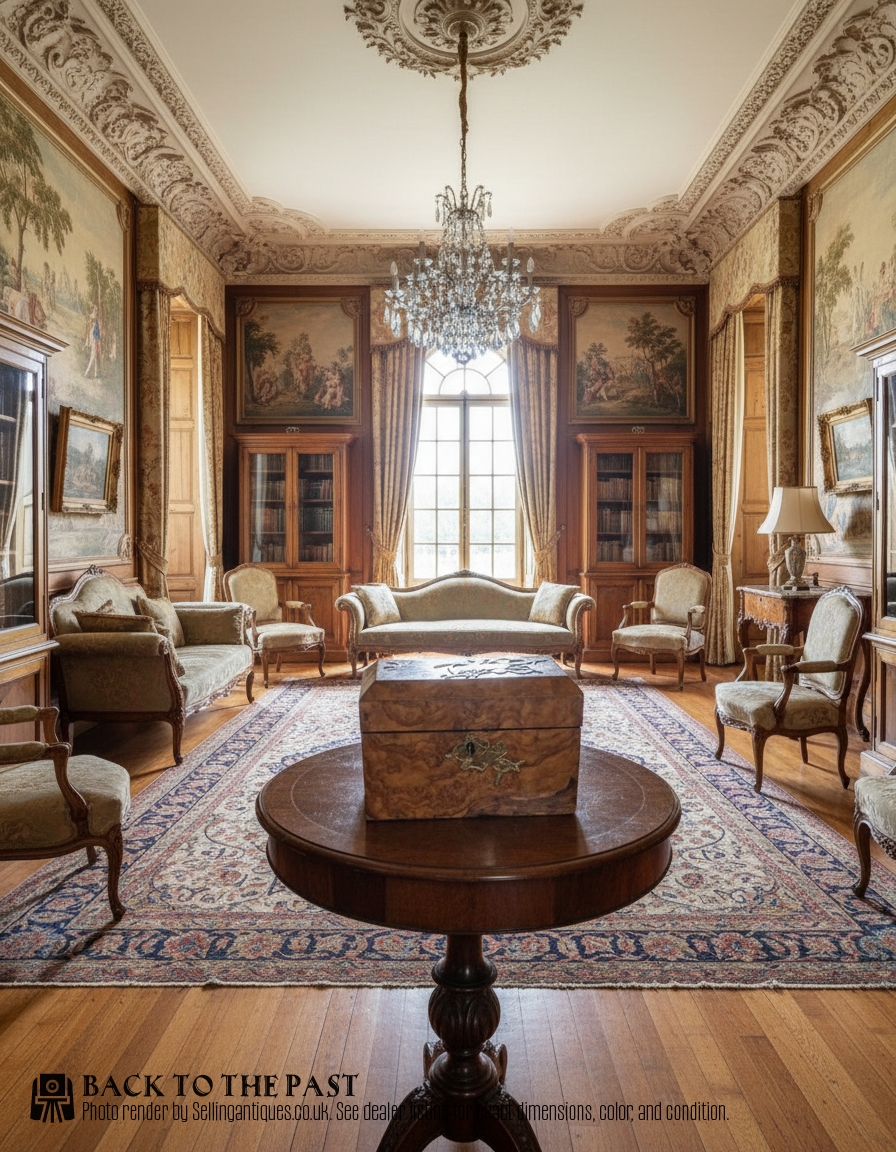
Decorative Walnut Box
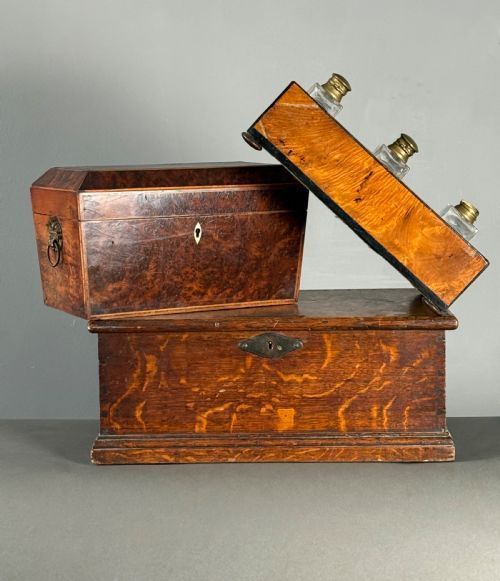
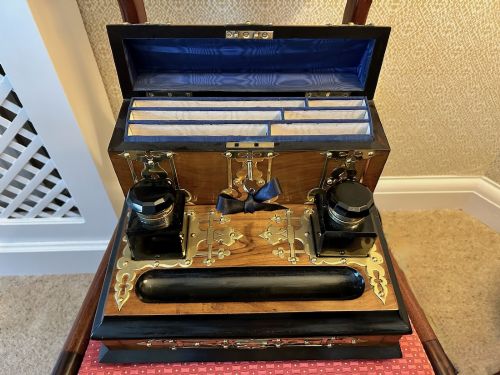
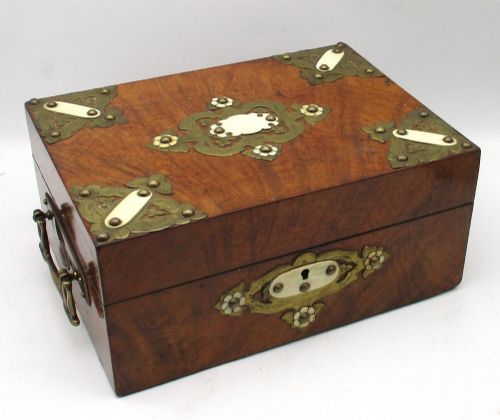
A decorative walnut box encompasses a wide variety of functional containers spanning multiple centuries, from austere seventeenth-century cabinets to elaborate Victorian caskets. The selection on this page leans heavily toward the nineteenth century and the Victorian era, offering forms designed to organise personal valuables, stationery or tea. Buyers encounter writing slopes, tea caddies, sewing cases and music boxes fashioned from this durable timber.
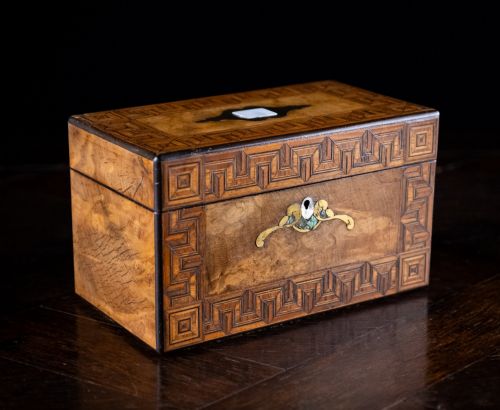
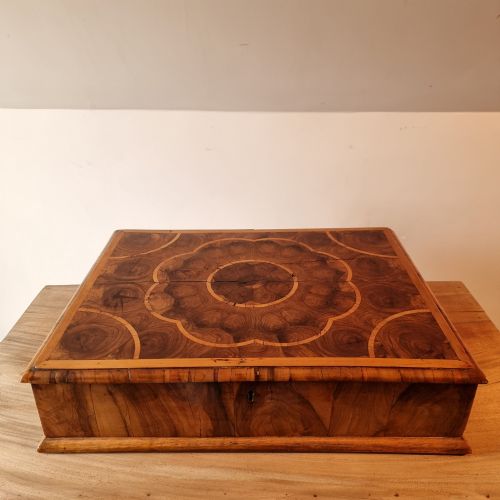
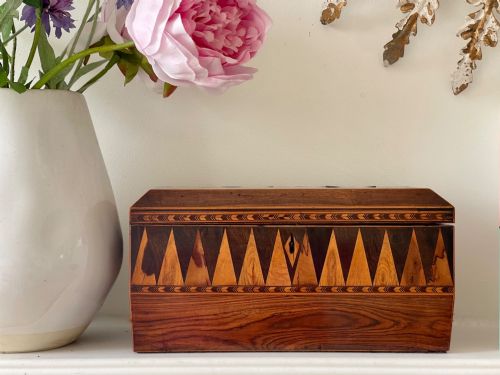
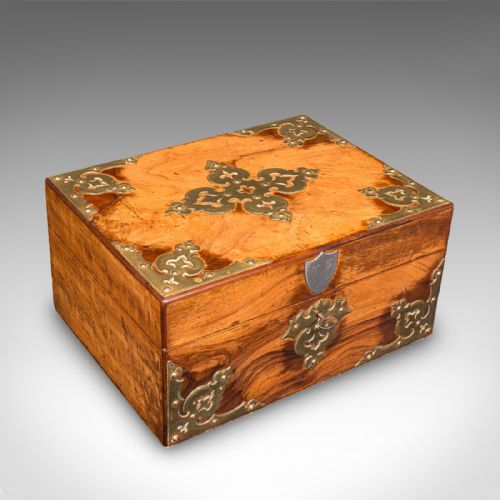
Earlier examples include seventeenth-century lace boxes and floral marquetry caskets which display rich grain patterns and deeper tones. Georgian pieces bring simpler geometric lines or early Tunbridge Ware detailing, while Victorian iterations often feature contrasting stringing, brass mounts and fitted interiors. Each form reflects the domestic habits of its period, scaling from pocket snuff containers to substantial table caskets.
Materials and Construction Techniques
Makers utilised solid walnut and decorative veneers like burr walnut, laid over secondary woods to achieve rich surface patterns. The timber often receives enhancement from boxwood, bone, brass and mother of pearl inlay, creating geometric parquetry or floral marquetry designs. Tunbridge Ware examples incorporate thousands of tiny coloured wood blocks to form intricate mosaic pictures on the lids.
Construction relies on precise joinery, with dovetail joints commonly securing the main carcase of tea caddies and writing slopes. Brass binding, escutcheons and carrying handles reinforce the corners and lids of travel-intended pieces. Interiors frequently feature velvet or silk linings alongside fitted compartments for bottles, nibs or jewellery.
Some nineteenth-century versions conceal secret drawers behind false bottoms, offering a discreet hiding spot for love letters or missing keys.
Assessing Craftsmanship and Condition
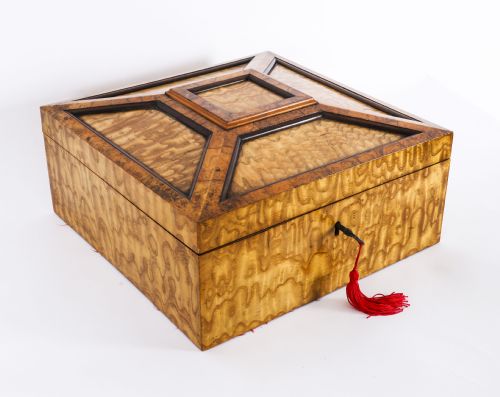
Quality rests primarily in the selection of the walnut veneer and the precision of the decorative inlay. Burr walnut with a deep, undulating grain commands attention above plain stock, especially when matched symmetrically across a lid. The tightness of parquetry and the absence of lifting brass or missing mother of pearl elements signal superior workshop standards.
The integrity of the interior fittings and original working locks with matching keys elevate an object's standing. Finer pieces retain clean silk linings, intact compartmentalised trays and sound hinges that allow the lid to rest correctly without strain. Signs of clumsy past repairs or replacement hardware diminish the appeal for discerning collectors.
Gill & Reigate
The Decorative Walnut Box Glossary
- Burr walnut
- A highly figured wood grain obtained from the growths or burrs on walnut trees, prized for its swirling, marbled patterns. It creates a striking visual texture on box lids.
- Tea caddy
- A container designed to store loose tea leaves securely, often featuring internal lidded compartments. They frequently include glass mixing bowls or foil linings.
- Writing slope
- A portable desk with a hinged, slanted writing surface that folds flat, opening to reveal compartments for stationery, inkwells and pens. Many incorporate secret drawers beneath the writing flap.
- Parquetry
- A geometric mosaic of wood pieces inlaid into a surface to form patterns such as cubes or stripes. It contrasts different timber tones for decorative effect.
- Marquetry
- The art of applying thin veneers of different woods, bone or mother of pearl to form pictorial or floral designs on a carcase. This technique defines many formal nineteenth-century caskets.
Decorative Walnut Box: Frequently Asked Questions
How do I date a decorative walnut box?
Dating relies on observing construction methods, timber choices, hardware styles and interior layouts. Seventeenth and eighteenth-century pieces often display hand-cut dovetails and simpler, thicker carcases.
Victorian examples frequently introduce complex machinery-cut veneers, elaborate brass escutcheons and varied internal velvet or leather fittings. Comparing the lock type and hinge style against known period examples helps narrow the decade of manufacture.
What were tea caddies used for?
Tea caddies served as secure storage vessels for expensive tea leaves during periods when tea was a heavily taxed luxury commodity. They typically featured a lock to prevent servants or guests from accessing the valuable contents.
Inside, twin compartments kept black and green teas separate, often alongside a central well for blending.
How should I clean a walnut surface?
Maintenance requires gentle dusting with a soft, dry lint-free cloth to remove surface particles without scratching the aged polish. Avoid modern liquid polishes or silicone sprays, which build up residue and attract dust.
Period furniture wax applied sparingly once or twice a year helps nourish the dry timber and maintain a soft sheen.
What is Tunbridge Ware?
Tunbridge Ware refers to woodworking originating from Tunbridge Wells, characterised by mosaic designs built from thousands of tiny wood blocks. Artisans arranged these naturally coloured woods to create realistic floral motifs or geometric borders on box lids.
Victorian ladies prized these trinket boxes and writing desks for their remarkable miniature detail.