
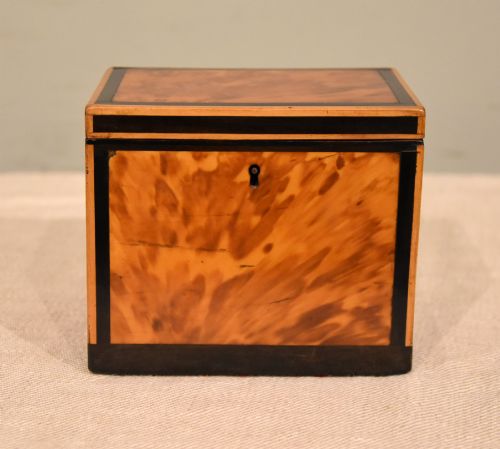


Tortoiseshell Tea Chest
A tortoiseshell tea chest is a treasured container combining organic shell veneer with precious metals, offering collectors a glimpse into Georgian and Regency refinement.
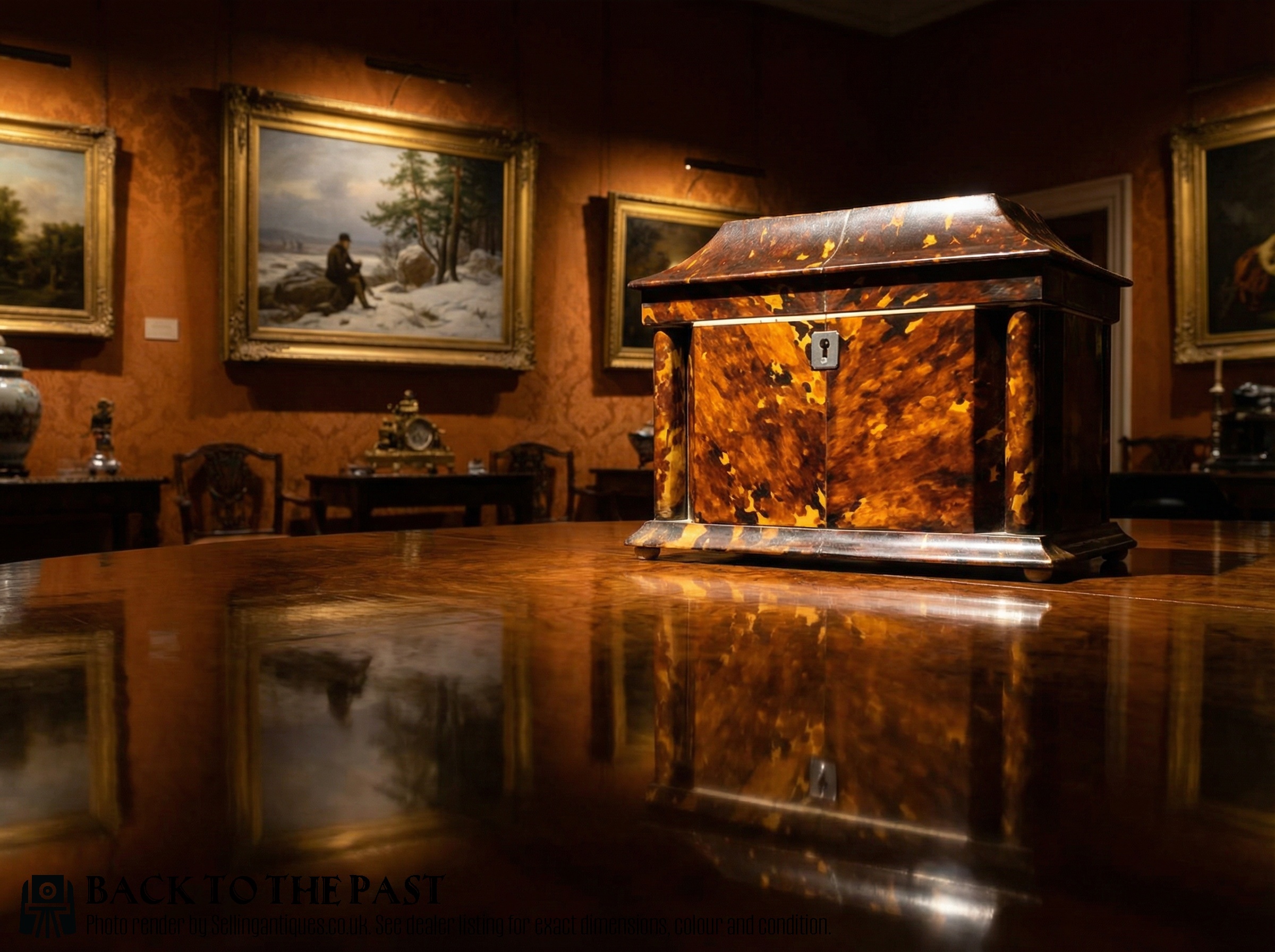
Tortoiseshell Tea Chest
A tortoiseshell tea chest stands as a sophisticated receptacle designed originally to protect expensive tea leaves under lock and key. These pieces appear most frequently in Georgian and Regency forms, showcasing characteristic geometric proportions and hinged lids.
Collectors encounter tea chests spanning from the mid-eighteenth century through the Victorian era, including notable French Napoleon III and French Restoration examples. The selection ranges from single and double caddies to miniature pairs and elaborate fitted boxes complete with interior cannisters and sugar dishes.
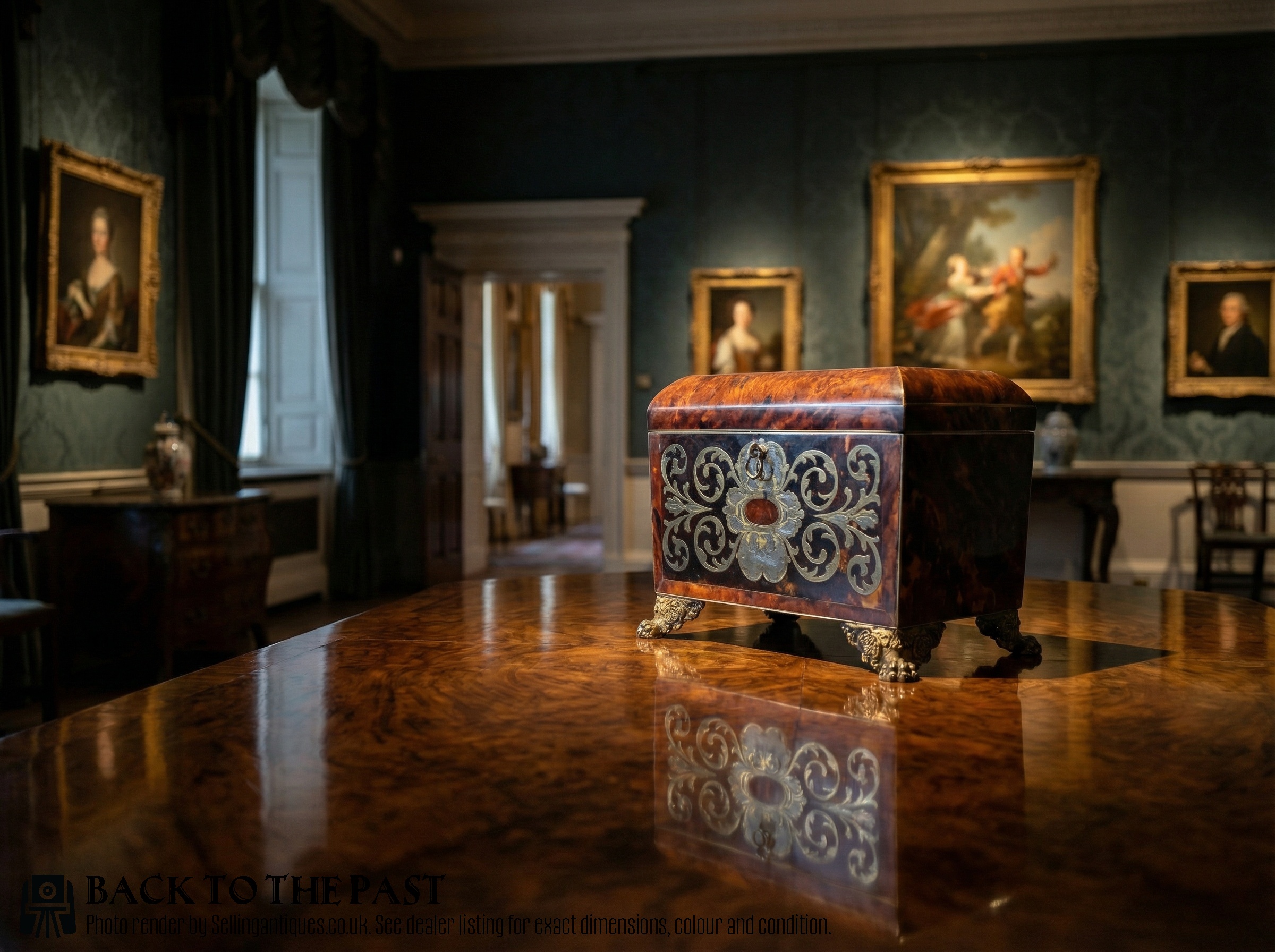
How they were made
Makers applied delicate tortoiseshell veneer over a supportive wooden carcase, frequently incorporating ebonised wood or ebony to frame the translucent panels. Brass, gilt metal and silver mounts reinforce the structural edges and provide escutcheons for working locks.
Interiors often utilise bone for delicate knob fittings or subtle stringing details, while complex boullework combines tortoiseshell with brass inlay in the French manner. Metal components such as silver hallmarks help anchor the production dates securely in time.
Tortoiseshell Tea Chest Retail Price Guide 2026
Typical asking prices for tortoiseshell tea chest among the pieces listed under this phrase on Sellingantiques today, from the lower quarter to the upper quarter. They describe what is for sale here now, not the wider market.
A few miniature chests exist purely to tease the eye, shrinking grand architectural tea caddies down to pocket-sized proportions.
What varies in quality
The sophistication of the silhouette defines the upper tier of pieces, distinguishing simple rectangular boxes from decagonal, octagonal and bow-fronted masterpieces. Precision in the application of tortoiseshell veneer and the crispness of brass or silver mounts indicate superior workshop standards.
The Tortoiseshell Tea Chest Glossary
- Tortoiseshell
- A mottled brown and amber material derived from the shell of certain marine turtles, prized for its translucent warmth. It was traditionally heated and pressed over a wooden foundation.
- Boulle
- An elaborate marquetry technique associated with French furniture, combining tortoiseshell and brass inlay. It creates a striking contrast of golden metal against dark organic shell.
- Cannister
- A lidded interior container designed to hold loose tea leaves safely inside the main chest. Multiple cannisters allowed different varieties of tea to be stored securely.
- Escutcheon
- A protective plate surrounding the keyhole of a tea chest, usually cast in brass, silver or gilt metal. It prevents the tortoiseshell from fracturing around the lock mechanism.
- Stringing
- A narrow line of contrasting inlay used to outline the geometric panels of a box. This technique highlights the crisp angles of Georgian and Regency carcases.
Tortoiseshell Tea Chest: Frequently Asked Questions
How do I date a tea chest?
Dating relies on the combination of architectural outline, secondary woods, and decorative mounts such as silver hallmarks or brass stringing. Georgian and Regency examples often feature crisp geometric forms, whereas later Victorian pieces incorporate different stylistic influences.
Examining the interior construction and lock mechanism provides further clues regarding the manufacturing period.
Were these boxes used for storage?
Yes, they were specifically manufactured to store precious dry tea leaves away from moisture and light. Because tea was an expensive commodity, the boxes were fitted with locks to restrict access.
Many also accommodated interior cannisters and sugar dishes for serving convenience.
How do I care for tortoiseshell?
Tortoiseshell requires stable environmental conditions away from direct sunlight and extreme humidity to prevent warping or shrinkage of the veneer. Gentle dusting with a dry microfibre cloth maintains the natural lustre.
Avoid chemical polishes and excessive moisture which can damage both the organic shell and the underlying wood.
What styles are common?
The listings demonstrate strong Georgian and Regency sensibilities alongside French Napoleon III and French Restoration aesthetics. Common architectural shapes include octagonal, decagonal and bow-fronted profiles.
Maker techniques also range from plain tortoiseshell panels to intricate boullework and contrasting ebony frames.