




Regency Lockable Tea Box
A regency lockable tea box is a secure timber caddy designed to preserve valuable leaf tea under lock and key.
Regency Lockable Tea Box
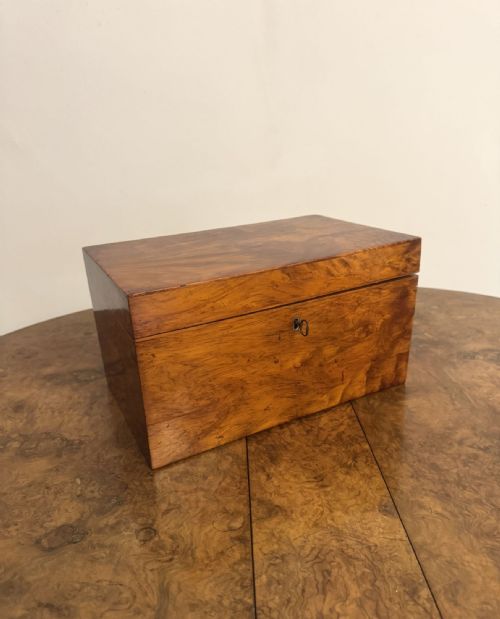
A regency lockable tea box takes the form of a lidded wooden container fashioned during the nineteenth, Georgian, and Regency periods. These domestic objects guarded expensive dry tea leaves from household servants and guests when tea was a luxury commodity.
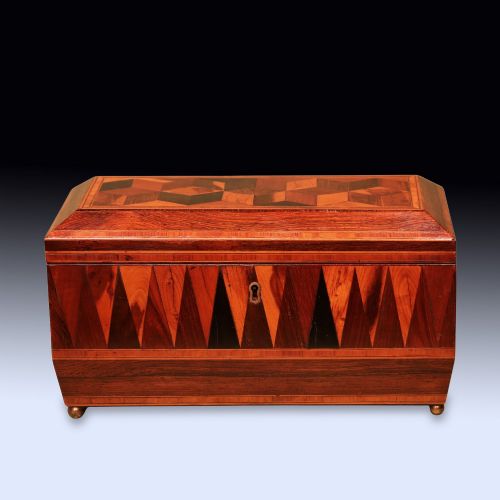
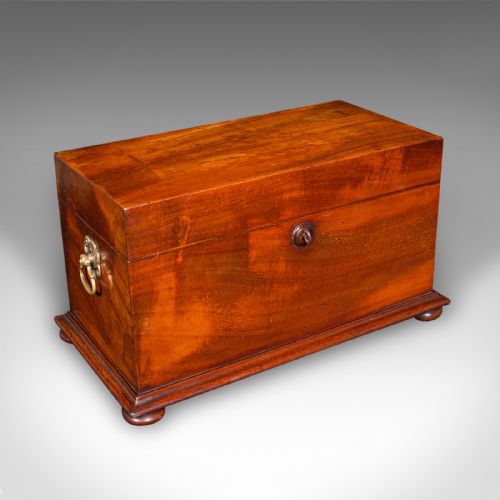
The most common examples on this page are rosewood and mahogany caddies shaped as sarcophagi or oblong boxes. Many incorporate internal compartments, mixing glasses, and functioning locks with keys.
Origins span English workshops alongside French influence, with dates centring around eighteen-twenty. The selection bridges late George III through to William IV and early Victorian eras.
How they were made
Cabinetmakers utilised dense tropical hardwoods including rosewood and mahogany as foundational carcasses for these boxes. Finer pieces employ elaborate veneers of amboyna, burr maple, and gonçalo alves over solid timbers.
Decoration relied on contrasting stringing, parquetry, and marquetry patterns using boxwood and ebony. Inlaid brass lines and brass lion mask handles accent the heaviest rosewood sarcophagus designs, whilst tortoiseshell surfaces demonstrate delicate shell work over protective metallic foils.
Tea was so strictly rationed by the master of the house that the housekeeper carried the caddy key on a ring pinned to her apron.
What varies in quality
The calibre of a regency lockable tea box rests upon the choice of timber and the precision of its decorative veneers. Dense burr maple, amboyna, and figured rosewood separate ambitious cabinet work from standard mahogany boxes.
Interior fittings dictate standing within the range, where intact glass mixing bowls, bone escutcheons, and original inner canisters elevate a piece. Superior examples retain working locks with matching keys and balanced proportions in sarcophagus or bow-fronted forms.
The Regency Lockable Tea Box Glossary
- Sarcophagus
- A box shape featuring a domed lid and tapered body reminiscent of classical stone tombs. This silhouette became the dominant fashion for luxury tea containers during the Regency period.
- Canister
- An internal lidded compartment designed to hold distinct varieties of loose tea leaves separate from the central sugar bowl or mixing glass.
- Parquetry
- A geometric mosaic of wood veneers arranged in repeating patterns across the exterior surfaces of the box. Cabinetmakers utilised contrasting tones of boxwood and ebony to achieve this effect.
- Escutcheon
- A small decorative plate surrounding the keyhole on the front of the box. These shields were frequently cast in brass or carved from bone.
- Amboyna
- A highly prized exotic burl timber exhibiting intricate swirling grain patterns. It appears as a decorative veneer on select high-end Regency caddies.
Regency Lockable Tea Box: Frequently Asked Questions
What is a regency lockable tea box?
A regency lockable tea box is a decorative wooden chest partitioned to store loose tea leaves securely. They were kept locked in the parlour to protect precious imported tea from theft.
Most surviving examples date from the early nineteenth century and feature hinged lids protecting internal lidded canisters or glass mixing bowls.
How do I use one today?
These boxes function well on sideboards or coffee tables as secure storage for jewellery, trinkets, or modern tea bags. Their compartmentalised interiors keep small household items neatly organised.
Placed away from direct sunlight and radiator heat, the polished rosewood or mahogany surfaces maintain their sheen without special treatment.
How do I tell Regency from Victorian pieces?
Regency caddies often display sharp architectural lines, brass stringing, and sarcophagus forms executed in rosewood or mahogany around eighteen-twenty. Detail work relies on neoclassical restraint and fine parquetry.
Victorian boxes tend to show heavier proportions and simpler veneering techniques. The woods shift subtly as tastes moved towards mid-century preferences.
Why do some have glass bowls inside?
The central glass vessel served as a mixing bowl where different tea grades were blended together before brewing. Alternatively, it held sugar lumps to sweeten the infused brew.
These removable bowls also accommodated loose leaf waste during the tea preparation ritual.