


Regency Period Storage Box
These regency period storage box finds are solid timber containers built to house tea, documents, games and wine.
Regency Period Storage Box
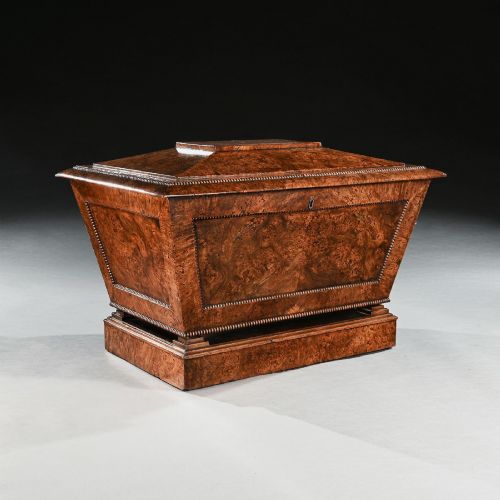
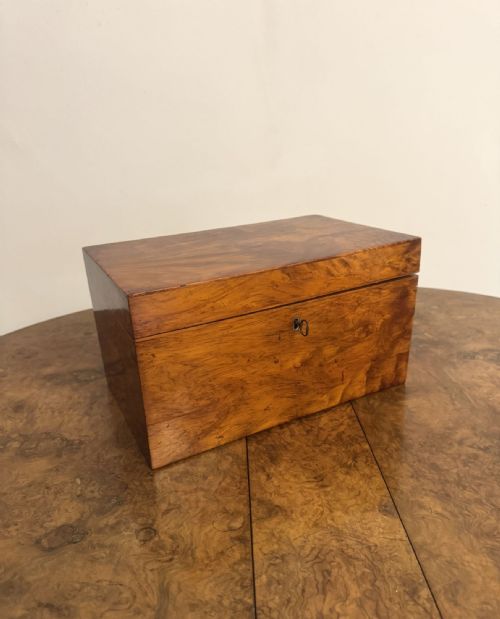
A regency period storage box encompasses tea caddies, desktop cabinets, sewing boxes, games boxes and wine coolers originating from the Regency, Georgian and nineteenth-century periods. The examples encountered on this page span table-top tea containers in rosewood and mahogany through to larger floor-standing cellarettes and ottomans.
Makers of the era designed these pieces for specific domestic uses, ranging from secure tea storage to the housing of correspondence and collector specimens. Tea caddies and work boxes dominate the smaller tabletop forms, whilst pollard oak, burr elm and mahogany form the larger cellar-level wine coolers.
How they were made
Cabinet makers utilised dense hardwoods including mahogany, rosewood, walnut, pollard oak and burr elm as the primary carcase materials. Artisans enhanced these surfaces with contrasting veneers of satinwood and ebony, alongside detailed brass inlay and brass studwork.
Decorative techniques recorded across the pieces include parquetry patterns, intricate penwork and tortoiseshell applied to timber foundations. Internal compartments often incorporate bone elements and leather linings tailored to the specific function of the box.
Miniature tortoiseshell tea caddies allow collectors to store exceptionally tiny leaves for very exclusive social calls.
What varies in quality
Quality rests upon the selection of timber figures, such as pollard oak or burr elm, and the precision of brass inlay work. Superior examples display careful matching of wood veneers across all visible surfaces.
The refinement of internal fittings, including bone escutcheons, partitioned tea compartments and original locking mechanisms, distinguishes the finer production from simpler utility pieces.
The Regency Period Storage Box Glossary
- Cellarette
- A lockable container designed for holding bottles of wine or spirits near the dining table. They frequently stand on legs or take substantial floor-standing forms during the Regency era.
- Tea Caddy
- A box or chest built specifically for storing loose tea leaves securely under lock and key. Many period examples feature internal lidded canisters and mixing bowls.
- Penwork
- A decorative surface technique involving fine ink drawing directly onto wood before sealing. This method creates detailed pictorial or geometric motifs on games boxes.
- Parquetry
- A geometric mosaic of wood pieces used to create patterned veneers on box lids and surfaces. It differs from marquetry by strictly employing angular or polygonal tile arrangements.
Regency Period Storage Box: Frequently Asked Questions
What were tea caddies used for?
Tea was an expensive commodity in the period, so these lidded boxes kept precious leaves secure under lock and key. They often featured internal compartments to separate green and black teas.
Servants typically prepared the brew in the parlour or dining room, using the caddy's internal bowls for blending leaves before steeping.
How do I care for rosewood?
Keep timber boxes away from direct sunlight and sudden radiator heat to prevent the rosewood veneers from drying and splitting. Natural wax applied sparingly helps maintain the polish.
Avoid excessive moisture on brass inlays and leather surfaces during routine dusting with a dry cloth.
Are these boxes original Regency pieces?
The listings comprise items originating from the Regency, Georgian and nineteenth-century periods, constructed from traditional timbers like mahogany and rosewood. Construction details such as hand-cut dovetails help confirm period authenticity.
Craftsmen of the era utilised specific hardwoods and brass decorative techniques consistent with early nineteenth-century workshops.
What is a cellarette?
A cellarette is a large storage vessel built to hold wine bottles safely within the dining room. Larger examples sit on the floor while smaller versions rest on sideboards.
Interior divisions kept glass bottles separated and protected during a meal when accessed by hosts.