



Boulle Marquetry Box
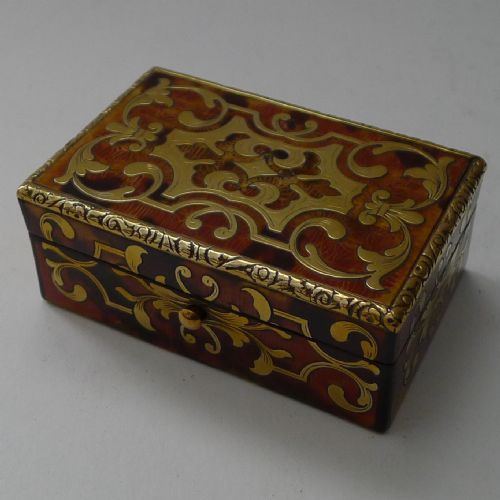
A boulle marquetry box brings together brass and tortoiseshell with striking contrast, offering a handsome place to store letters or jewellery.
Boulle Marquetry Box
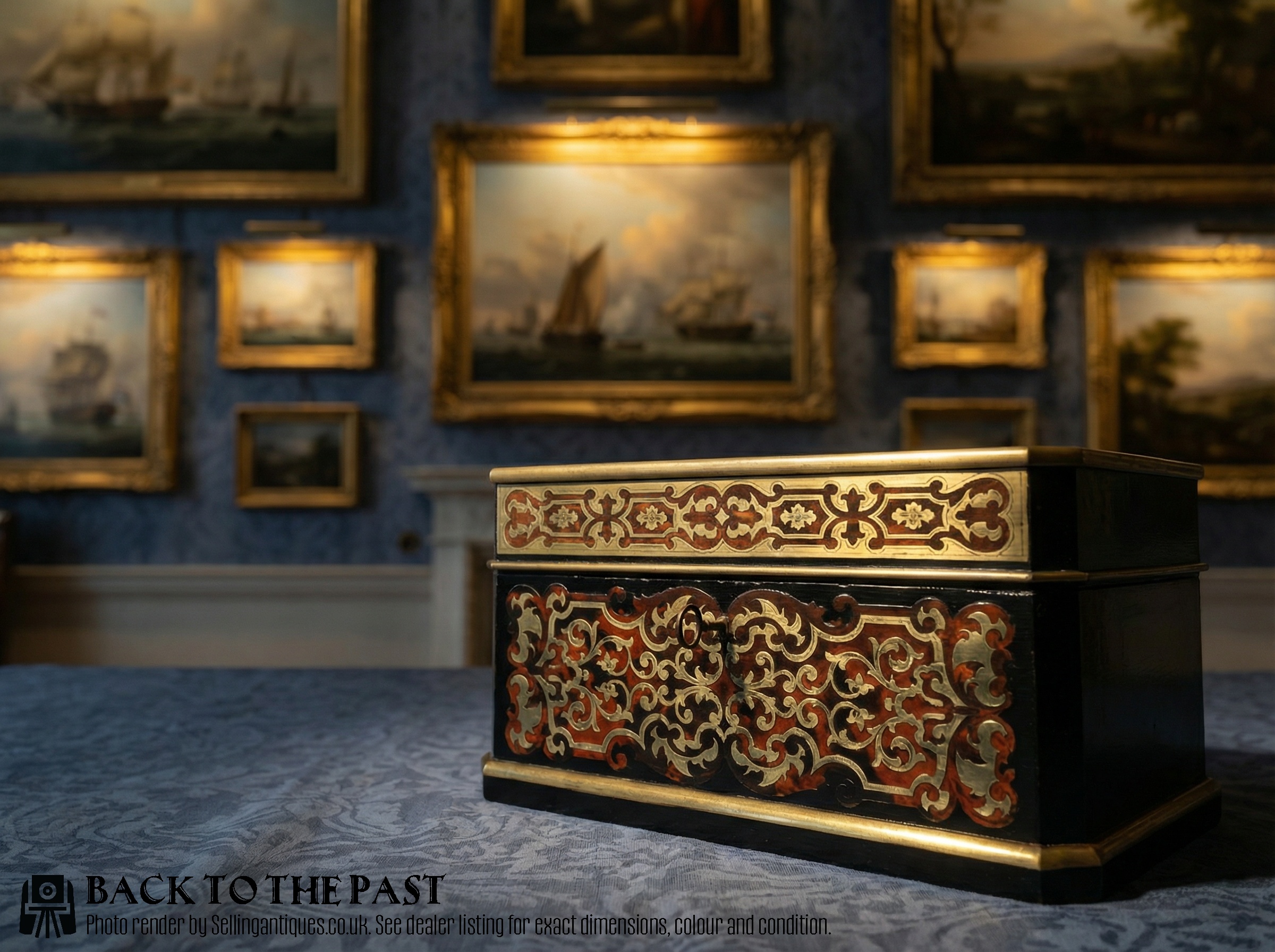
A boulle marquetry box is a decorative container defined by its distinctive inlay of brass and tortoiseshell, drawing on a tradition popularised in French cabinet making. When you search for a boulle marquetry box, you encounter forms ranging from compact trinket boxes and tea caddies to larger writing boxes and desk stands.
The pieces listed on this page span several eras including the Regency, Victorian, and wider nineteenth century periods, with French Napoleon III styles appearing frequently alongside English interpretations. You are most likely to meet rectangular writing boxes or tea caddies featuring brass scrollwork set against dark tortoiseshell or ebonised wood surfaces.
How they were made
Finishing touches involved cast gilt metal mounts, brass stringing, and fitted interior compartments lined for writing or tea storage, sometimes incorporating glass inkwells or inner canisters.
Boulle Marquetry Box Retail Price Guide 2026
Typical asking prices for boulle marquetry box among the pieces listed under this phrase on Sellingantiques today, from the lower quarter to the upper quarter. They describe what is for sale here now, not the wider market.
Many a Victorian tea caddy hides an internal sugar dish alongside its canisters, proving people took their sweetening very seriously indeed.
What varies in quality
Quality in a boulle marquetry box rests upon the precision of the brass cutting and how tightly the inlay sits within the surrounding tortoiseshell or timber ground. Superior examples display crisp, flowing lines in the scrollwork without excessive gaps or heavy adhesive fillers between the elements.
The choice of secondary woods, the weight and detail of the gilt metal mounts, and the complexity of the internal fittings further separate standard production pieces from finer workshop creations.
Lund Of Cornhill·Asprey
The Boulle Marquetry Box Glossary
- Boulle marquetry
- A decorative technique involving inlaid brass and tortoiseshell, named after the famed French cabinet maker André-Charles Boulle. It creates a rich, reflective surface pattern.
- Tortoiseshell
- A mottled brown and amber material derived from the shell of certain turtle species, utilised as a dark background for brass inlay. It provides a translucent depth beneath the polished surface.
- Tea caddy
- A container designed originally to store loose tea leaves, often featuring internal compartments or canisters. Examples in this category frequently incorporate locking lids and key escutcheons.
- Writing box
- A portable desk fitted with a sloped writing surface, inkwells, and storage space for stationery. These pieces often unfold to reveal velvet or leather-lined writing slopes.
Boulle Marquetry Box: Frequently Asked Questions
How do I tell a French box from an English one?
French pieces often lean heavily into Napoleon III or ornate revival styles with abundant brass scrollwork and gilt metal mounts.
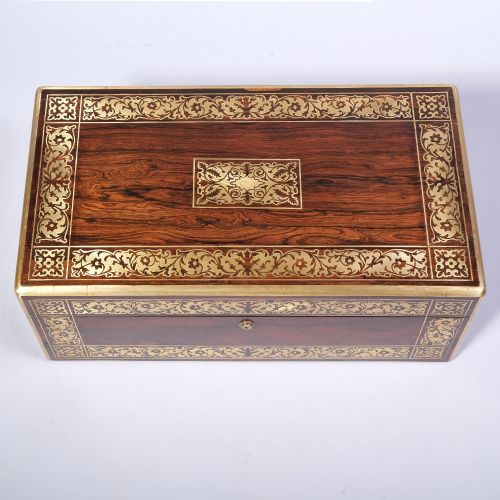
English interpretations from the Regency and Victorian eras sometimes employ brass inlay within rosewood or tortoiseshell bodies with slightly more restrained proportions.
How do I care for tortoiseshell and brass?
Keep these boxes away from direct sunlight and excessive heat sources, which can cause tortoiseshell to warp or dry out.
Dust gently with a soft, dry cloth and avoid harsh chemical polishes that might damage the delicate metal and shell surfaces.
What periods do these boxes come from?
The pieces available range primarily through the nineteenth century, including Regency and Victorian eras alongside mid-nineteenth-century French workshop items.
Dates extend from earlier eighteenth-century examples up to late Victorian productions around eighteen-ninety.