

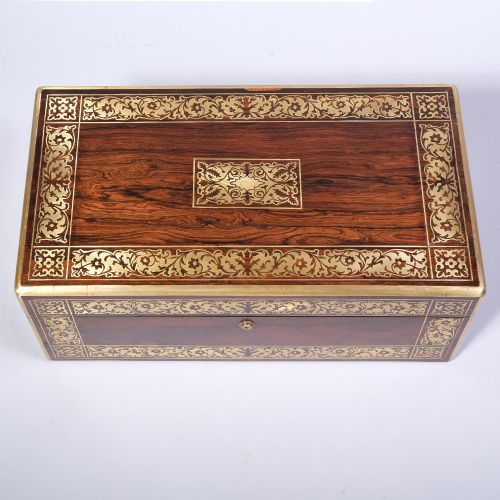


Brass Marquetry Caddy
These brass marquetry caddy pieces are timber tea containers and boxes inlaid with metal, designed to keep costly leaf secure on the parlour table.
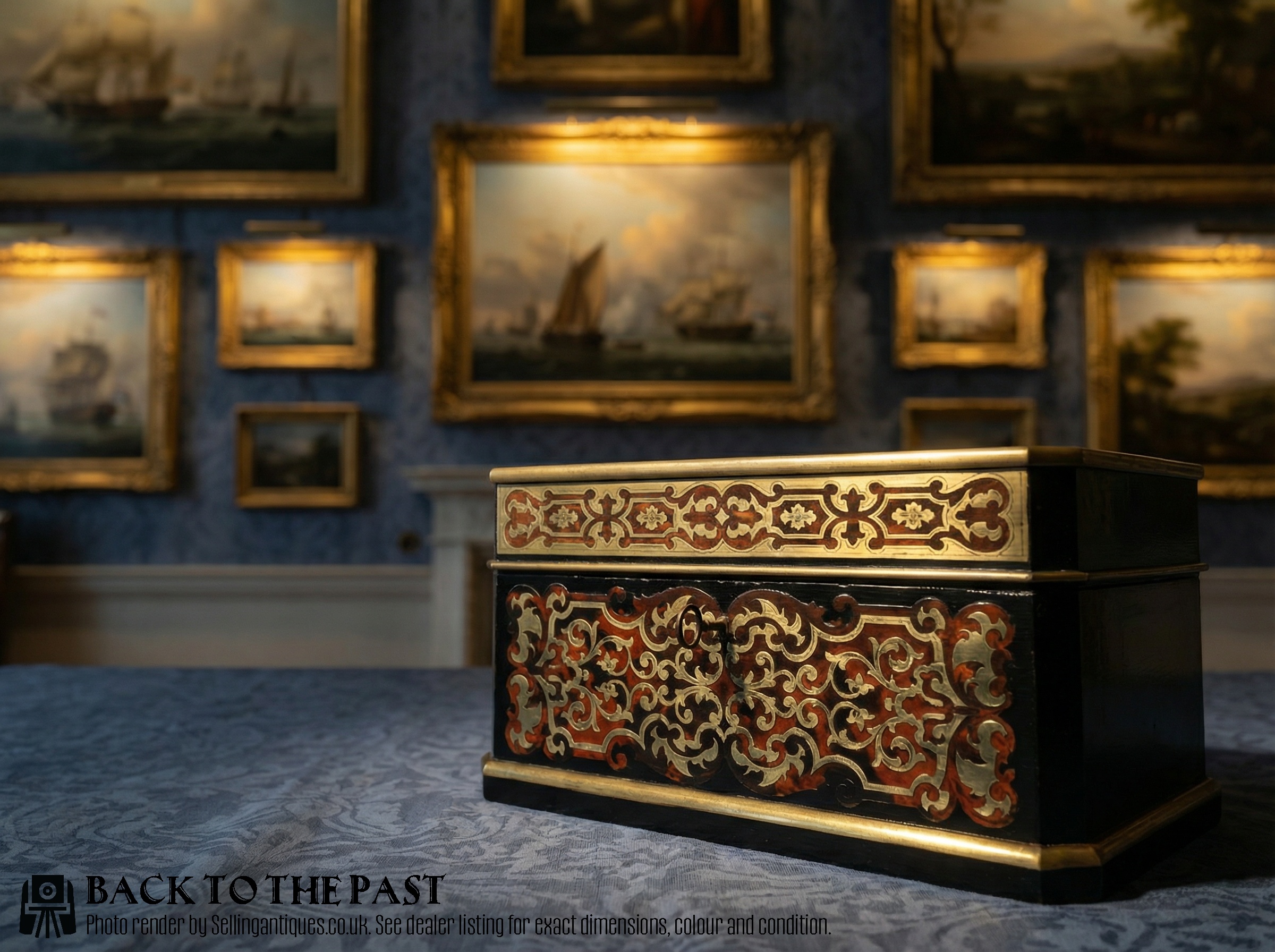
Brass Marquetry Caddy
Most examples you encounter on this page pair dark tropical woods with intricate metal inlay work. Forms range from simple tea caddies to larger writing boxes, teapoys on stands, and occasional liquor canteens.
Origins span English workshops and French cabinets, particularly from the Regency and Napoleon III eras. Buyers seek these objects for their rich timber surfaces and geometric or floral metal ornamentation.
How they were made
Cabinetmakers constructed the foundational carcase from dense timbers such as rosewood, burr walnut, and oak, often applying fine veneers to the exterior surfaces. Boxwood and tortoiseshell frequently served as contrasting elements in the decorative scheme.
The characteristic brass marquetry involves cutting thin sheets of metal into delicate scrolls and floral motifs, then recessing them precisely into the wood. Craftsmen secured these brass elements with animal glue and tiny pins before scraping the entire surface flush.
Brass Marquetry Caddy Retail Price Guide 2026
Typical asking prices for brass marquetry caddy among the pieces listed under this phrase on Sellingantiques today, from the lower quarter to the upper quarter. They describe what is for sale here now, not the wider market.
The listings here include pieces from the 18th, 19th, and Victorian centuries, executed in rosewood, burr walnut, tortoiseshell, and oak.
What varies in quality
Quality rests heavily on the precision of the metal inlay and the selection of the underlying timber figures. Finer pieces display crisp, tight brass cutting with minimal filler, whereas simpler work shows wider gaps around the metal motifs.
The interior fitments also determine the grade of the box, with superior examples retaining original glass mixing bowls, inner foil-lined canisters, and working locks with matched keys. The depth of grain in the rosewood or burr walnut further separates standard production from exceptional cabinet work.
The Brass Marquetry Caddy Glossary
- Marquetry
- Decorative inlay technique where pieces of brass, tortoiseshell, or wood are fitted together to form a geometric or floral picture. This creates a flush, ornamental surface across the lid and sides of the box.
- Boulle
- A specific style of marquetry using brass and tortoiseshell developed in France and popularised during the 19th century. It frequently appears on French caddies and decorative containers of the period.
- Teapoy
- A small stand or large caddy mounted on a central pillar with legs, designed to hold tea canisters and a mixing bowl. Regency examples often feature elaborate brass inlay.
- Canister
- An internal compartment or separate lidded box housed within the main caddy to preserve the aroma of the tea leaves. These are often made of tin or wood and sometimes lined with foil.
Brass Marquetry Caddy: Frequently Asked Questions
What is a brass marquetry caddy?
It is a decorative wooden storage box inlaid with brass patterns, built during the 18th and 19th centuries to store dry tea leaves.
Tea was an expensive commodity in past centuries, requiring secure containers fitted with locks to protect the contents from servants or damp air.
How do I date a tea caddy?
Dating relies on the timber species, the style of the brass inlay, and the overall shape of the box carcase. Regency and Victorian examples show distinct shifts in veneer choice and decorative motifs.
Examining the interior construction, hinges, and lock plates also helps determine the period of manufacture.
Were these boxes lined with foil?
Many period caddies feature interior compartments lined with thin metal foil to keep loose tea leaves fresh and dry. This practical addition prevented moisture from spoiling the expensive contents.
Original foil linings remain uncommon due to the fragile nature of the material over centuries of use.
Can I use a teapoy as a side table?
Teapoys function well as compact occasional tables beside seating, provided the central pillar and legs remain structurally stable. Their original purpose was to stand near the tea table for easy access during social gatherings.
Care should be taken to protect the polished wood and brass inlay from direct moisture and heavy objects.