




Regency Tortoiseshell Box
A regency tortoiseshell box brings rich natural warmth and precise metalwork to a desk or table, offering a tactile piece of Georgian history.

Regency Tortoiseshell Box
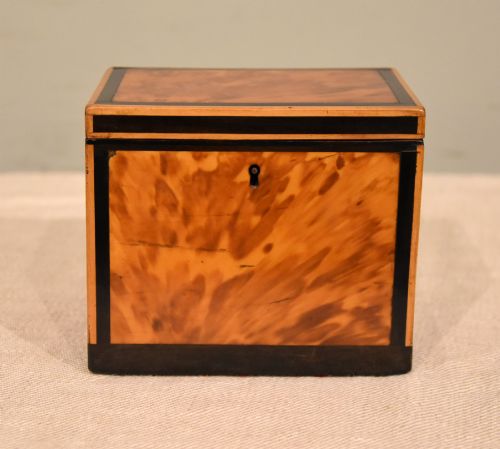
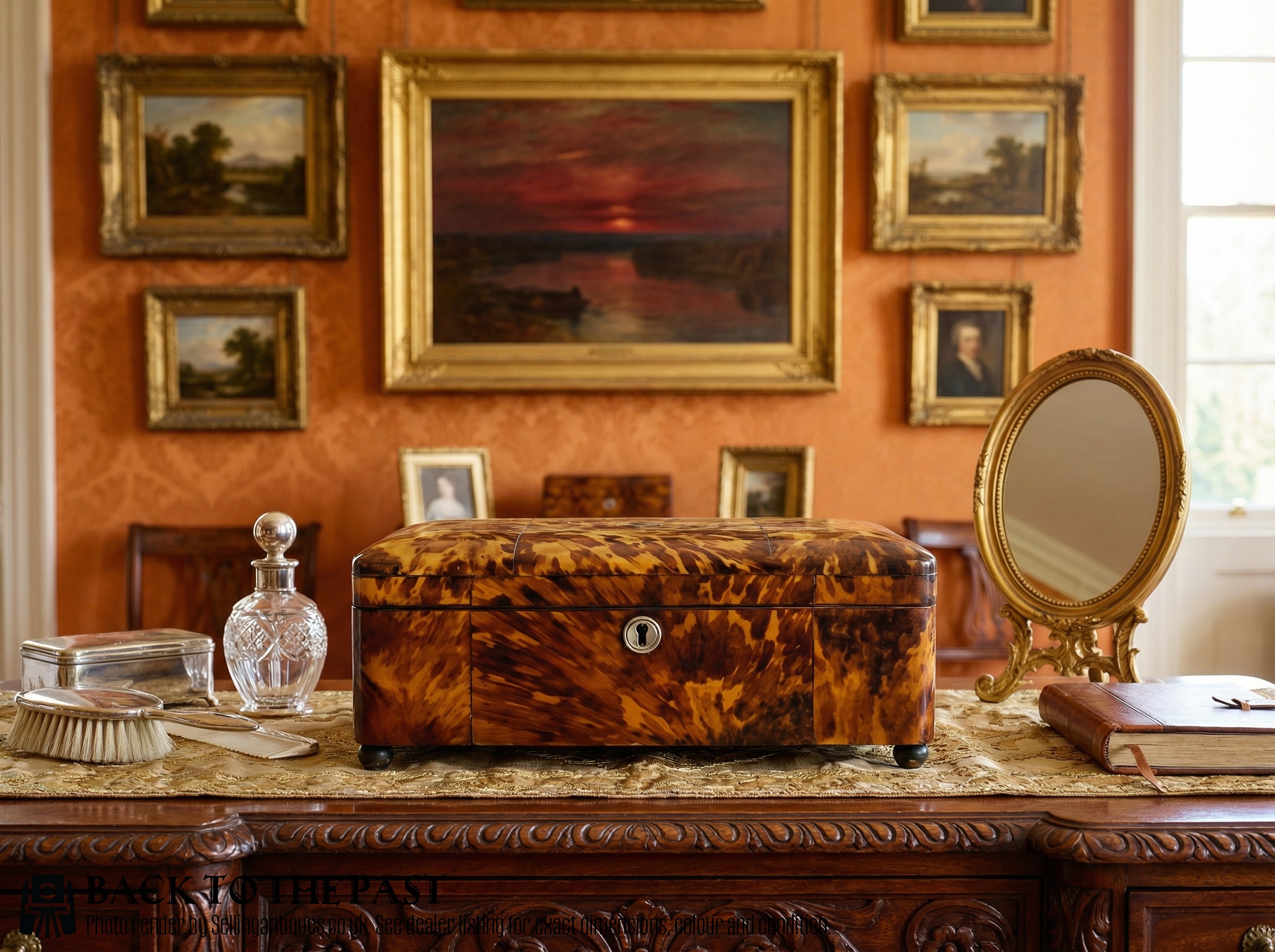
When you search for a regency tortoiseshell box, you are looking at small personal containers fashioned from animal shell during the Georgian and Regency eras. These pieces include tea caddies, ladies table top jewellery boxes, sewing boxes, and small snuff boxes.
You are most likely to meet tea caddies and sewing boxes on this page, reflecting the domestic uses of the period. The forms range from simple octagonal and bow-fronted tea caddies to fitted tables and miniature double caddies.
The objects span the late eighteenth and early nineteenth centuries, covering Georgian, Regency, and French Restoration styles. Their origins include English workshops and continental makers utilising native and imported materials.
How they were made
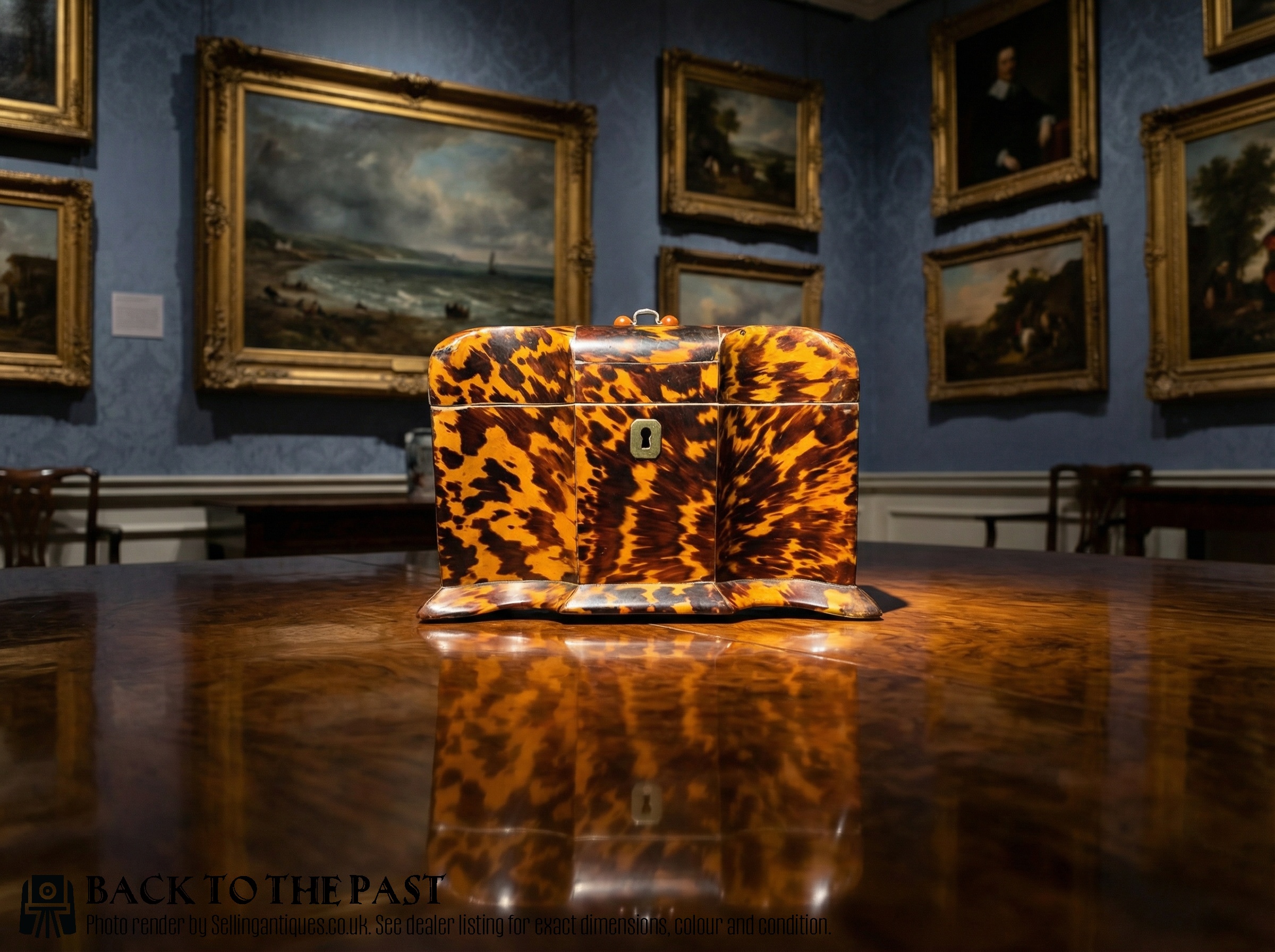
Maker's workshops built these boxes using thin plates of tortoiseshell or turtle shell applied over a wooden core, often using ebony or ebonised wood to frame the panels. Silver mounts, brass stringing, and bone details provided structural reinforcement and crisp decorative borders.
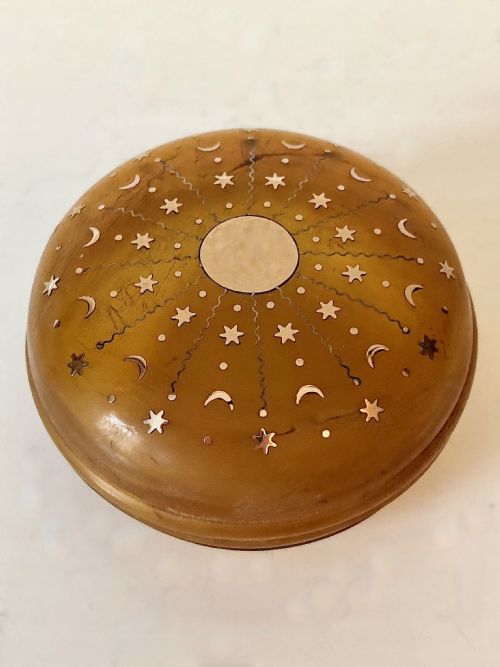
Surface ornamentation relied on delicate techniques such as gold pique inlay and reverse glass painting set into the lids. Interior arrangements featured fitted compartments, silver components, and inner canisters designed for tea or sewing implements.
Regency Tortoiseshell Box Retail Price Guide 2026
Typical asking prices for regency tortoiseshell box among the pieces listed under this phrase on Sellingantiques today, from the lower quarter to the upper quarter. They describe what is for sale here now, not the wider market.
Listings feature items built from tortoiseshell, silver, wood, bone, brass, ebony, and ebonised wood across the Georgian and Regency periods.
What varies in quality
The standard of a regency tortoiseshell box rests upon the clarity and blonde tones of the shell and the precision of the underlying wood carcass. Subtle variations in the grain and the richness of the natural patterning separate standard containers from finer examples.
Execution of decorative details such as gold pique inlay, silver mounts, and ivory stringing dictates the refinement of the piece. Complete internal fittings, original keys, and intact interior compartments elevate the standing of a box.
The Regency Tortoiseshell Box Glossary
- Tortoiseshell
- A decorative material sourced from the shell of certain turtle species, valued for its translucent amber and brown mottled pattern.
- Pique
- A method of decoration involving tiny pins of gold or silver tapped into the surface of tortoiseshell to form geometric or floral patterns.
- Tea caddy
- A small box or jar once used to store tea, often featuring internal lidded cannisters or compartments.
- Stringing
- Thin inlaid lines of contrasting wood, bone, or metal used to outline the edges and panels of a box.
- Reverse glass painting
- An artwork technique where the image is painted directly onto the back of a glass panel so the finished picture is viewed through the front.
Regency Tortoiseshell Box: Frequently Asked Questions
What were tea caddies used for?
Tea caddies served to store precious loose tea leaves securely under lock and key in the Georgian home. Tea was an expensive commodity, making these containers central to household management.
Servants or the mistress of the house dispensed the leaves for each meal, keeping the box locked between uses to protect the contents.
How do I care for tortoiseshell?
Tortoiseshell requires gentle handling and protection from direct sunlight and extreme temperature fluctuations. Keep the material away from artificial heat sources to prevent warping or drying out.
Dust the surface lightly with a soft, dry cloth. Avoid chemical polishes and liquid cleaners that can damage the delicate shell and metal mounts.
How are sewing boxes fitted?
Sewing boxes contain internal trays, compartments, and small holders designed for threads, needles, and bobbins. These trays often lift out to reveal deeper storage space beneath.
Many examples include fitted needle books, thimble holders, and small storage sections lined with silk or velvet to protect sewing tools.
What is gold pique?
Gold pique is a decorative technique where tiny gold pins or wire are pressed into softened tortoiseshell. The metal creates shimmering patterns across the dark surface of the box.
Master craftsmen placed each tiny dot or strip by hand, requiring immense patience and precision to achieve intricate geometric or floral designs.