
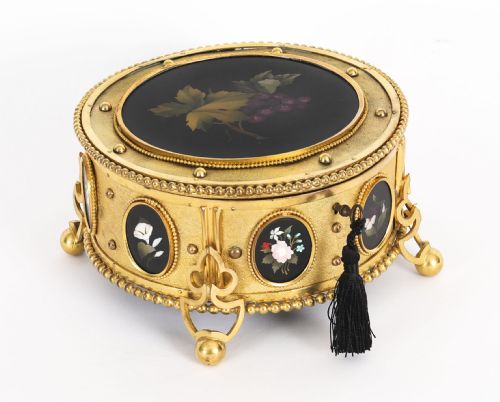


Grand Tour Souvenir Box
A grand tour souvenir box is a portable Italian keepsake in marble, mosaic, and inlaid wood, collected by travellers for its classical design.
What a grand tour souvenir box is
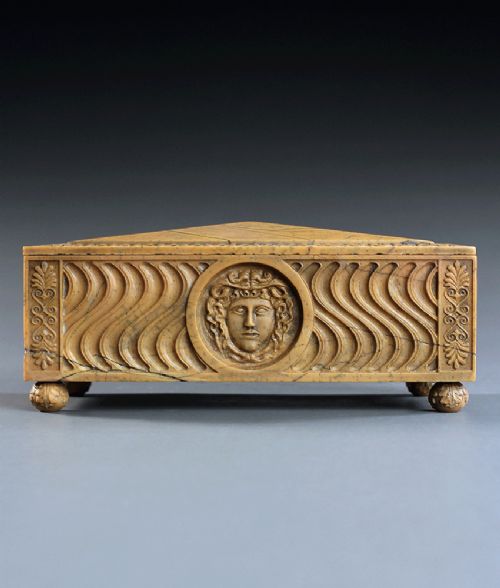
A grand tour souvenir box takes the form of a sarcophagus casket, a book-shaped container, or a snuff box. These decorative boxes emerged from nineteenth-century travel across Italy.
The pieces on this page span the nineteenth century, including specific dates like eighteen-fifty and eighteen-sixty. They reflect neoclassical and Italian grand tour styles created for foreign visitors.
How they were made
Maker workshops utilised hard stones and natural timbers, combining Siena marble, jasper, and ebonised wood alongside fruitwood, olive wood, and general olivewood. Structural integrity relied on precise carpentry and stone cutting.
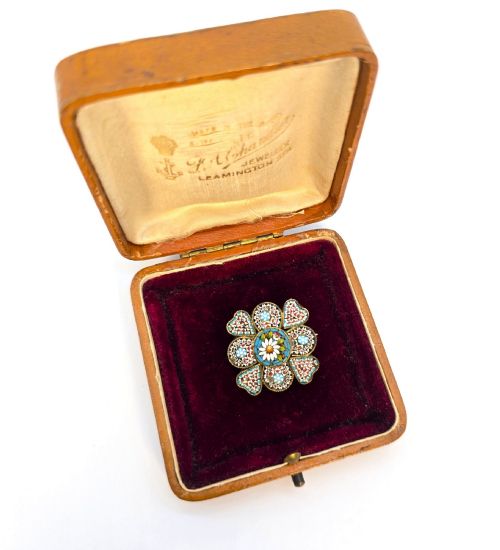
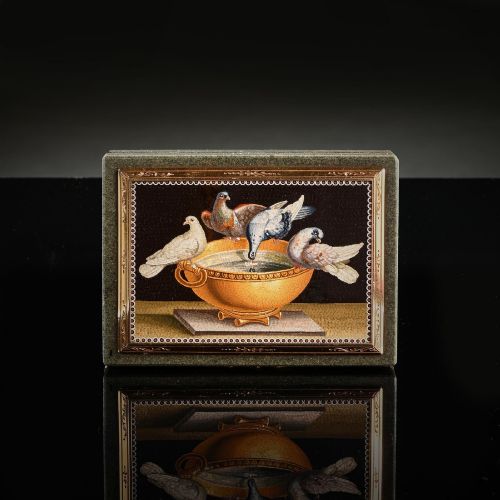
Surface ornamentation involved micro-mosaic work using glass tesserae mounted in gold, paired with intricate Sorrento marquetry and inlaid geometric or pictorial motifs.
Retail Price Guide 2026
Typical UK retail prices for grand tour souvenir box, calculated from the Sellingantiques database of over a million retail prices indexed since 2003. This retail price guide relies exclusively on Sellingantiques data; no external sources or auction records are used, so the figures do not describe the wider market.
Travellers once carried home miniature Italian landscapes built entirely from microscopic glass tiles stuck together with glue.
What varies in quality
The distinction between standard containers and finer work rests on the intricacy of the surface medium, whether microscopic glass tesserae or delicate wood inlay. Precise joins in marble caskets and secure gold mounts indicate higher workshop standards.
Gioacchino Barberi
The Grand Tour Souvenir Box Glossary
- Micromosaic
- A detailed picture assembled from tiny coloured glass pieces known as tesserae. This technique decorated nineteenth-century Italian souvenirs with classical ruins.
- Siena Marble
- A yellow Italian marble with dark grey or purple veining. It formed the heavy bodies of neoclassical grand tour caskets.
- Marquetry
- The art of applying small pieces of veneer to a structure to form decorative patterns. Sorrento workshops specialised in inlaid wood views and motifs.
- Sarcophagus
- A box shape modelled on ancient stone coffins with a pitched lid. Grand tour makers adopted this classical architectural form for decorative caskets.
- Tessera
- An individual small block of coloured glass used in mosaic work. Thousands of these tiny units created miniature pictorial scenes on snuff box lids.
Frequently Asked Questions
What is a grand tour souvenir box?
A grand tour souvenir box is a small decorative container brought back by nineteenth-century travellers in Italy. These pieces served as portable reminders of classical art and architecture.
They appear in forms such as book-shaped boxes, sarcophagus caskets, and small snuff containers. Materials range from inlaid olivewood and fruitwood to Siena marble and glass micro-mosaics.
How do I date a nineteenth-century box?
Dating relies on material evidence, construction techniques, and stylistic markers recorded in the piece. Mid-nineteenth-century examples often feature Sorrento marquetry or specific Italian marble types.
Makers sometimes incorporated specific stones like Siena marble or employed micro-mosaic panels associated with known Roman workshops. Comparing the timber species, such as olive wood or ebonised framing, helps narrow the period.
What materials are used in these boxes?
These items utilise a variety of natural stones and timbers gathered during European travels. Common materials include jasper, Siena marble, ebonised wood, olivewood, and fruitwood.
More elaborate examples incorporate glass tesserae and gold mounts. These varied substances were combined to create contrasting colours and tactile surfaces.