



Antique Parquetry Box
An antique parquetry box combines geometric precision with rich natural timbers, offering a tactile receptacle for letters, tea or keepsakes.
Identifying an antique parquetry box
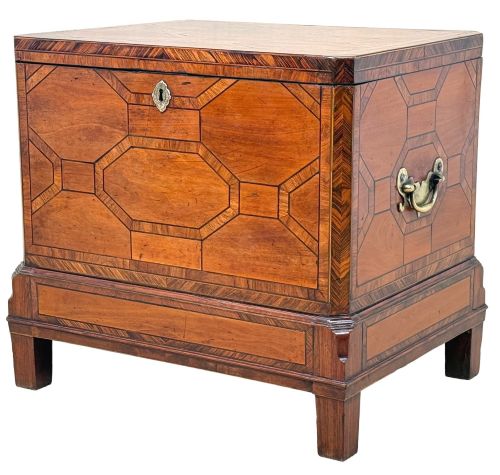
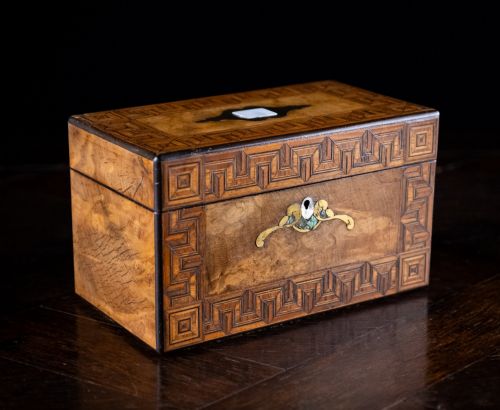
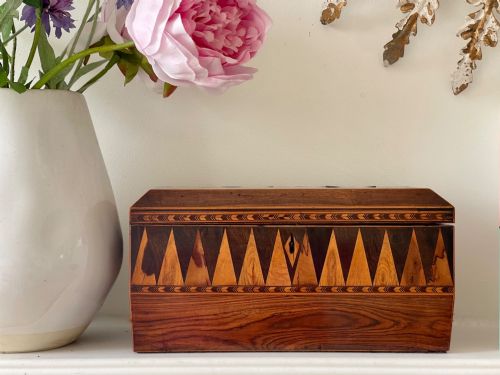
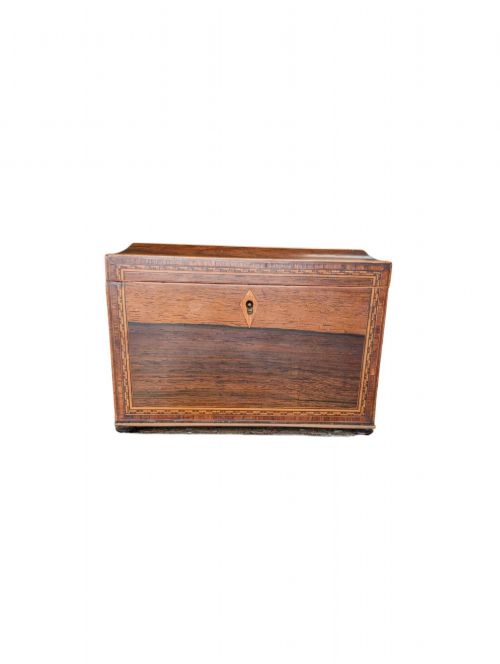
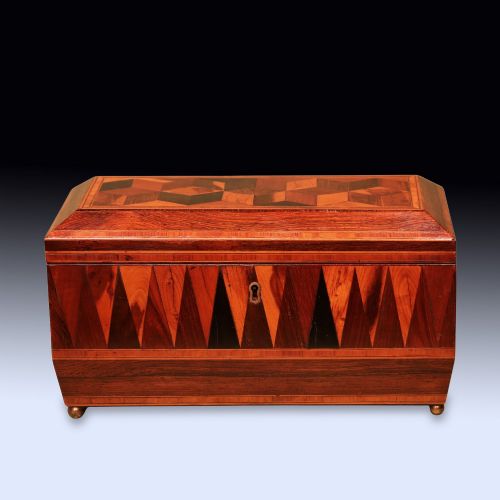
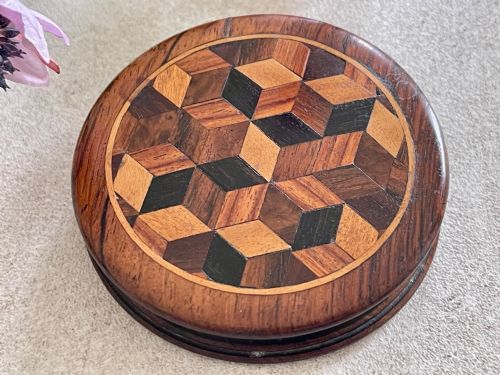
An antique parquetry box is a wooden container surfaced with small, precision-cut geometric veneers that form patterned mosaics. The examples appearing on this page span the Regency and Victorian periods, capturing the nineteenth-century passion for intricate surface decoration. You encounter them most frequently as tea caddies, writing boxes, work boxes, and jewellery cases.
The forms range from compact tabletop pieces to larger receptacles designed to house correspondence or needlework. Their utility dictated their internal architecture, often featuring compartments, lift-out trays, or secret drawers. Makers utilised distinct woods to create tonal contrast within the geometric schemes rather than relying on applied paint.
Originating largely from nineteenth-century English workshops, these boxes display the distinct stylistic shifts from the restraint of the Regency era to the more elaborate Victorian aesthetic. Some incorporate Tunbridge ware elements or hand-painted panels alongside the staple geometric wood mosaics. Every piece reflects the domestic storage requirements of its period.
Construction and materials
The foundation carcass of an antique parquetry box is typically constructed from a stable secondary timber, which is then enveloped in fine hardwood veneers. Craftsmen sliced walnut, rosewood, fruitwood, mahogany, and burl walnut into thin sections before cutting them into meticulous geometric polygons. These tiny wooden pieces were assembled piece by piece on a paper backing before being glued to the box body.
Makers introduced brass stringing, escutcheons, and occasionally ivory feet to punctuate the wooden surfaces and reinforce corners. The geometric patterns rely entirely on the natural grain direction and contrasting colours of the various timbers to generate visual depth. Surface finishing involved applying multiple layers of polish to protect the delicate wood mosaics while enhancing the natural warmth of the grain.
Differentiating quality
The standard of an antique parquetry box rests on the absolute precision of the geometric veneer work and the crispness of the angles where individual wooden tesserae meet. Superior examples maintain exact alignment across every surface, including the interior compartments and the underside, showing no visible gaps between timbers. The choice of base materials also dictates worth, with burr walnut and figured rosewood commanding greater visual presence than simpler fruitwoods.
Higher quality pieces distinguish themselves through sophisticated internal engineering, such as secret drawers, fitted stationery slopes, or matching veneered internal lids. The integration of secondary decorative elements, like hand-painted panels or specialised Tunbridge ware mosaic borders, elevates a piece beyond standard geometric production. Original brass hardware and well-preserved interior linings further separate standard utilitarian boxes from superior cabinetmaker commissions.
The Antique Parquetry Box Glossary
- Parquetry
- A geometric mosaic of wood veneer used to cover floors or furniture and box surfaces. It relies on contrasting timber tones to form repeating patterns.
- Tunbridge Ware
- A specialised form of British woodwork originating from Kent, characterised by tiny wooden mosaic tiles forming pictorial or geometric scenes. It frequently appears on nineteenth-century boxes.
- Tea Caddy
- A container designed originally to store loose tea leaves securely. Many surviving nineteenth-century examples feature internal compartments and parquetry surfaces.
- Burr Walnut
- A highly prized wood harvested from the wart-like growths on walnut trees. It exhibits swirling, organic grain patterns utilised extensively on luxury Victorian boxes.
- Escutcheon
- A protective plate surrounding a keyhole, usually fashioned from brass on nineteenth-century wooden boxes. It prevents the surrounding wood from wearing down through repeated use of the key.
Frequently Asked Questions
What were antique parquetry boxes used for?
These boxes served specific domestic functions in the nineteenth century, ranging from securing expensive tea leaves to storing letters, jewellery, and sewing equipment. Their compartmentalized interiors kept valuable personal items organised and protected from dust.
Over time, they transitioned from functional desktop accessories to decorative display pieces in the Victorian parlour. Their robust construction allowed them to survive generations of daily handling.
How do I date an antique parquetry box?
Dating relies on examining the overall style, the secondary timbers used in the carcass, and the construction methods of the internal fittings. Regency examples tend to display cleaner, more restrained geometric lines, whereas Victorian pieces often incorporate denser parquetry and elaborate burl veneers.
Hardware such as brass locks, hinges, and escutcheons also provide chronological clues when compared against period manufacturing standards. Examining the base and internal compartments reveals the hand of the cabinetmaker.
What distinguishes parquetry from marquetry?
Parquetry strictly utilises geometric and symmetrical shapes - such as cubes, triangles, and squares - assembled to form repeating patterns across a surface. It relies on the interplay of wood grain and natural colour contrasts.
Marquetry, by contrast, employs curved lines and organic pictorial representations, depicting flowers, figures, or landscapes using various dyed and natural woods. While parquetry boxes focus on architectural precision, marquetry pieces resemble wooden paintings.