




Geometric Inlaid Box
A geometric inlaid box brings together contrasting timbers and precise patterns to form a functional container.
Identifying a geometric inlaid box
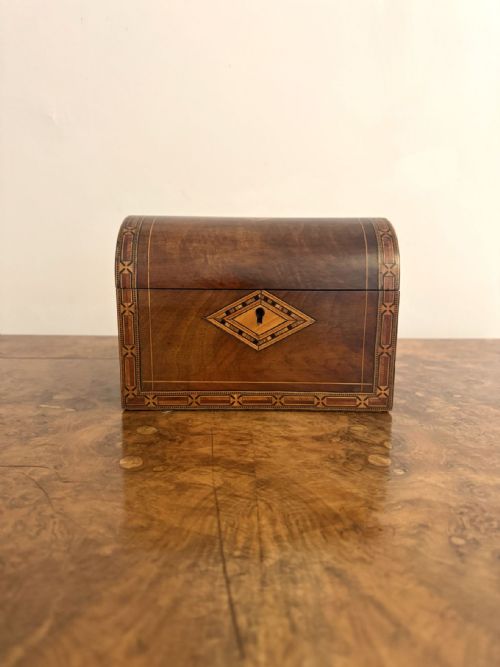
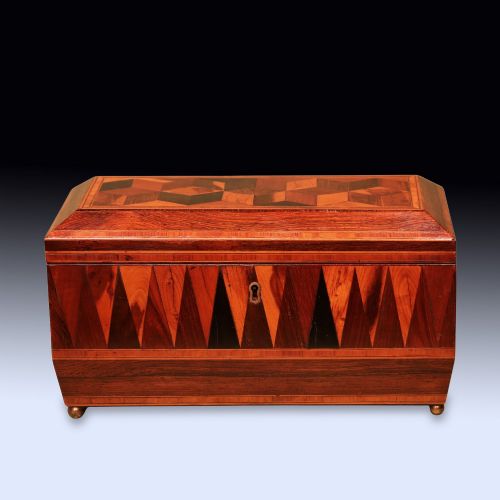
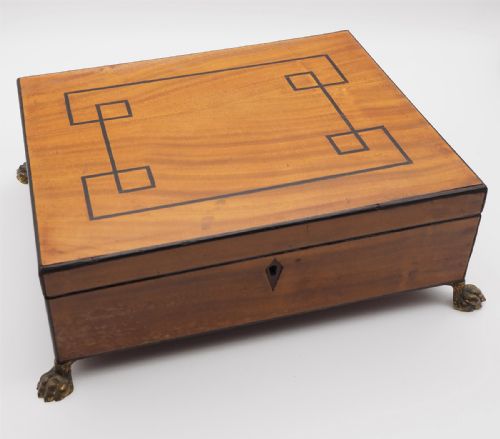
A geometric inlaid box is a storage piece decorated with angular patterns formed from contrasting timber pieces.
Examples on this page span the nineteenth century and the Victorian period, reflecting the era's taste for intricate surface ornament.
Common forms include tea caddies and sewing boxes, created to house household provisions and needlework tools.
Materials and construction
Construction relies on sturdy foundational timbers such as rosewood and walnut, which provide rich dark backgrounds for lighter decorative elements.
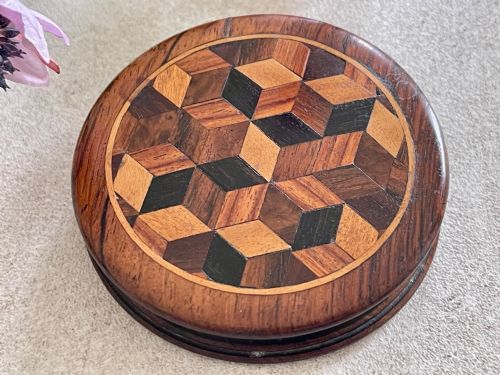
Surface decoration incorporates mixed wood inlay and brass accents, alongside specialised mosaic techniques like Tunbridge Ware to create complex visual grids.
Assessing quality
The finest geometric inlaid box relies on absolute precision in the cutting and fitting of individual timber segments.
Superior execution shows seamless alignment across corners and edges, where patterns continue uninterrupted around the form.
The Geometric Inlaid Box Glossary
- Parquetry
- Geometric mosaic woodwork formed by fitting small wooden tiles together to create a patterned surface. This technique produces repeated angular motifs across the lid and sides of a container.
- Tea caddy
- A small lidded box designed originally to store loose tea leaves securely. These containers often featured internal compartments and locking lids.
- Tunbridge Ware
- A specialised form of nineteenth-century decorative woodwork originating from Kent. It utilises thousands of tiny tinted wood blocks to form pictorial or geometric mosaics.
- Rosewood
- A dense, heavily grained tropical timber prized for its deep colour and durability. It serves as a favored carcase and veneer material for nineteenth-century boxes.
Frequently Asked Questions
What is a geometric inlaid box used for?
These decorative containers served specific domestic functions in period interiors, such as storing dry tea leaves in subdivided caddies or holding threads and needles inside sewing boxes.
Today, they function well as desktop storage or decorative objects that display nineteenth-century woodworking skill.
How old are these boxes?
The examples available date from the nineteenth century and the Victorian era, reflecting the prevailing design standards of those periods.
Craftsmen utilised traditional hand tools to shape the timbers and lay the intricate geometric patterns.
What materials are used in their construction?
Primary woods include rich dark timbers like rosewood and walnut, which form the main structure of the box.
Surface enrichment comes from mixed wood inlay, brass details, and mosaic elements arranged in strict geometric layouts.
How do I care for a Victorian inlaid box?
Keep the wood away from direct sunlight and sudden changes in humidity to protect the delicate inlays from lifting or shrinking.
A gentle application of appropriate wax polish helps maintain the finish of the rosewood or walnut surface.