


Nineteenth Century Wooden Box
A nineteenth century wooden box brings functional storage and fine cabinet-making into daily domestic life.
Nineteenth Century Wooden Box
When you search for a nineteenth century wooden box, you encounter a diverse array of utilitarian and decorative containers shaped by Georgian, Regency, and Victorian aesthetics. These pieces include practical trunks and chests alongside refined writing slopes, tea caddies, and specialised stationary boxes.
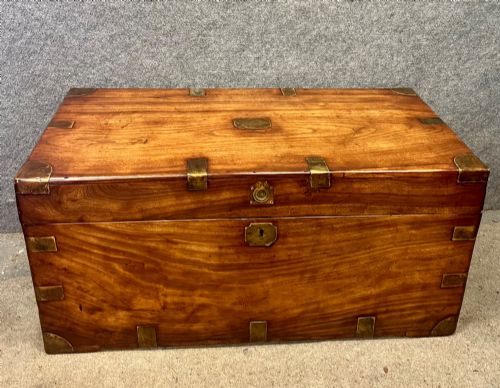
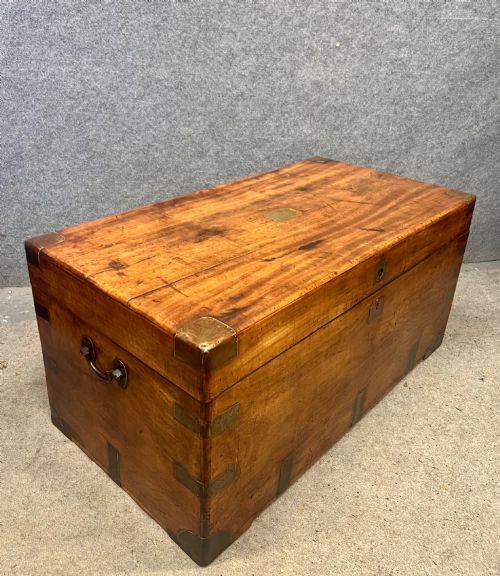
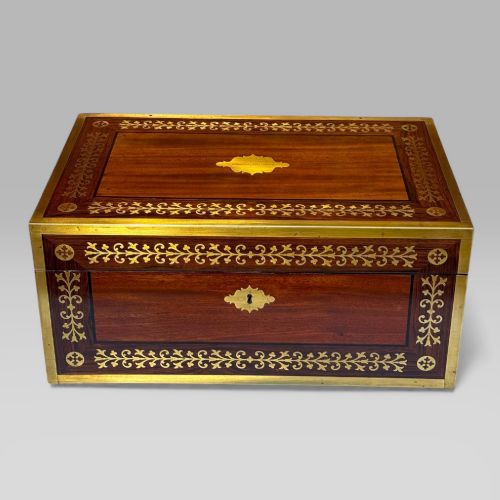
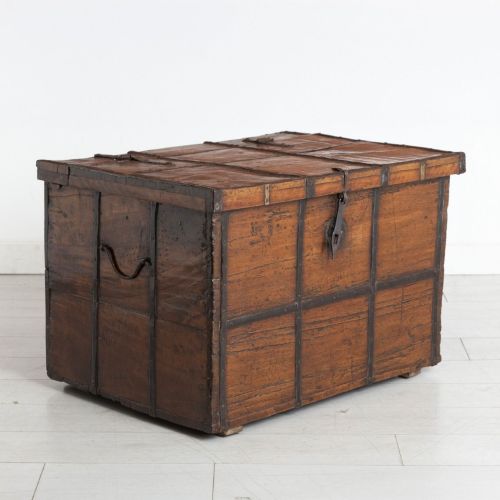
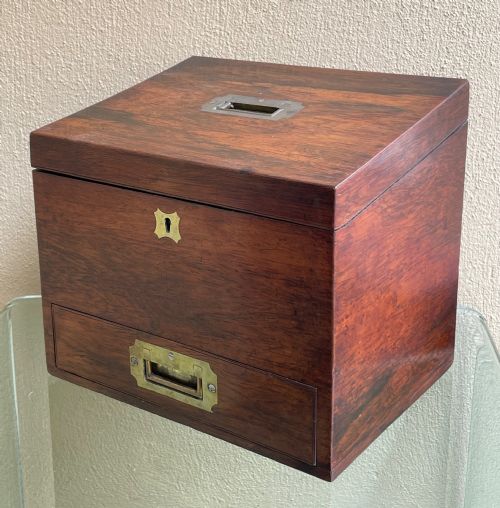
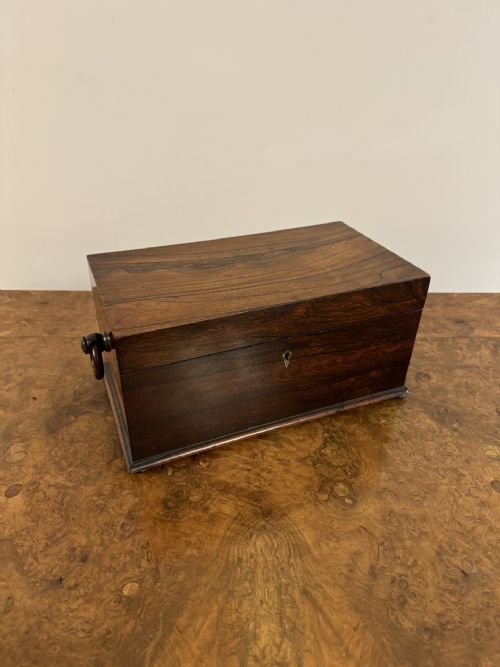
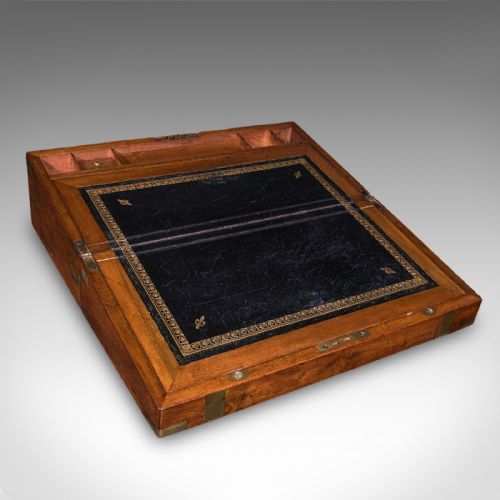
The versions most commonly met on this page reflect the travels and domestic habits of the period, ranging from robust brass-bound campaign pieces to elegant burr walnut or rosewood tea caddies and miniature apprentice pieces.
How they were made
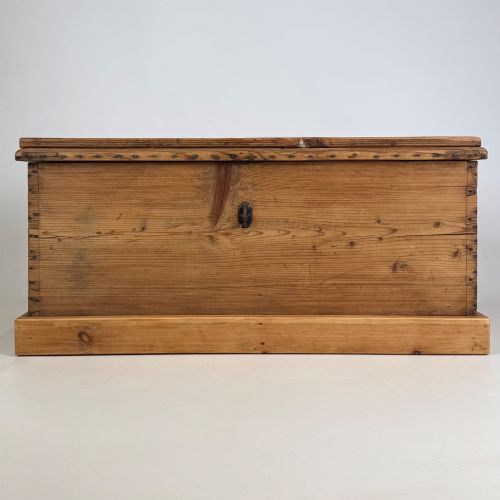
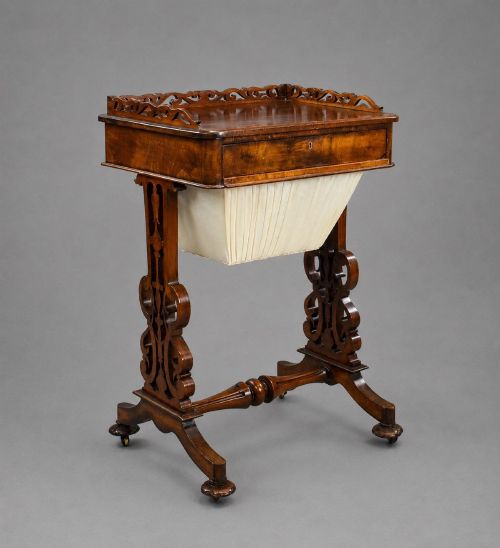
Cabinet-makers utilised dense hardwoods such as mahogany, walnut, and rosewood, often enhanced by distinctive veneers like burr walnut or burr yew-wood. Pine and oak served for structural framing and country pieces.
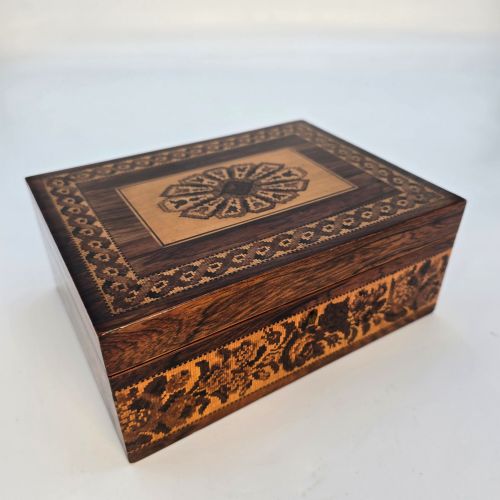
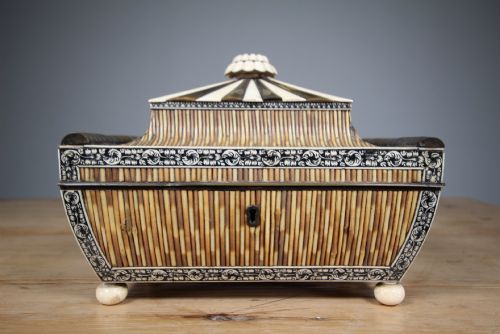
Construction frequently incorporated brass binding, iron reinforcement, and intricate decorative techniques such as Tunbridge ware marquetry, parquetry, and bone inlay to strengthen and embellish the objects.
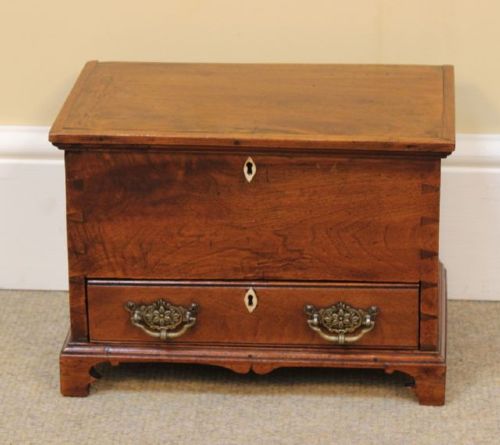
Among the storage pieces hide tiny bone dominoes and miniature furniture chests made for practice.
What varies in quality
The distinction between standard examples and superior pieces rests upon the precision of the joinery and the selection of figured timbers. Finely matched veneers and well-preserved interior fittings elevate a box.
Hardware quality also dictates value, with heavy brass mounts, flush-fitting campaign handles, and original working locks representing higher standards of workshop production.
Edmund Nye·H Mitchell·Holtzapffel and Co·Seabrook·B A Bremond
The Nineteenth Century Wooden Box Glossary
- Campaign slope
- A portable writing desk designed for travel, typically fitted with folding panels and recessed brass handles.
- Sarcophagus form
- A box shape featuring a convex-sloping lid and flared base, reminiscent of classical monument design.
- Tunbridge ware
- Wood-mosaic decoration utilising thousands of tiny dyed wood blocks to create pictorial geometric patterns.
- Tea caddy
- A lidded container specifically partitioned to store and preserve expensive loose tea leaves.
Nineteenth Century Wooden Box: Frequently Asked Questions
What is a writing slope used for?
A writing slope opens to reveal an angled leather or velvet-lined writing surface alongside compartments for inkwells and pens.
These portable desks allowed individuals to correspond neatly while travelling or sitting away from a traditional cabinet.
How do I identify a campaign box?
Campaign boxes feature recessed brass corners and flush handles designed to prevent snagging during military transport.
They are constructed from robust timbers like mahogany or camphorwood to withstand harsh climates and frequent movement.
What are apprentice pieces?
Apprentice pieces are small-scale chests, drawers, or boxes made by trainees to prove their competence to a guild.
Cabinet-makers judged these miniature items strictly on their proportional accuracy and fine dovetail joinery.
Why do some tea caddies have two compartments?
Tea caddies often included two internal lidded canisters to store separate varieties of black and green tea.
A central well held a glass mixing bowl where owners blended leaves to personal taste.