


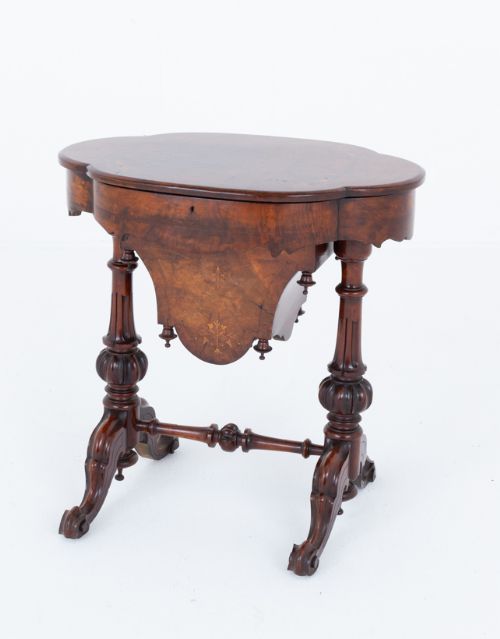


Inlaid Wooden Games Box
An inlaid wooden games box brings historical parlour leisure into a modern room through fine marquetry, fitted compartments, and traditional pastime equipment.
Inlaid Wooden Games Box
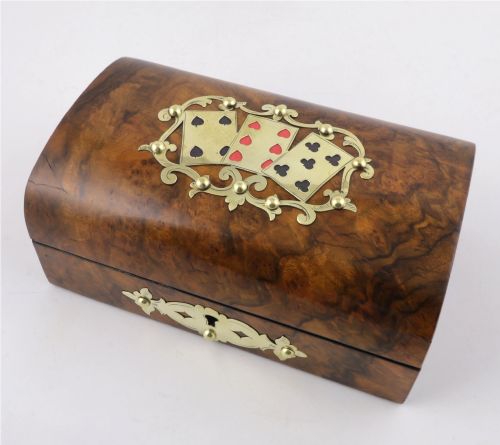
An inlaid wooden games box is a portable receptacle designed to hold playing pieces, cards, and boards for pastimes such as chess, backgammon, and cribbage. When searching for this phrase, a buyer encounters pieces primarily from the nineteenth century, including Victorian and Edwardian examples, alongside earlier Regency variants.
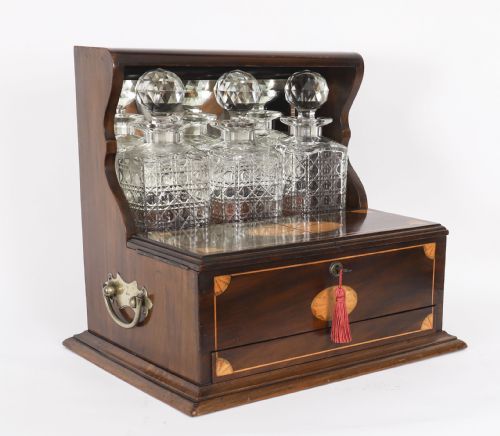
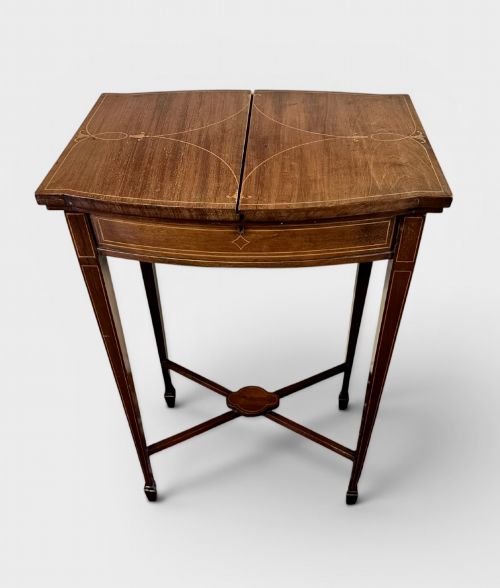
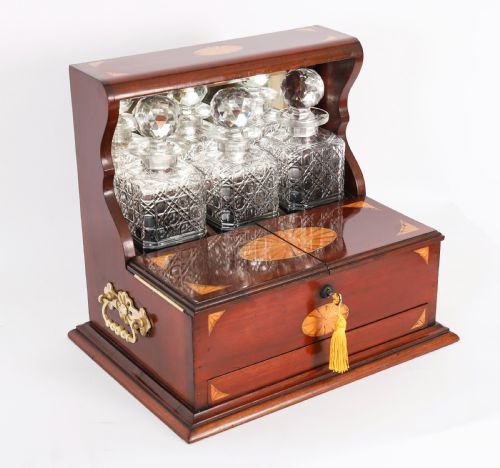
The objects on this page take several forms, ranging from dedicated card boxes and caskets to more elaborate compendiums incorporating fitted interiors for multiple games. Some pieces merge multiple functions, appearing as sewing tables, occasional tables, or tantalus combinations with built-in decanters and crystal glassware.
Materials vary across the selection, featuring timbers such as walnut, burr walnut, mahogany, rosewood, satinwood, and kingwood. These surfaces frequently display intricate parquetry or Tunbridge ware, while internal components often utilise bone and mother of pearl.
How they were made
Cabinet makers utilised dense exotic and domestic timbers, constructing carcases in walnut, mahogany, rosewood, and burr walnut. Surfaces were then embellished with contrasting veneers and geometric parquetry to form decorative checkerboards and floral motifs.
Specialised techniques such as Tunbridge ware allowed artisans to create detailed mosaic patterns from numerous small wood blocks. Interiors were carefully divided with wooden partitions to securely hold cards, counters, and dice during travel.
Poker dice and cribbage pegs tucked inside centuries-old wooden compartments prove that parlour competitiveness has barely changed.
What varies in quality
Quality rests in the precision of the parquetry and the complexity of the internal fittings. Superior examples feature seamless timber matching, crisp Tunbridge ware, and complete original sets of bone or mother of pearl gaming pieces.
The integrity of the construction and the retention of original brass mounts or locks distinguish finer workshop output from simpler utilitarian boxes. Boxes that integrate multiple functions, such as combined games and writing slopes or tantalus frames, demonstrate higher ambition in design.
The Inlaid Wooden Games Box Glossary
- Parquetry
- Geometric mosaic woodwork formed by fitting small veneer pieces together. It creates decorative patterns on the lids and surfaces of games boxes.
- Tunbridge Ware
- A distinct form of nineteenth-century decorative woodwork originating from Tunbridge Wells. It utilises thousands of tiny coloured wood blocks to depict landscapes and geometric mosaics.
- Cribbage Box
- A small receptacle specifically designed to hold a cribbage board, cards, and pegs. These compact boxes frequently feature sliding lids or fitted internal channels.
- Compendium
- A multi-functional container holding equipment for several distinct pastimes. These larger boxes often include folding boards and multiple tiers of compartments.
- Tantalus
- A locking beverage stand holding decanters, often combined with a games compendium. The mechanism prevents access to the spirits until the wooden bar is unlocked.
Inlaid Wooden Games Box: Frequently Asked Questions
What games do these boxes hold?
These boxes typically contain equipment for chess, backgammon, cribbage, and card games. Many feature folding boards and partitioned interiors designed to keep dice, counters, and playing pieces organised.
Compendiums combine several pastimes into a single container, allowing players to switch between board games and card play using fitted internal trays.
How do I identify a Victorian games box?
Victorian examples generally date from the mid to late nineteenth century and showcase timbers like burr walnut, rosewood, and mahogany. They often incorporate brass hardware, intricate parquetry, and internal velvet or silk linings.
Design styles shifted across the era, moving from heavier rosewood caskets towards refined satinwood and inlaid walnut compendiums by the end of the century.
Are the gaming pieces usually original?
Some boxes retain their original bone, mother of pearl, or wooden playing pieces, while others survive as empty caskets or require assembled sets. Surviving components typically match the era and material of the box itself.
Checking the interior partitions helps determine whether the current pieces align with the original configuration intended by the maker.
How should I care for an inlaid wooden box?
Maintain these wooden boxes in stable indoor conditions away from direct sunlight and extreme temperature fluctuations to protect the delicate veneers. Regular gentle dusting preserves the polished timber and delicate parquetry.
Avoid excessive moisture on the surface and treat the antique brass hardware and hinges with care when opening fitted compartments.