
Antique Inlaid Storage Box
These antique inlaid storage box pieces range from Georgian tea caddies to heavy oak coffers, offering practical storage with decorative woodwork.
Antique Inlaid Storage Box
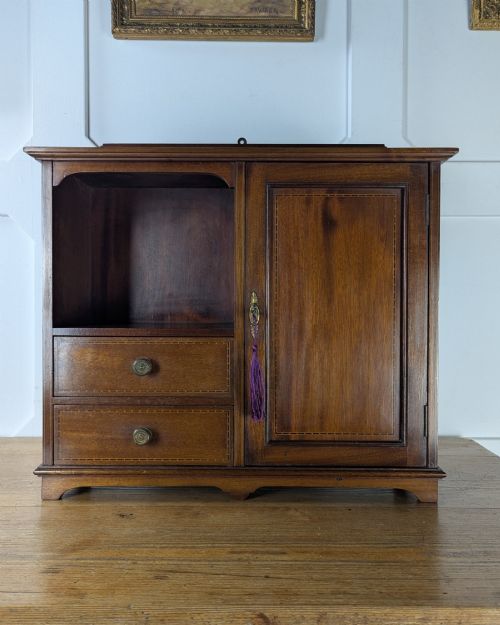
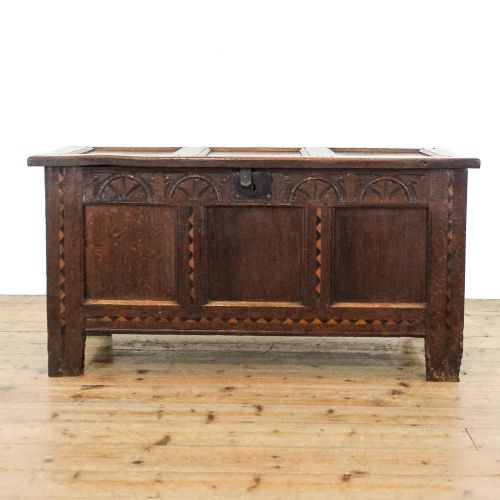
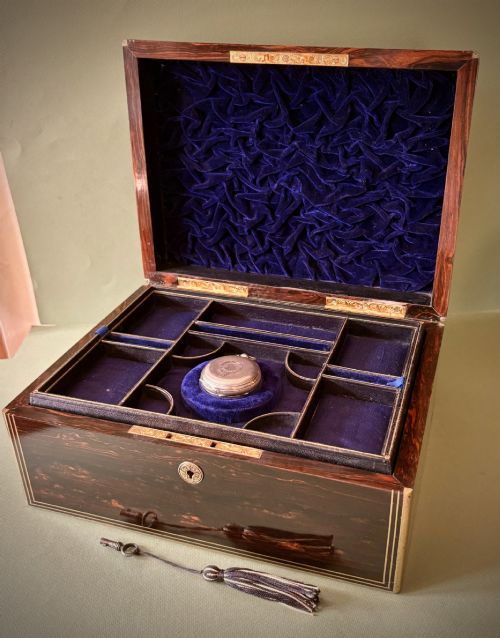
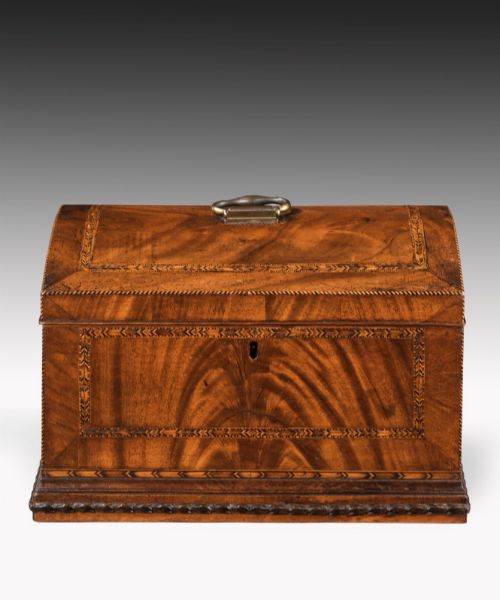
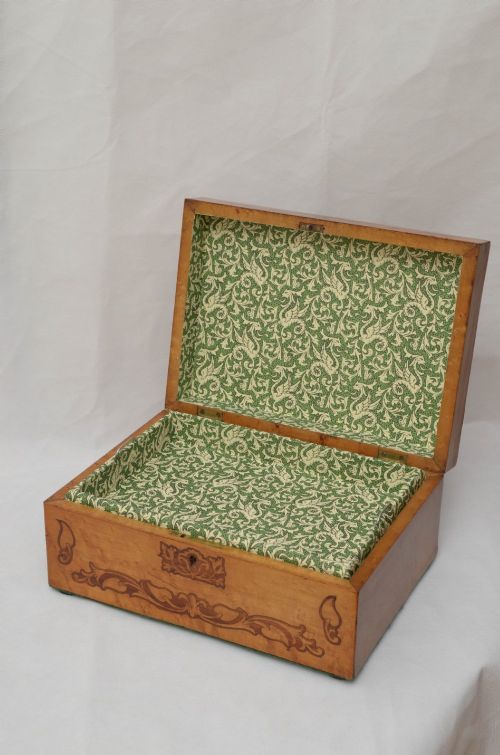
An antique inlaid storage box serves multiple domestic purposes, appearing across these listings as tea caddies, document boxes, jewellery caskets, and larger coffers. The form dictates the scale, moving from small tabletop containers designed for leaf tea or trinkets to heavy chests intended for linen or valuables.
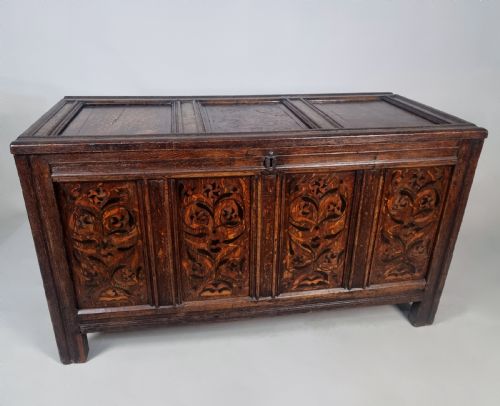
Most examples hail from the Georgian, Victorian, and nineteenth-century periods, with older seventeenth-century oak coffers and chests also represented. These pieces reflect the prevailing tastes of their eras, shifting from austere seventeenth-century panels to ornate nineteenth-century satinwood and rosewood.
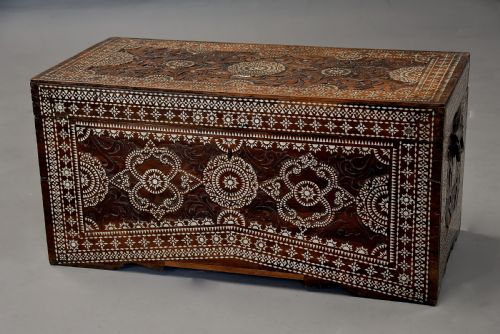
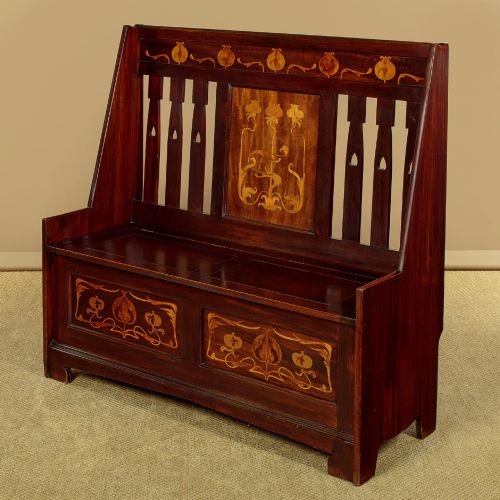
Buyers encounter diverse regional styles on this page, including English Tunbridge Ware, Middle Eastern and Syrian trunks, and Arts and Crafts designs. Each origin brings distinct timber choices and specific decorative motifs to the surface of the container.
Materials and construction methods
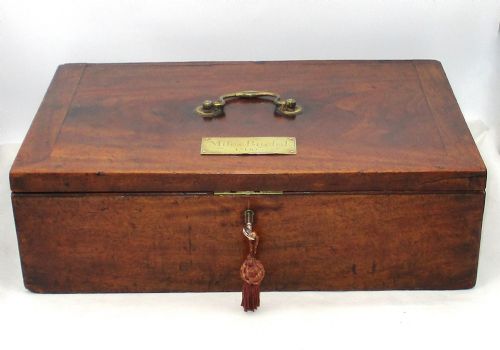
Cabinetmakers utilised hardwoods such as mahogany, oak, walnut, and rosewood as the primary structural foundation for each antique inlaid storage box. Softer woods like sycamore, satinwood, and boxwood provided contrasting colour and grain for detailed surface patterns.
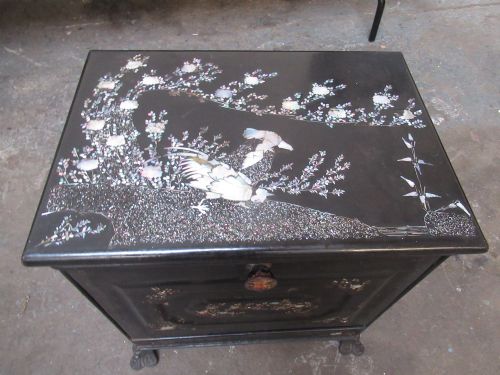
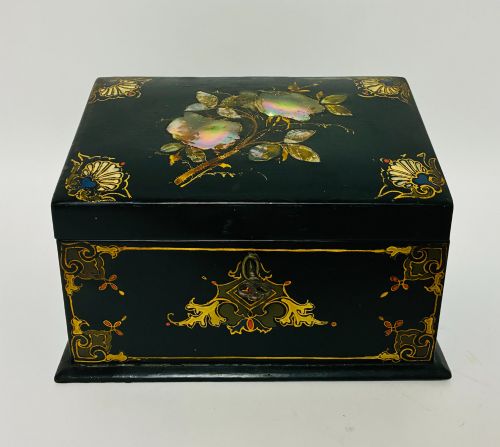
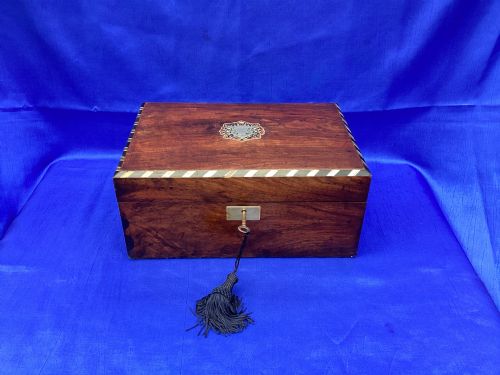
Inlay techniques combined contrasting timbers with materials like mother-of-pearl, bone, brass, and pewter, set flush into recesses carved into the wood. Marquetry formed pictorial scenes or floral arrangements, while parquetry created geometric patterns using small wooden tiles.
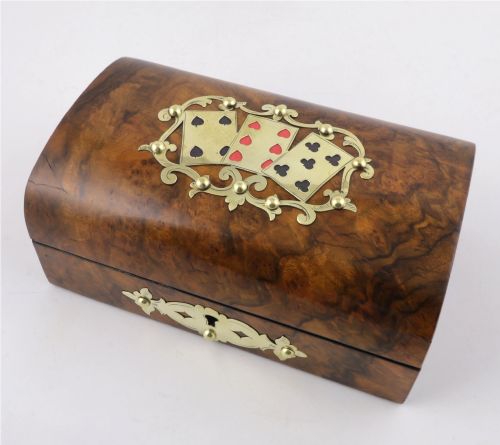
Among the storage options lies a specialised playing card box equipped for poker dice games.
Assessing quality in decorative boxes
Quality rests upon the precision of the cabinetmaker's joinery and the tightness of fit where different materials meet on the surface. Superior pieces maintain crisp alignment in their marquetry or parquetry without visible gaps or excessive filler around the inlays.
The selection of timber grain defines the visual success of the piece, with figured mahogany, burr yew-wood, and bird's-eye maple elevating standard forms. Original working locks, hinges, and interior fittings further distinguish finer examples from altered or later-assembled containers.
James Shoolbred and Co·Holtzapffel and Co
The Antique Inlaid Storage Box Glossary
- Tea Caddy
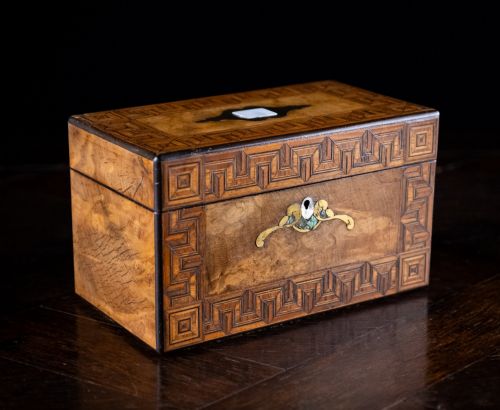
- A small storage box originally designed to hold loose tea leaves, often fitted with internal compartments and a lock. Many surviving examples feature delicate wood veneers and stringing.
- Marquetry
- A decorative technique applying pieces of veneer to a structure to form pictorial designs or scrollwork. Craftsmen selected woods of varying natural tones to create contrast without paint.
- Parquetry
- Geometric mosaic woodwork forming repeating patterns such as cubes or stripes across the surface of a box. This technique showcases precise sawing and fitting of small timber blocks.
- Tunbridge Ware
- Small wooden objects decorated with mosaic patterns made from thousands of tiny tinted wood blocks. Named after the English town where the technique flourished.
- Coffer
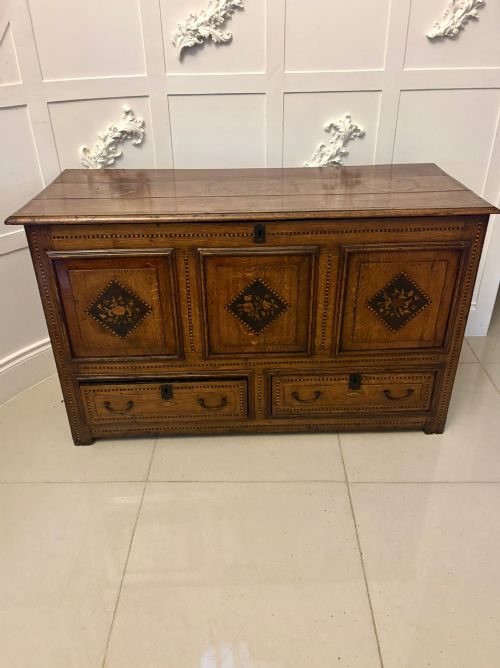
- A heavy wooden chest with a hinged lid, traditionally used for storing valuables, documents, or textiles. Early examples often display carved panels alongside inlay work.
Antique Inlaid Storage Box: Frequently Asked Questions
What were tea caddies used for?
Tea caddies stored expensive loose tea leaves safely under lock and key in Georgian and Victorian households. Servants or the master of the house kept the key to ration the supply.
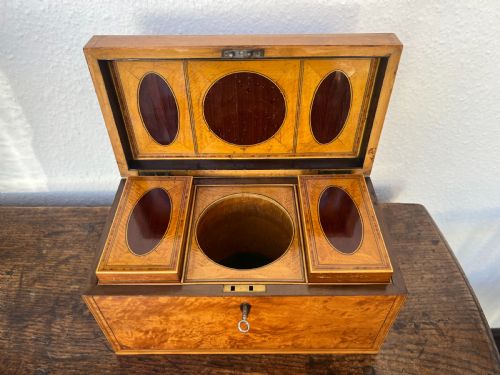
Inside, the box often featured separate compartments for green and black teas, plus a central mixing bowl for blending.
How do I date a wooden storage box?
Dating relies on the combination of timber species, construction joints, and the style of the inlay work. Georgian pieces frequently use mahogany or satinwood with simple geometric stringing.
Later Victorian items often introduce exotic veneers like rosewood or bird's-eye maple, paired with mother-of-pearl or complex marquetry.
Can I use these antique boxes daily?
These boxes function well for modern storage of jewellery, trinkets, stationery, or playing cards. Their robust timber construction withstands regular handling when treated with care.
Keep them away from direct sunlight and fluctuating humidity to protect the delicate wood veneers and internal linings.
What is the difference between a coffer and a box?
A coffer is a large, heavy chest built with thick oak or hardwood planks, designed for floor placement and bulk storage. Smaller boxes sat on tabletops or desks for personal items and documents.
Coffers often feature structural framing and robust iron hinges, whereas tabletop boxes prioritise fine decorative finishes.