




Regency Inlaid Casket
A regency inlaid casket is a handsome lidded box designed to hold small valuables, papers, or tea, built to last and look fine on a table.
Regency Inlaid Casket
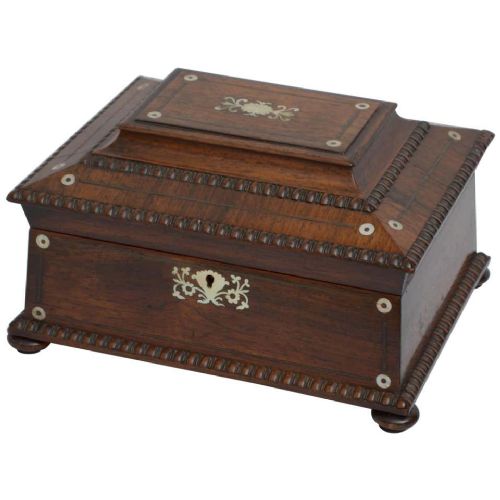
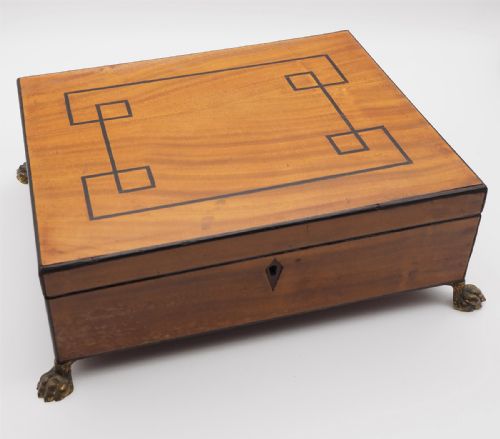
A regency inlaid casket covers a range of small storage pieces including tea caddies, jewellery boxes, document cases, and work boxes. Most examples seen on this page date from the Regency and Georgian periods down into the nineteenth century.
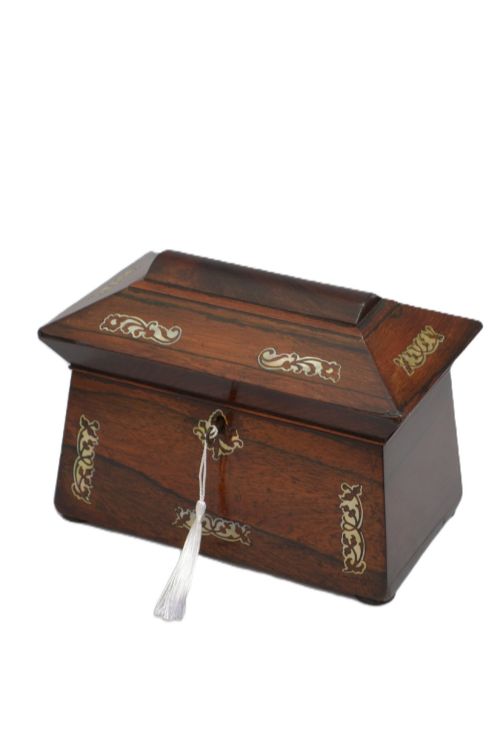
The form is typically rectangular or sarcophagus-shaped, often fitted with compartments inside for needles, letters, or dry leaf. The makers designed them for domestic use in the drawing room or study, where timber and metal decoration caught the light.
Rosewood, mahogany, and yew form the backbone of these pieces, frequently enhanced by contrasting woods or shell. You are most likely to meet rosewood boxes featuring cut brass inlay or mother-of-pearl details on this page.
How they were made
Cabinet makers constructed the carcases from dense tropical hardwoods like rosewood, coromandel, and mahogany, often veneered over a stable secondary timber. These surfaces provide the dark ground required to make contrasting inlays stand out.
Decoration relied on precise cutting of brass, boxwood, ebony, and mother-of-pearl into geometric bands, scrolling motifs, or floral cartouches. Craftsmen set these materials flush into the wood before finishing the surface with polish.
Many boxes incorporate brass banding along the edges and corners for structural strength and visual definition, sometimes matched with recessed campaign handles and working locks with keys.
Rosewood is the dominant timber across these listings, frequently paired with brass inlay or mother-of-pearl.
What varies in quality
The standard of timber selection and veneer matching defines the upper tier of these pieces. Grain that flows naturally across the lid and sides shows greater care than panels put together from random scraps.
Precision in the inlay work separates ordinary boxes from superior ones. Clean edges where brass or mother-of-pearl meets the surrounding wood, without thick gaps of dark filler, indicate skilled handiwork.
Interior fittings and original condition carry significant weight. Complete silk-lined compartments, functional compartmental trays, and intact escutcheons maintain the integrity of the piece.
The Regency Inlaid Casket Glossary
- Casket
- A decorative box used for holding valuables, letters, or keepsakes. These vessels typically feature hinged lids and secure locks.
- Inlay
- A technique where pieces of contrasting material are set into depressions carved into a solid wood base. Common elements include brass, mother-of-pearl, and lighter woods.
- Sarcophagus
- A box shape featuring a domed or sloping lid with flared sides, reminiscent of classical stone tombs. This silhouette became popular during the Regency period for tea caddies and work boxes.
- Escutcheon
- A protective plate surrounding a keyhole, usually made of brass or bone. It prevents the wood around the lock from splitting with repeated use.
- Veneer
- A thin sheet of decorative timber applied over a secondary wood carcase. This method allowed makers to display dramatic grain patterns without using solid costly logs.
Regency Inlaid Casket: Frequently Asked Questions
What were regency inlaid caskets used for?
These boxes served multiple practical purposes in nineteenth-century homes, functioning as secure receptacles for jewellery, sewing implements, correspondence, or tea.
Owners kept them on tables in private rooms or public parlours where their decorative exteriors contributed to the interior scheme.
How do I tell a Regency box from a Victorian one?
Regency pieces often display restrained classical proportions with precise cut brass inlay or architectural rosewood forms. Victorian examples tend towards heavier ornamentation, wider use of mother-of-pearl, and different interior layouts.
Construction methods and secondary timbers also shift as manufacturing techniques evolved past the middle of the nineteenth century.
How should I clean a rosewood and brass box?
Dust the exterior gently with a dry, soft cloth to remove everyday particles. Avoid harsh modern chemical polishes or excessive moisture, which can damage old polish and lift delicate veneers.
A micro-layer of quality wax can help protect the timber surface if applied sparingly.
Are the locks on these boxes usually functional?
Many boxes retain their original lever locks, though keys are frequently lost over the decades. Some mechanisms still work smoothly with the original key, while others are locked shut or require professional adjustment.
It is wise to check the status of the lock if secure closure matters to you.
What is burr yew and why is it sought after?
Burr yew is a highly figured wood grain caused by growths on yew trees, creating swirling patterns of dark knots against a warm golden background. Cabinet makers valued it for small statement pieces because it catches the eye.
Boxes made from this timber are less common than standard rosewood or mahogany variants.