

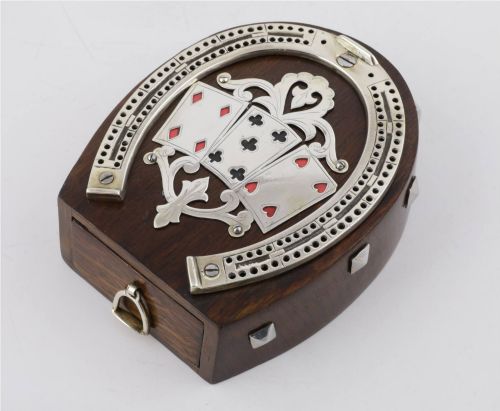


Vintage Cribbage Board
A vintage cribbage board is a tactile piece of social history used for scoring points in the traditional card game, prized for its craftsmanship and material variety.
Vintage Cribbage Board
A vintage cribbage board forms the heart of traditional pub and parlour card games, designed with drilled tracks of holes to peg scores during play. When you search for a vintage cribbage board, you encounter pieces that span the Georgian, Victorian, and later nineteenth-century eras, reflecting domestic leisure across generations.
The objects on this page range from standalone boards to comprehensive games boxes and compact travelling cases. Many take the form of dedicated wooden boxes that store cards and pegs inside, whilst others are flat boards or specialist brass pipe tampers.
Victorian examples dominate the selection, often accommodating three players rather than the standard two, showcasing the era's taste for social gaming. Materials vary widely from simple hardwoods to luxury sterling silver fittings, bone, and horn.
How they were made
Cabinet makers utilised dense timbers such as mahogany, kingwood, and burr walnut, fashioning them into solid boxes and shaped boards with precision inlays. These woods provided the durability needed for repeated pegging without splitting the delicate scoring tracks.
Specialist materials like bone, horn, and brass appear frequently, carved or cast into intricate components for scoring indicators and decorative hinges. Prisoner of war items demonstrate meticulous hand carving in bone, reflecting extraordinary patience using rudimentary tools.
Vintage Cribbage Board Retail Price Guide 2026
Typical asking prices for vintage cribbage board among the pieces listed under this phrase on Sellingantiques today, from the lower quarter to the upper quarter. They describe what is for sale here now, not the wider market.
What varies in quality
Quality rests upon the choice of timber and the precision of the drilled pegging holes, where cleaner lines and tighter joints distinguish finer workshop production from utilitarian items. Finer pieces incorporate exotic veneers like burr walnut or kingwood alongside metal mounts.
The presence of original fitted interiors, complete box compartments, and integrated brass or sterling silver detailing elevates a piece significantly. Multi-player configurations and unusual materials such as stag horn or hallmarked silver mark the upper tier of surviving examples.
The Vintage Cribbage Board Glossary
- Cribbage board
- A flat board or box featuring rows of small holes used to track scores in the card game of cribbage. These typically accommodate two or three players using metal or wooden pegs.
- Peg
- A small pin, often made of brass or bone, inserted into the tracks of a cribbage board to record points. Sets often lack their original pegs, which affects completeness.
- Compendium
- A single decorative box containing equipment for multiple different parlour games. These often incorporate a cribbage board alongside chess, backgammon, or dominoes.
- Pipe tamper
- A small hand-held implement used to pack tobacco into a pipe bowl. Some Victorian examples double as functioning cribbage boards cast in brass.
Vintage Cribbage Board: Frequently Asked Questions
What is a cribbage board?
A cribbage board is a mechanical scoring device used during the card game of cribbage. Players move small pegs along drilled tracks to record points won during each hand.
Historically kept in parlours and taverns, these boards range from simple wooden slabs to elaborate folding boxes lined with velvet and compartmented for cards.
How do you date an old cribbage board?
Dating relies on identifying the timber species, construction methods, and any metal hallmarks or maker marks present on the piece. Georgian and Victorian examples often feature hand-cut dovetails and regional hardwoods.
Stylistic cues such as burr walnut veneers, silver mounts with town marks, or prisoner of war bone carvings help narrow down the decade of production.
Are original pegs usually included?
Many surviving boards arrive without their original pegs due to their small size and tendency to get lost over generations. Replacements are frequently utilised by collectors to restore full usability.
When original bone or brass pegs do accompany a board, it enhances the completeness and desirability of the item.
How should I care for a wood board?
Wooden and veneered boards require stable indoor humidity away from direct sunlight to prevent the timber from warping or the glue from failing. Occasional light waxing preserves the finish without harming the antique surface.
Metal components like brass tracks or silver mounts benefit from gentle dusting rather than aggressive chemical polishing.