



Wooden Games Board
A wooden games board is a tactile piece of social history built for play, offering both furniture function and interactive entertainment.
Wooden Games Board
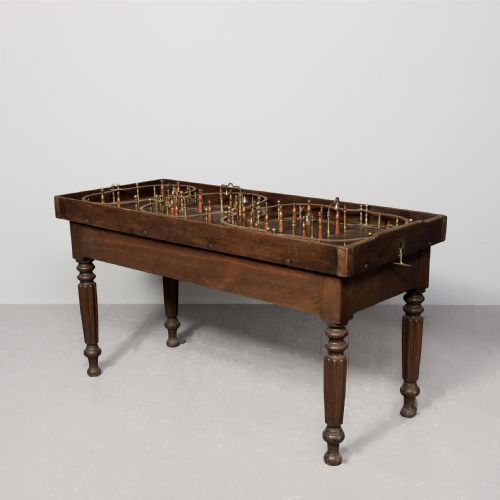
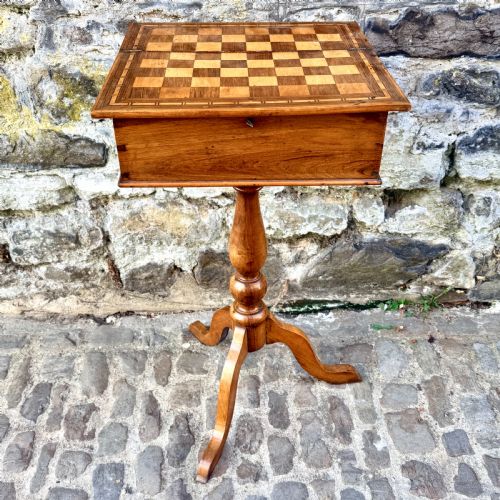
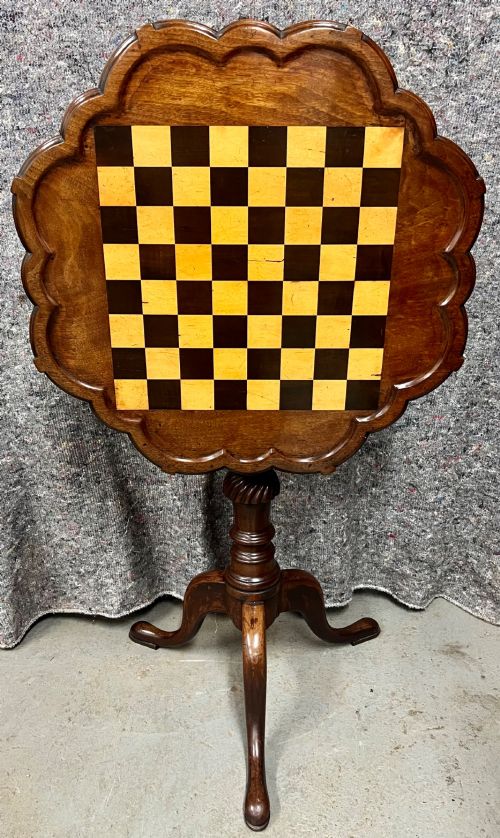
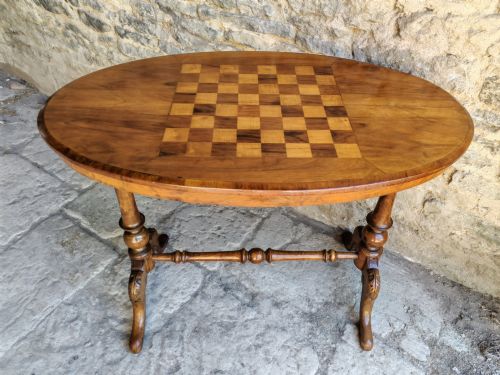
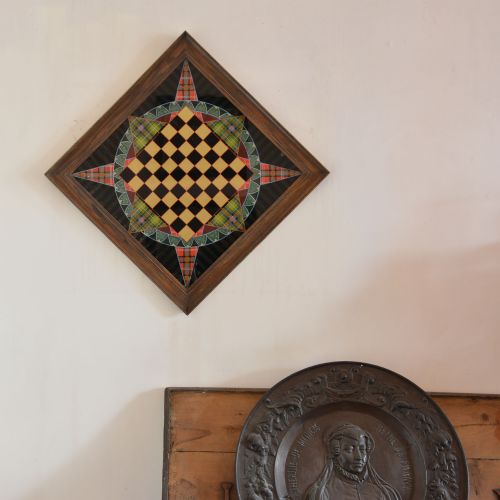
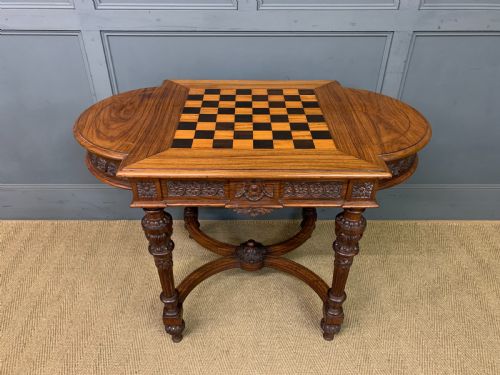
A wooden games board encompasses folding chess boards, standalone tables, scoreboards, and compendiums designed for pastimes like backgammon, cribbage, and solitaire. You will frequently encounter Victorian folding boards alongside freestanding mahogany and walnut chess tables originating from the nineteenth century.
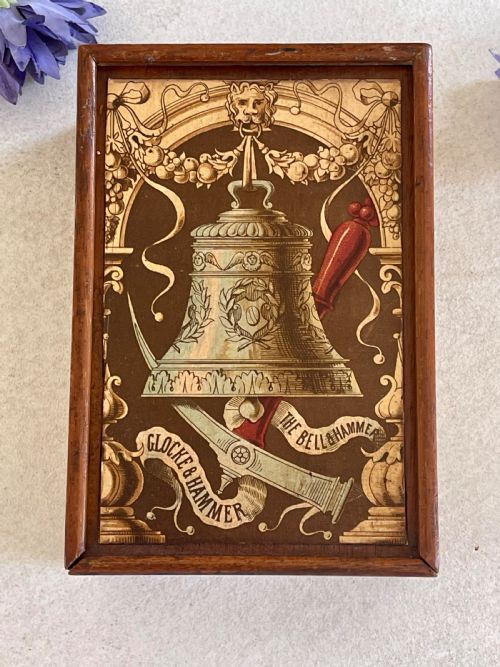
The selection extends from domestic cribbage boxes and travelling sets to larger wall-mounted scoreboards and fairground panels. These objects range in scale from portable items intended for travel to substantial furniture pieces meant for permanent display in a parlour.
Origins span English, French Provincial, Swedish, and Anglo-Indian workshops, demonstrating diverse regional cabinet-making traditions applied to leisure. Whether you need a compact folding board or a multi-game compendium, the variety reflects centuries of social pastimes.
How they were made
Cabinet makers utilised dense hardwoods such as mahogany, walnut, rosewood, and oak for structural stability and fine grain. Inlays of boxwood, birch, and sycamore created contrasting playing squares and decorative borders on the playing surfaces.
Specialised components incorporated bone, brass, slate, and reverse glass painting to add detail to scoreboards, game bells, and compendium interiors. Folding mechanisms and hinges required precise metalwork to ensure seamless operation over repeated use.
Listings feature eighteenth-century Georgian examples alongside nineteenth-century Victorian and early twentieth-century pieces.
What varies in quality
The distinction between ordinary and superior pieces rests on the precision of the woodwork and the quality of the timber selection. Finely figured burr walnut, intricate marquetry, and well-matched contrasting veneers elevate a piece far above utilitarian items.
Subtleties in turning, hand-carved details, and the integration of original operational hardware determine the overall standard of craftsmanship. A piece that retains its original scoring pegs, marbles, or fitted interior boxes demonstrates greater integrity.
Orme and Sons Manchester·Thurston and Co Ltd·British Chess Company
The Wooden Games Board Glossary
- Compendium
- A single fitted box containing equipment and boards for multiple different games.
- Cribbage board
- A scoring board featuring tracks of small holes used to record points in the card game cribbage.
- Marquetry
- Decorative woodwork where thin pieces of veneer are applied to a structure to form intricate patterns or pictures.
- Solitaire board
- A circular timber board with indented depressions designed for a single player to jump marbles or pegs.
Wooden Games Board: Frequently Asked Questions
How do I date a wooden games board?
Dating relies heavily on timber choices, construction techniques, and stylistic markers associated with periods like the Georgian era or Victorian times. Secondary woods, hinge types, and joinery methods provide reliable clues to the decade of manufacture.
Examining any accompanying markers, scoreboards, or associated sets can also help narrow down the production period. Comparing the piece to documented examples from known makers clarifies its place in time.
Were these boards used for travel?
Many smaller folding boards and compendiums were specifically engineered for portability during nineteenth-century journeys. These often feature locking mechanisms or magnetic and pegged pieces to secure the game during transit.
Larger freestanding tables and wall-mounted scoreboards remained stationary in billiard rooms and parlours. Portable variants catered to the Victorian appetite for entertainment away from home.
What woods were commonly used?
Mahogany and walnut served as the primary structural timbers for larger tables and boxes. Rosewood, kingwood, and oak also appear frequently in framing and cabinet work.
Contrasting woods like boxwood and birch provided the light tones needed for alternating playing squares and inlay work. Secondary timbers such as pine or cedar frequently form internal dividers and carcases.
How do I care for a antique board?
Protect antique timber surfaces from direct sunlight and dramatic shifts in relative humidity to prevent wood shrinkage and veneer lifting. Gentle dusting with a dry, soft cloth preserves the polish without introducing moisture.
Avoid modern chemical polishes, relying instead on traditional wax formulations sparingly if nourishment is required. Handling sliding lids and folding hinges with care prevents unnecessary wear on aged joints.