


Antique Chessboard
An antique chessboard brings tactile strategy into your room, offering centuries of timber craftsmanship and inlaid play surfaces.
Antique Chessboard
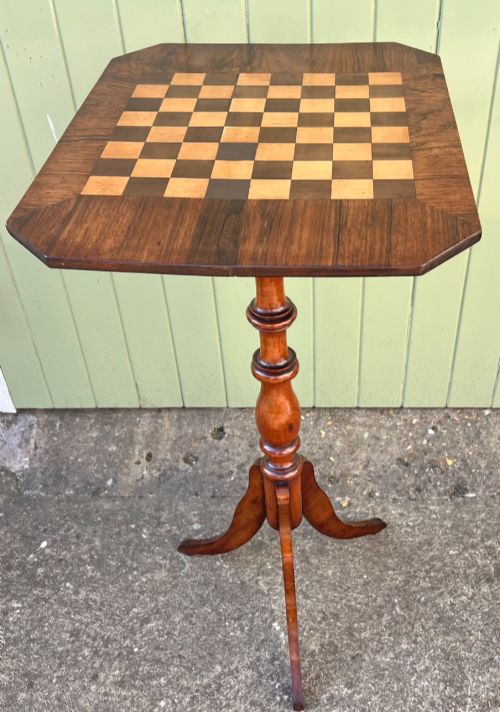
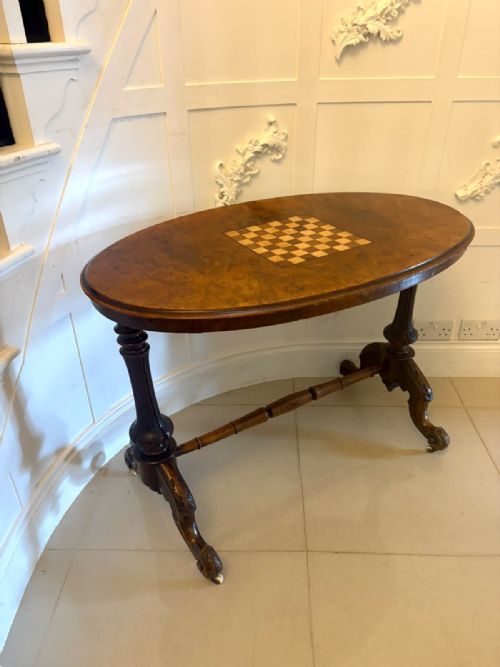
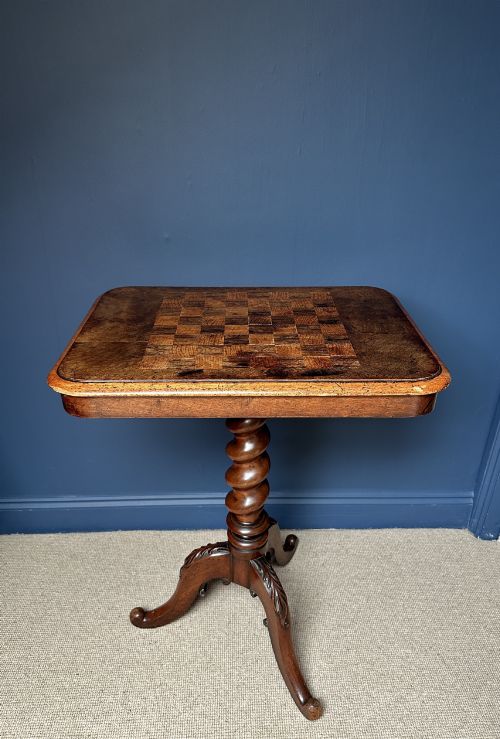
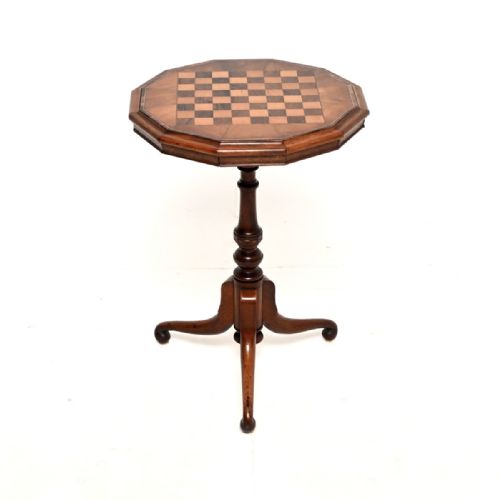
When you search for an antique chessboard, you encounter everything from folding wooden boards and portable leather travel surfaces to substantial freestanding tables configured for multiple pastimes. The examples met most frequently on this page date from the nineteenth century, spanning Regency, Victorian, and Edwardian periods.
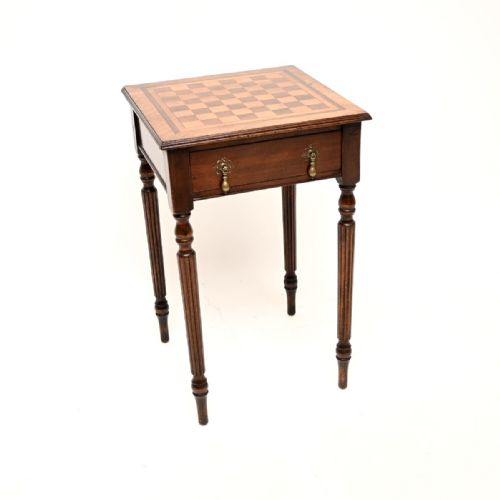
Many survivors double as sewing tables, work tables, or backgammon boards, reflecting how nineteenth-century households valued multi-functional furniture. Dedicated folding boards and miniature sets also appear alongside grand pedestal centre tables featuring permanently inlaid squares.
Origins vary from English workshops to Swedish Biedermeier cabinets, Anglo-Indian productions, and inlaid marble pieces from Kashmir. This geographic spread ensures that timber selections and decorative motifs shift notably between individual pieces.
Materials and construction methods
Cabinetmakers constructed these surfaces using contrasting timbers to create the alternating dark and light squares required for play. Rosewood, walnut, mahogany, and ebony typically form the dark squares or the primary table carcase, while boxwood, satinwood, sycamore, and birch provide the pale counterparts.
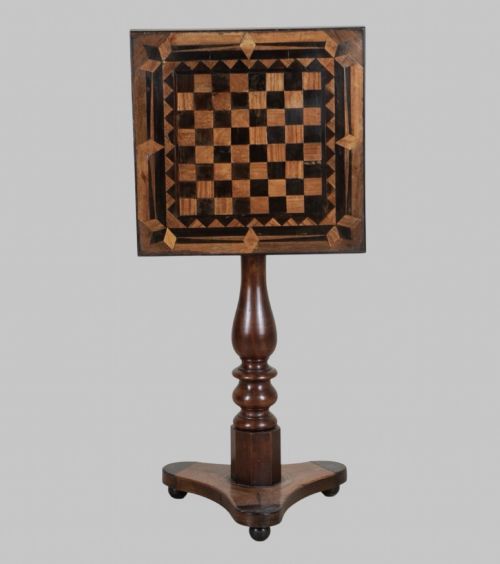
Intricate marquetry and geometric inlay define the decorative vocabulary, frequently incorporating brass stringing, penwork, or mother-of-pearl accents into the borders. Structural forms range from turned pedestals and tripod legs to leather-bound folding panels and solid stone slabs.
Assessing quality and execution
Quality rests upon the precision of the timber inlay and the stability of the underlying carcase. Superior pieces demonstrate flush, tightly fitted squares without unsightly gaps or timber shrinkage lifting the surface.
The choice of secondary woods, the crispness of carved pedestals, and the integration of pivoting or folding mechanisms further distinguish finer workshops from utilitarian production.
George Merrifield·A British Chess Company
The Antique Chessboard Glossary
- Marquetry
- Decorative veneer work forming pictures or geometric patterns by fitting together small pieces of wood, shell, or ivory. This technique creates the contrasting squares on many boards.
- Staunton style
- The standard design for chess pieces introduced in the mid-nineteenth century, featuring distinct architectural shapes topped by a cross on the king. Named after the player Howard Staunton.
- Compendium
- A single box or case containing multiple games, often including chess, backgammon, dominoes, and cards. These multi-use sets gained immense popularity during the Victorian era.
- Penwork
- A decoration technique using ink applied to wood to simulate more expensive inlay or carving. Regency makers utilised this method for delicate board borders.
- Scycamore
- A pale hardwood frequently utilised for the lighter squares on nineteenth-century boards. It provides a clean contrast against darker timbers like walnut and rosewood.
Antique Chessboard: Frequently Asked Questions
How do I date an antique chessboard?
Dating relies upon timber choices, construction techniques, and prevailing decorative styles. Regency pieces often display penwork or rosewood veneers, while Victorian examples frequently favour burr walnut and heavy pedestal bases.
Examining secondary woods underneath or inside drawers helps clarify the period of manufacture. Comparing the construction methods to dated comparative pieces provides further confirmation.
Were these boards meant for display or play?
Many antique chessboards served a dual purpose as functional furniture and decorative drawing-room objects. Games tables invited daily recreation while remaining part of the formal interior scheme.
Folding boards and leather library versions offered portable convenience for travellers and club players. Compendiums kept multiple pastimes neatly stored when visitors arrived.
How should I care for a wooden chess table?
Keep wooden surfaces away from direct sunlight and heat sources to prevent the veneers from drying out and cracking. Maintain a stable room temperature to protect the delicate inlaid squares.
Apply a microcrystalline wax periodically to nourish the timber and preserve the polish. Avoid excessive moisture when cleaning the inlaid play surface.
What is a games compendium?
A games compendium is a fitted box containing equipment for several different pastimes, such as chess, checkers, backgammon, and cribbage. These portable sets became common during the Victorian period.
They allowed households to enjoy a wide variety of board games without requiring multiple separate tables or boxes. Inside, velvet-lined compartments keep all the matching pieces organised.