


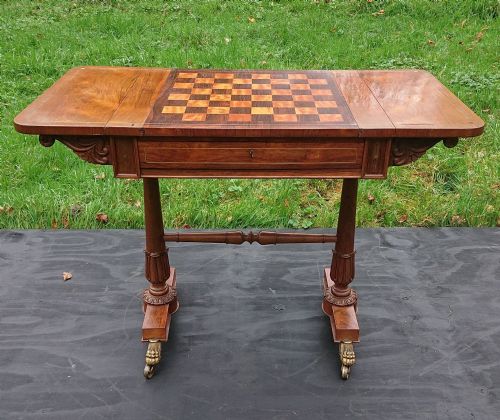


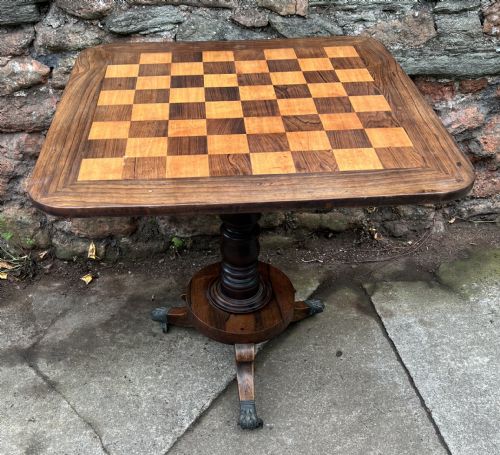
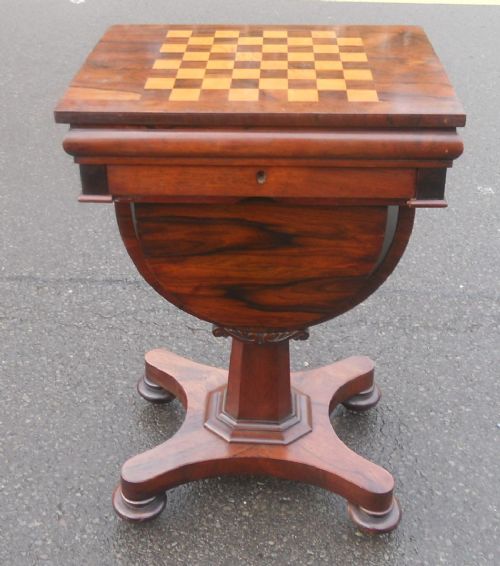
Rosewood Chess Board
A rosewood chess board is a densified timber battleground for strategy, prized for rich grain contrast and enduring structural heft.
Rosewood Chess Board
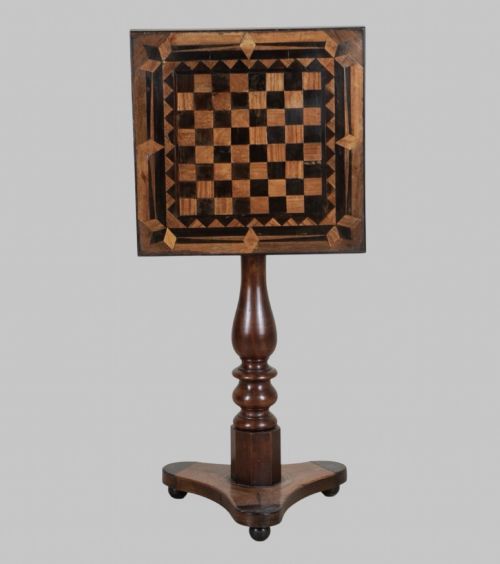
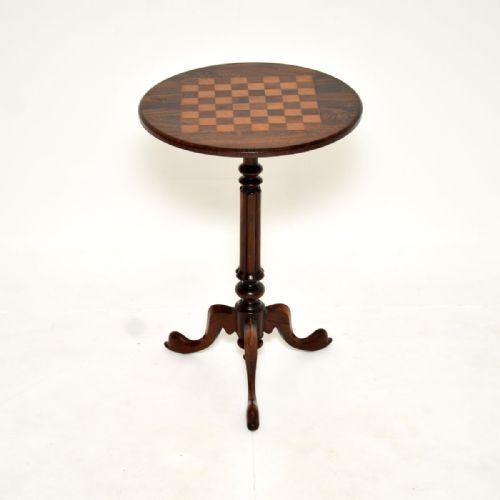
A rosewood chess board appears across several nineteenth century periods, including Regency, Georgian, and Victorian eras. These objects manifest primarily as dedicated freestanding games tables, folding games boxes, and occasional flat boards incorporating contrasting timbers.
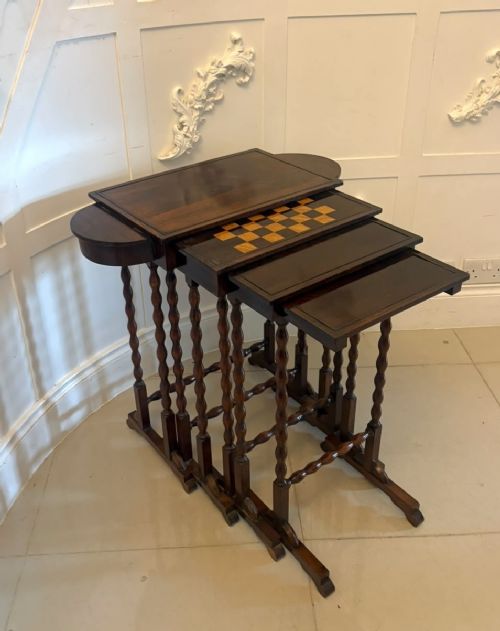
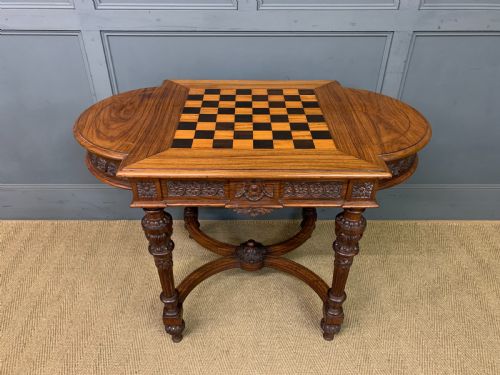
The buyer encounters items ranging from elaborate specimen tables with inlaid chequer tops to integrated nests of tables and multi-game boxes. Origins span English workshops alongside distinct Anglo-Indian productions.
Materials and technique
Construction relies heavily on dense rosewood paired with lighter contrasting woods such as boxwood, sycamore, satinwood, maple, and mahogany to form the alternating squares. Inlay techniques define the chequer patterns, frequently supplemented by brass mounts, mother-of-pearl, and bone details.
Cabinetmakers utilised sturdy hardwoods and specialised marquetry methods to ensure flat, stable playing surfaces that withstand decades of play and atmospheric change.
Materials recorded across boards include rosewood, boxwood, satinwood, mahogany, walnut, ebony, brass, and mother of pearl.
What separates the tiers
Quality rests upon the precision of the wood inlay and the depth of figure in the rosewood grain. Masterwork pieces integrate secondary timbers like mahogany and satinwood with meticulous joinery, while simpler folding boards display more straightforward construction.
The presence of integrated multi-game functions, such as backgammon interiors or custom tripod bases, elevates a piece from a utility board to a significant formal furniture item.
Gillows
The Rosewood Chess Board Glossary
- Rosewood
- A dense, dark timber valued for its pronounced dark grain and durable nature. It forms the primary dark squares and structural carcasses of these boards.
- Chequer-board
- The alternating light and dark grid pattern upon which chess pieces are deployed. This surface is typically created through precise wood inlay.
- Quartetto
- A matched nest of four tables designed to slide neatly beneath one another. Some nineteenth-century examples incorporate integrated chess tops.
- Specimen timber
- Selected woods chosen for specific decorative qualities or coloration. Makers combined these to create contrasting borders and playing squares.
- Marquetry
- The art of applying small pieces of veneer to a structure to form decorative patterns. This technique produces the crisp grid lines of the board.
Rosewood Chess Board: Frequently Asked Questions
How do I date a rosewood chess board?
Dating relies upon stylistic markers inherent to periods like the Regency or Victorian eras. Cabinetmaking techniques, structural framing methods, and secondary woods offer clues to age.
Changes in leg design, from tripod bases to pillar supports, further narrow down the decade of manufacture.
Were these boards used for other games?
Many nineteenth-century examples served dual purposes, combining chess with backgammon inside folding boxes or reversible table tops. Some occasional tables featured hidden compartments for gaming pieces.
This versatility suited period drawing rooms where space economy mattered.
How should I care for rosewood furniture?
Keep wooden games surfaces away from direct sunlight and severe temperature fluctuations to prevent wood splitting. Gentle dusting with a dry cloth maintains the finish.
Avoid heavy liquid polishes that can seep into historic inlay seams.
What is Anglo-Indian rosewood work?
Anglo-Indian pieces reflect nineteenth-century design exchange between British makers and Indian artisans. These items often showcase distinct regional carving styles and contrasting timber selections.
They represent a specific subset of colonial cabinetmaking.