



Victorian Games Board
A victorian games board brings tactile parlour pastimes into the room, offering inlaid wood and folding leather surfaces designed for chess, cards, and quiet evening competition.
Victorian Games Board
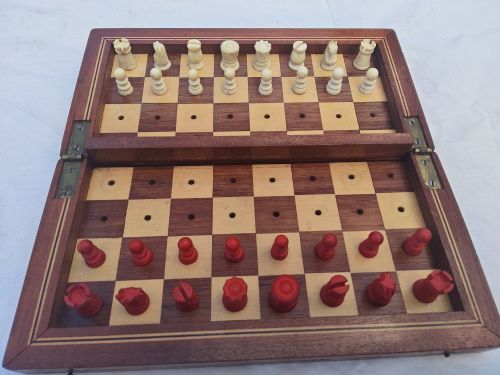
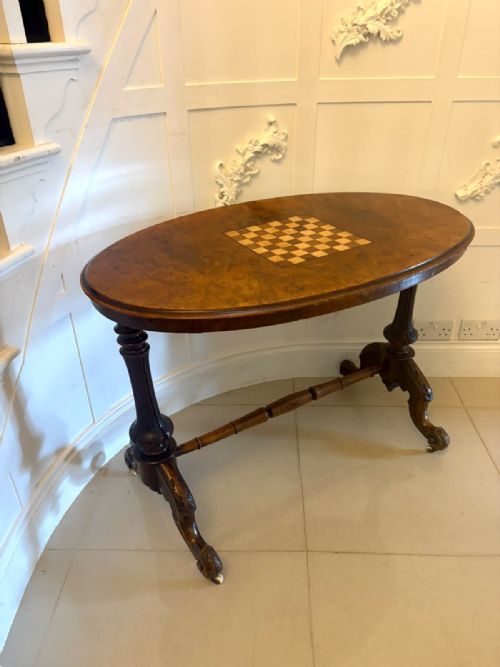
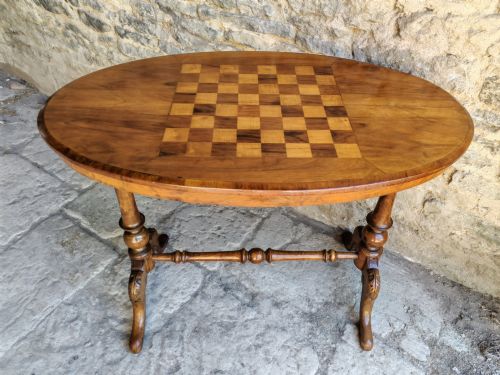
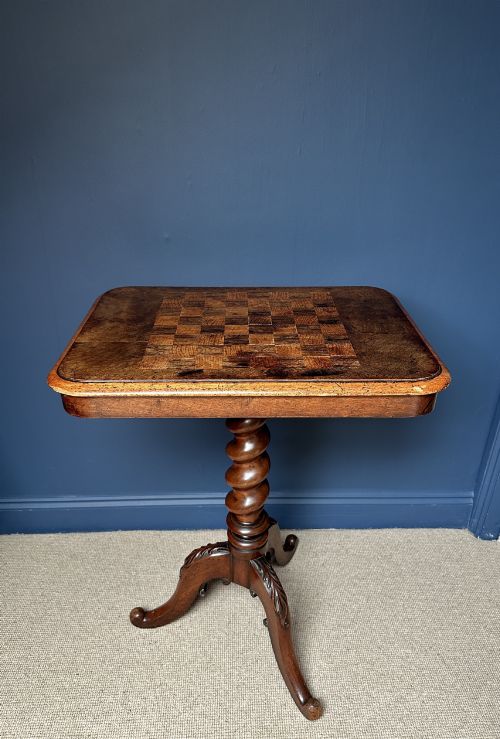
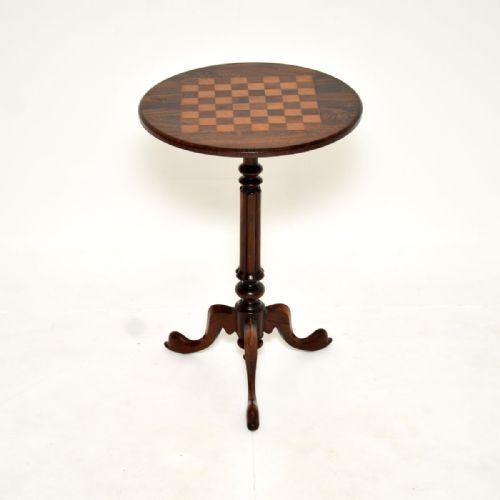
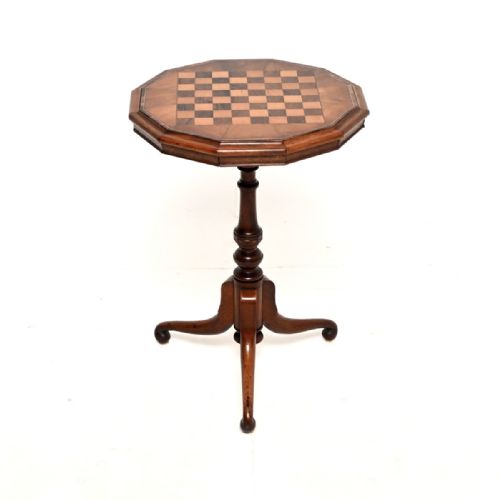
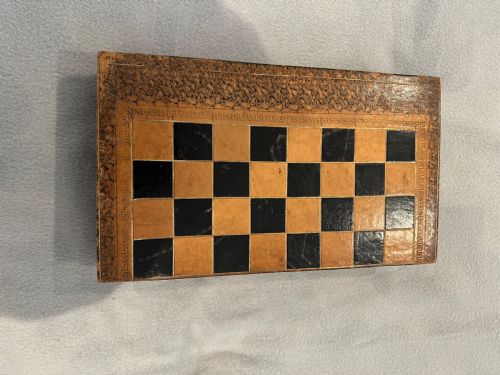
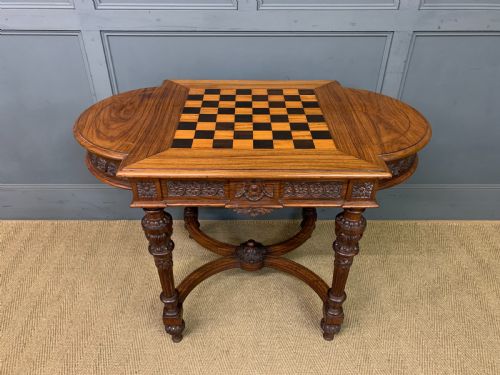
When you search for a victorian games board, you encounter a varied group of objects ranging from folding leather travel boards and tabletop compendiums to large freestanding occasional tables with inlaid chequer surfaces. The pieces listed on this page span the mid to late nineteenth century, taking the form of dedicated folding boards, fitted games boxes, scoreboards, and multi-purpose tables that double as sewing or lamp tables.
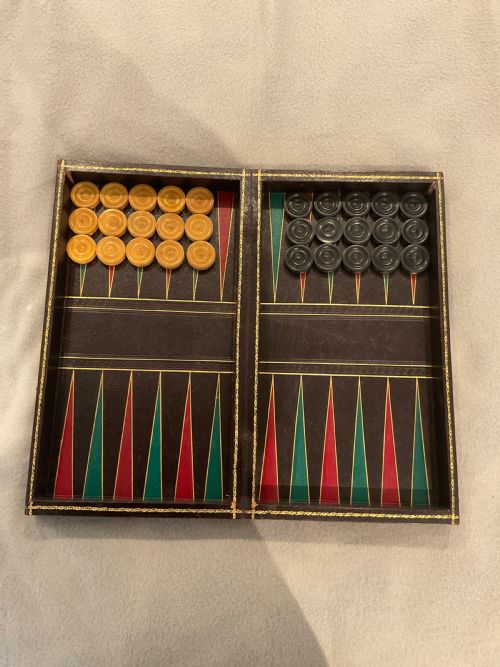
You are most likely to meet walnut and mahogany folding boards, rosewood compendium boxes, and occasional tables featuring inlaid boxwood and ebony squares for chess and backgammon. Many of these surfaces double up, concealing cribbage tracks or backgammon layouts beneath chess tops or inside folding compartments.
Originating largely from British workshops and domestic makers, these items served as the focal point for Victorian household entertainment before the arrival of radio and television. Their survival in domestic settings reflects both their practical utility and the high standard of nineteenth-century cabinet making.
How they were made
Cabinet makers utilised dense timbers such as mahogany, walnut, and rosewood for structural stability and rich natural grain, often applying burr walnut veneers to table tops and box lids. Inlays demand precise hand-cutting of contrasting light and dark woods, principally boxwood and sycamore, fitted tightly into recessed channels to form crisp chess and draughts squares.
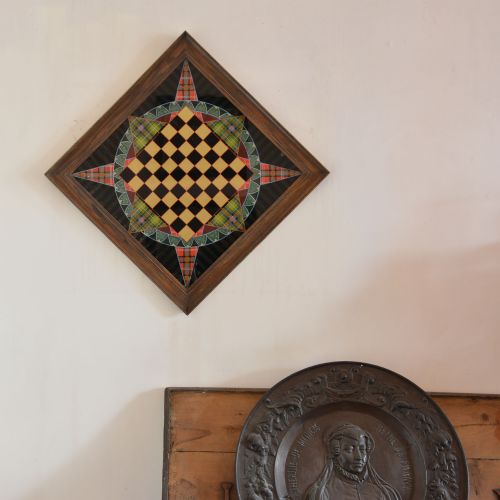
Specialist items incorporate leather tooling, reverse glass painting, and turned bone or ivory for sets and score markers, while brass hinges and lock plates secure folding panels and compartments. The construction relies on traditional joinery techniques, ensuring that hinged boxes and pedestal tables endure through generations of opening and play.
Victorian Games Board Retail Price Guide 2026
Typical asking prices for victorian games board among the pieces listed under this phrase on Sellingantiques today, from the lower quarter to the upper quarter. They describe what is for sale here now, not the wider market.
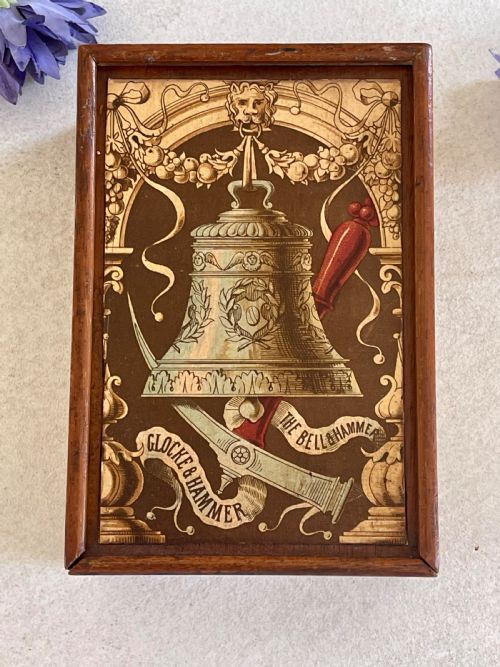
Game bell and hammer sets ensure noisy dispute resolution during Victorian parlour tournaments.
What varies in quality
The standard of a victorian games board rests upon the precision of its timber inlay and the figuring of the surrounding veneers. Superior examples display perfectly flush squares with no visible gaps between contrasting woods, alongside crisp joinery in folding mechanisms and drawers.
Secondary elements such as original brassware, intact interior compartments, and the presence of matching turned playing pieces elevate an item above simpler utilitarian versions. Pieces exhibiting balanced proportions, clean reverse glass work, or documented maker attribution represent the upper tier of surviving examples.
Orme and Sons Manchester·Thurston and Co London·The British Chess Company
The Victorian Games Board Glossary
- Compendium
- A single fitted box containing equipment for multiple different parlour games, such as chess, draughts, backgammon, and cribbage. These portable sets often feature removable trays and folding board lids.
- Cribbage board
- A narrow wooden board featuring drilled tracks of small holes used for scoring points with pegs during card games. Three-hand variants accommodate additional scoring rows.
- Bagatelle
- A nineteenth-century table game involving cues and balls driven up an inclined board into numbered wooden cups. Tables often fold or incorporate storage beneath the playing surface.
- Reverse glass painting
- A decorative technique where an image is painted directly onto the back of a glass panel to be viewed from the front. This method yields a glossy, reflective surface seen on specialised regional boards.
Victorian Games Board: Frequently Asked Questions
What games did Victorians play on these boards?
Victorian households engaged in a wide variety of tabletop pastimes, most commonly chess, draughts, backgammon, and cribbage. Many compendiums and multi-purpose tables were designed to accommodate several of these games within a single piece of furniture.
Scoring boards for billiards and snooker also survive from this era, reflecting the popularity of cue sports in billiard rooms and domestic libraries.
How do I care for an antique wooden games board?
Protect the timber and inlaid surfaces by keeping the piece away from direct sunlight and sudden changes in central heating or humidity. Gentle dusting with a dry cloth suffices for routine maintenance, avoiding modern silicone sprays.
Apply a traditional beeswax sparingly if the wood appears dry, buffing the surface gently to preserve the natural lustre of the walnut, mahogany, or rosewood.
Were these boards made for travel?
Many smaller examples, including leather-bound faux book boards and folding wooden sets, were specifically engineered for portability. Travellers utilised compact folding boards and pegged chess sets to pass time on coaches, trains, and ocean voyages.
Larger pedestal tables and heavy slate-backed scoreboards remained stationary furniture pieces anchored in drawing rooms, libraries, and dedicated games rooms.
How do I distinguish a sewing table from a games table?
Combination tables often blur the boundary by incorporating a chequer top above a fabric work bag or sewing drawer intended for needlework. Opening the fold-over top frequently reveals secondary backgammon or cribbage layouts alongside storage wells.
Dedicated games tables focus exclusively on playing surfaces, whilst trumpet-shaped pedestal variants often combine a games top with an internal wool bag beneath.