
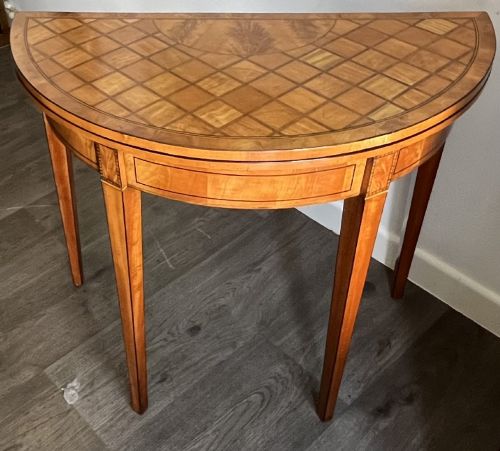


Antique Card Games
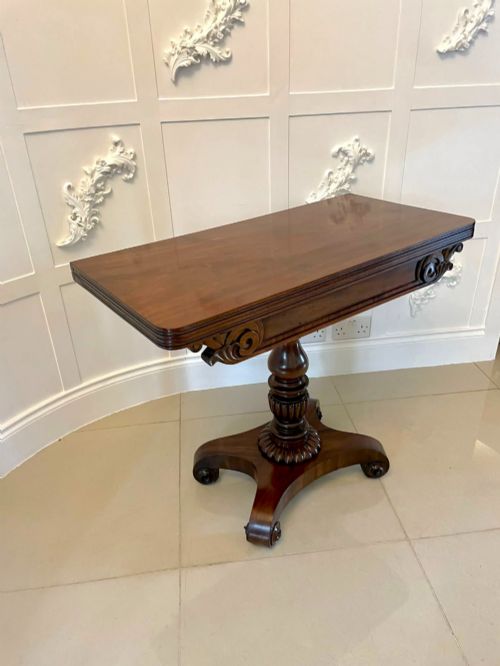
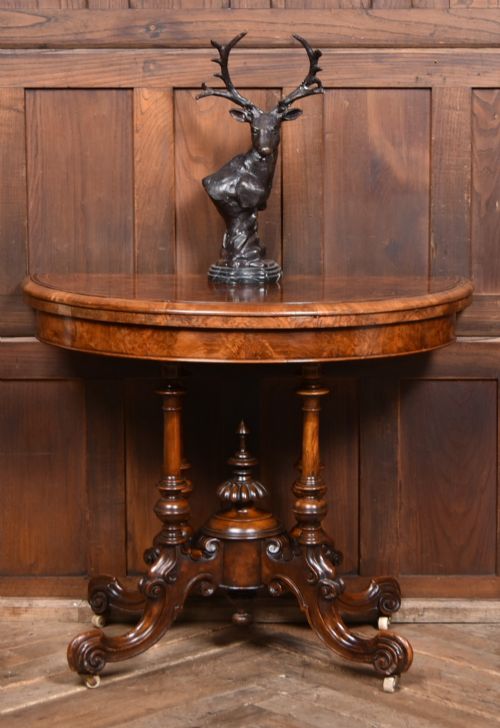
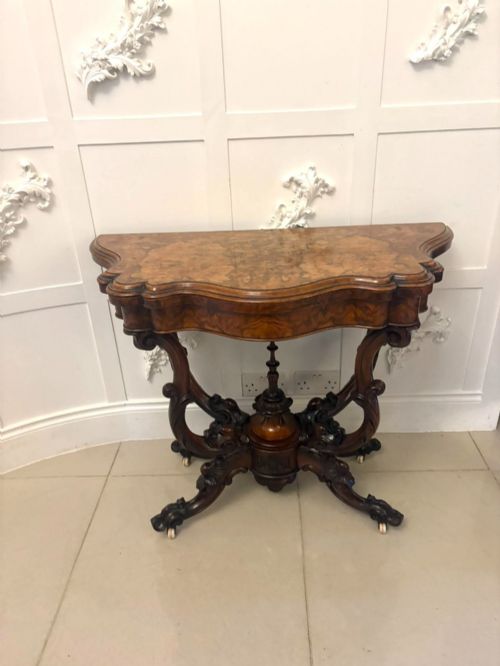
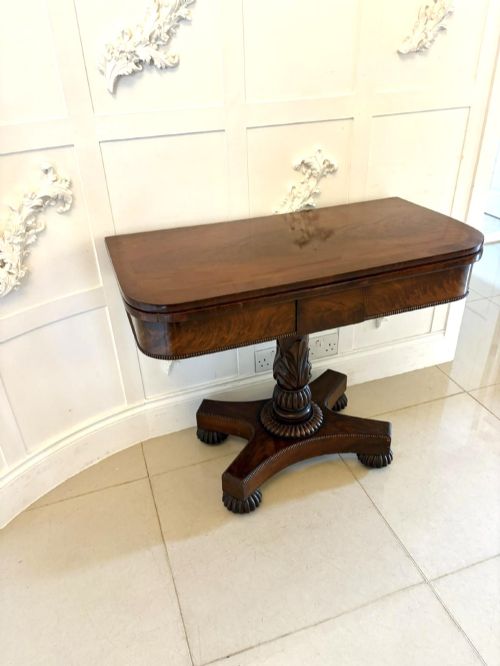
When searching for antique card games, collectors encounter fold-over tables, games boxes, and multi-use tables designed for domestic entertainment across the Georgian, Regency, and Victorian periods.
Antique Card Games
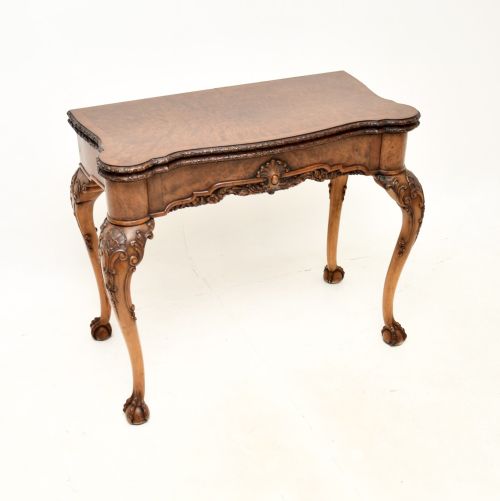
The category encompasses specialised tables and boxes created for social gaming, with antique card games predominantly represented on this page by fold-over card tables, games compendiums, and occasional side tables. Pieces span the 18th, 19th, and early 20th centuries, covering Georgian, Regency, William IV, Victorian, and Edwardian eras.
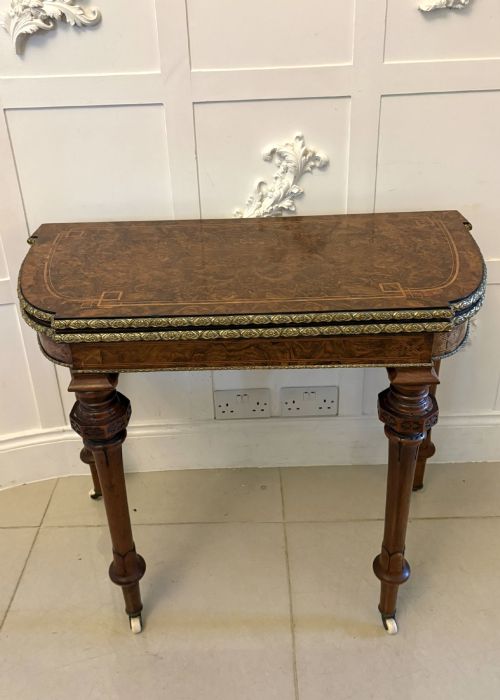
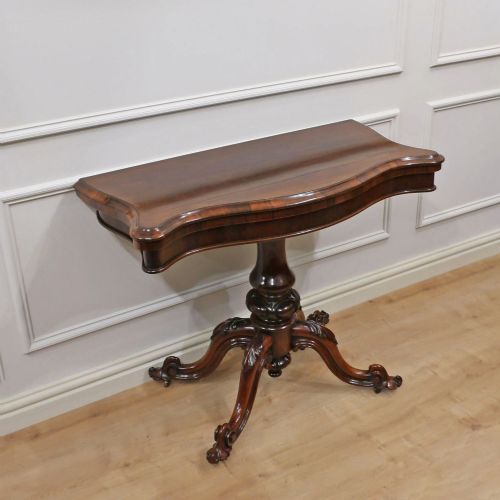
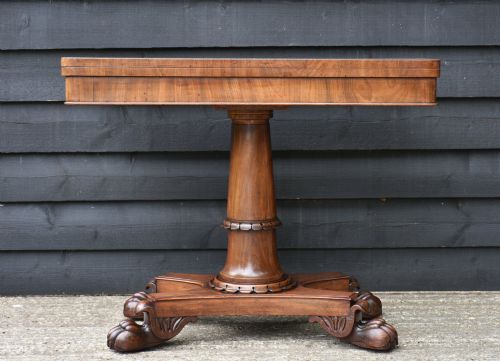
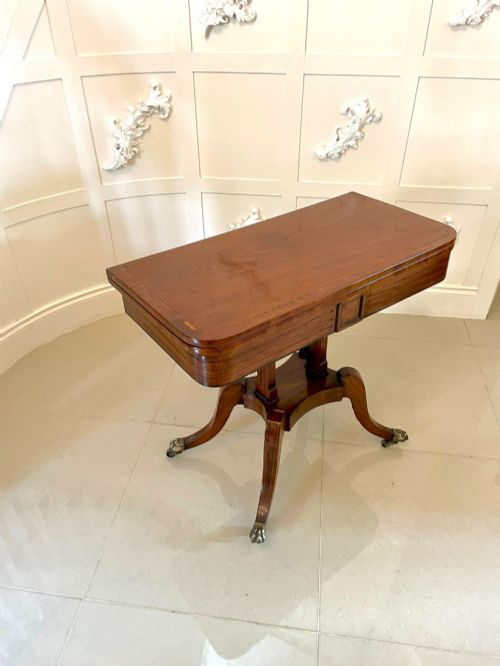
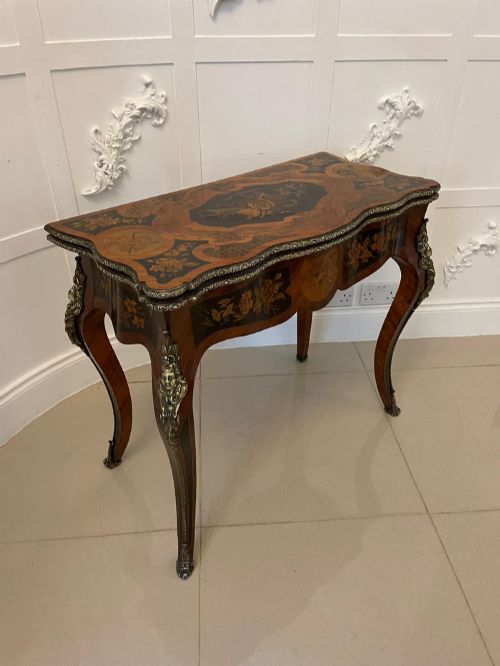
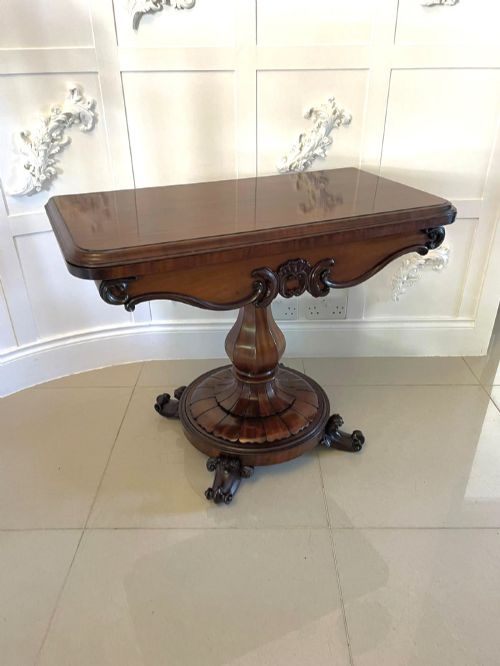
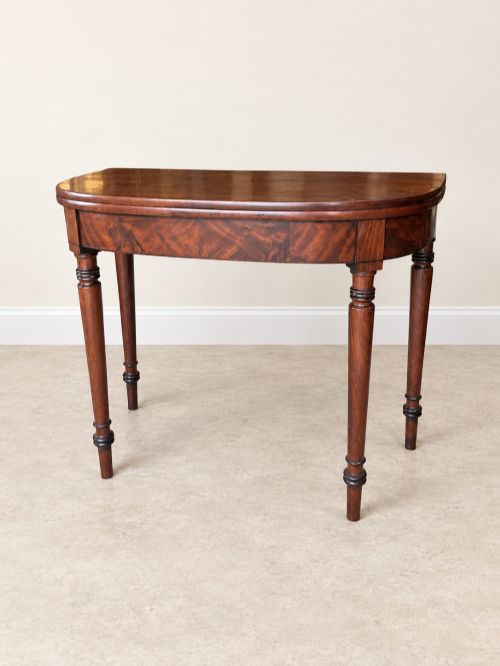
Most frequently, buyers meet mahogany, rosewood, and burr walnut fold-over tables that transition from console or side tables into baize-lined surfaces for card play. Alongside these tables sit smaller gaming boxes, chess tables, and envelope tables with rotating folding tops originating from English, French, and Syrian workshops.
How they were made
Cabinet makers utilised dense timber foundations of mahogany, walnut, and rosewood, frequently applying veneers of satinwood, kingwood, and burr yew to create striking geometric and floral patterns on the tops. Marquetry, brass stringing, and ormolu mounts were added to embellish the exterior surfaces of finer consoles and games boxes.
Structural ingenuity defined the mechanical elements, employing concertina actions, swivel tops, and folding envelope mechanisms to support the heavy timber leaves safely during play. Interior compartments were fitted with lined wells for cards, counters, and dice, reflecting the specific social pastimes of the period.
Listings feature mahogany, rosewood, and burr walnut across Georgian, Regency, and Victorian periods.
What varies in quality
The standard of timber selection and veneer matching dictates the upper tier of these pieces, where master cabinet makers employed symmetrical flame mahogany or richly figured burr walnut across the entire fold-over surface. Lesser examples rely on plain timber planks or heavier secondary woods with minimal surface figuring.
Complexity of construction and hardware integration also set finer examples apart, visible in smoothly operating concertina frames, heavy cast brass mounts, and detailed marquetry inlay. Simpler provincial tables feature plain turned legs and basic swivel actions without decorative banding or internal compartment detailing.
George Bullock·James Phillips·Epstein and Co
The Antique Card Games Glossary
- Fold-over table
- A table with a hinged top that doubles the surface area when opened for play. The rotating or pivoting leaf often reveals a hidden compartment beneath the top.
- Concertina action
- An expanding frame mechanism that extends outwards as the table top opens, providing support for the unfolded leaf without needing a central swing leg.
- Envelope table
- An Edwardian card table featuring four triangular flaps that rotate and fold open together like an envelope. This design reveals a baize-lined playing surface.
- Marquetry
- The art of applying decorative pieces of veneer to a structure to form intricate floral or geometric designs. Craftsmen used contrasting woods such as satinwood and kingwood for this work.
Antique Card Games: Frequently Asked Questions
How do you open a concertina card table?
The top leaf lifts and pivots through ninety degrees to rest upon the extended framework. As the top moves, the wooden concertina frame expands outward to support the weight evenly.
Care must be taken to guide the folding action smoothly without forcing the hinges. Once fully extended, the surface provides a stable area covered in baize or leather for playing cards.
What is an envelope card table?
An envelope table uses a square top composed of four triangular flaps that pivot inwards and outwards. Rotating the top causes the opposing flaps to slide open together into a diamond configuration.
This clever Edwardian mechanism allows the table to function as a small occasional piece when closed. Opening it reveals a compact baize-lined playing surface complete with corner wells for counters.
Where were games boxes used in the home?
Games boxes and compendiums lived in drawing rooms and parlours for evening entertainment. They held chess pieces, playing cards, and dice ready for social gatherings.
Their decorative wood veneers and inlaid surfaces allowed them to sit openly on side tables as ornamental objects. Wealthy households often kept specialised tables specifically for card games in reception rooms.
How can you tell a Regency card table from a Victorian one?
Regency tables frequently display architectural brass inlay, rosewood veneers, and pedestal bases with carved paw feet. The lines tend to follow classical revival influences with clean geometric proportions.
Victorian pieces often favour burr walnut, heavier serpentine fronts, and elaborate carved basket bases or pillar supports. The woodwork on Victorian examples generally showcases darker, highly figured timber grains.