


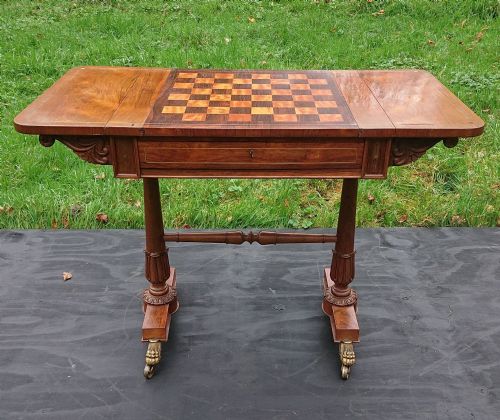


Mahogany Chess Board
A mahogany chess board brings timber warmth and quiet strategy to a room, offering a durable surface for play that doubles as handsome furniture.
Mahogany Chess Board
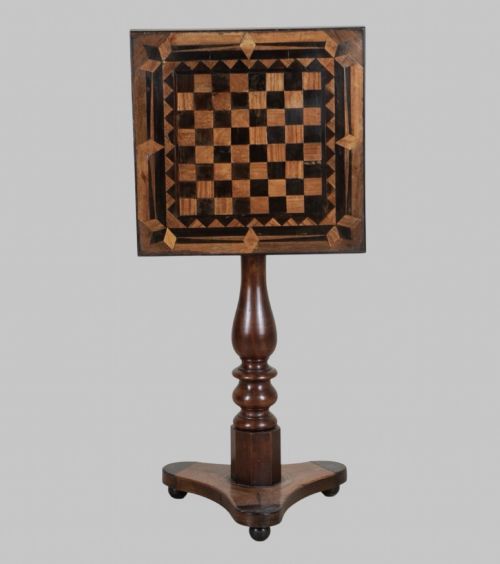
When you search for a mahogany chess board, you are looking at items designed for the game of chess using mahogany as the primary or secondary timber. These pieces range from simple folding boards to elaborate games tables with inlaid tops.
The version you are most likely to meet on this page is the Victorian or Georgian games table or folding board, frequently paired with contrasting woods such as sycamore, boxwood, or rosewood.
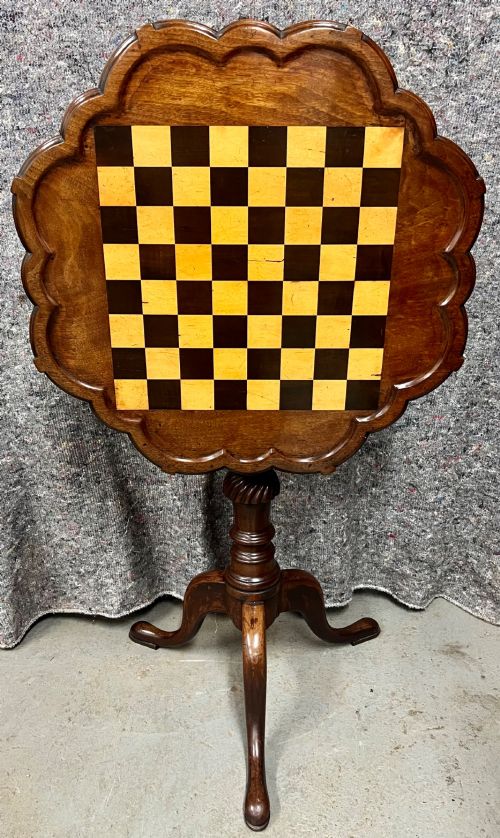
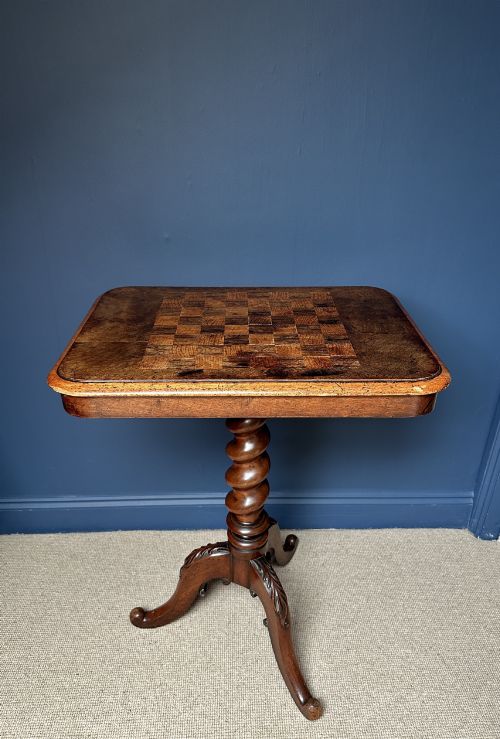
Origins span English traditional workshops, with examples extending from the George III period through to the early twentieth century. Forms include tripods, hall tables, lamp tables, and portable travelling sets.
How they were made
Construction relies on solid mahogany and rich veneers, often combined with light and dark timber inlays to form the contrasting squares of the grid. Boxwood and sycamore frequently provide the pale squares, while rosewood and walnut add further tonal depth.
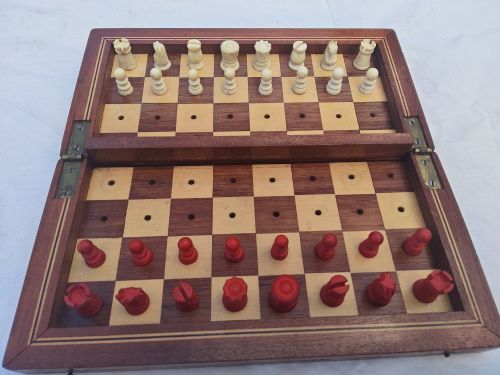
Cabinetmakers utilised precise marquetry and wood inlay techniques to achieve crisp borders and stable playing surfaces. Folding boards required sturdy brass hinges, and tables employed tripod pedestals or turned legs to support the weight of the timber top.
Travellers kept their wits sharp on bumpy coaches using miniature bone sets tucked neatly inside folding mahogany boxes.
What varies in quality
The standard of a board or table depends on the selection of timber and the precision of the inlay work. Finer examples display tight grain matching in the mahogany and meticulous alignment where the contrasting squares meet.
Structural integrity also separates ordinary items from superior ones, visible in the stability of the joints, the quality of the turned woodwork, and the retention of original fixtures such as brass hinges and removable components.
Gillows·A British Chess Company
The Mahogany Chess Board Glossary
- Mahogany
- A durable, reddish-brown tropical hardwood prized for its stability and rich grain. It forms the structural and visual foundation of these boards and tables.
- Sycamore
- A pale, fine-grained hardwood frequently utilised for the light squares on the playing grid. It provides a crisp contrast against the darker mahogany.
- Marquetry
- The art of applying small pieces of veneer to a structure to form decorative patterns. This technique creates the precise grid of the chess board.
- Tripod Table
- A small occasional table supported by a central pillar and three legs. Many period chess boards are integrated into this furniture form.
- Travelling Set
- A portable board designed for play on journeys, often featuring a folding case or pegged pieces. These items prioritise compact utility alongside craftsmanship.
Mahogany Chess Board: Frequently Asked Questions
How do I date a mahogany chess board?
Dating relies on observing construction methods, timber choice, and the overall style of the piece. Georgian and Regency examples often feature finer proportions and specific leg turns, while Victorian pieces incorporate heavier mouldings and distinct inlay patterns.
Secondary woods and hinge types also provide clues. Examining the underside and the joinery helps confirm whether the item belongs to the eighteenth, nineteenth, or early twentieth century.
Were these boards used only for chess?
Many of these items served multiple purposes, particularly the tables and folding boards. It is common to find surfaces designed to accommodate backgammon or draughts alongside chess.
Removable boards and reversible tops allowed households to transition between different parlour games using a single piece of furniture.
How should I care for a vintage wooden board?
Keep the timber away from direct sunlight and sudden changes in temperature to prevent the mahogany and veneers from drying out or splitting. Gentle dusting with a dry cloth is usually sufficient for daily maintenance.
Avoid excessive moisture and modern chemical polishes. A light application of traditional wax can help nourish the wood surface over time.
Are travelling boards different from standard tables?
Travelling boards are built for portability, typically featuring folding wooden cases that enclose the playing pieces when not in use. They focus on compact design rather than room display.
Tables and stationary boards remain fixed in a room as occasional furniture, offering a permanent surface for play and decoration.