




Traditional Games Board
A traditional games board brings centuries of social parlour pastimes into a room, offering tactile timber or leather craftsmanship designed for quiet evenings of chess or cribbage.
Traditional Games Board
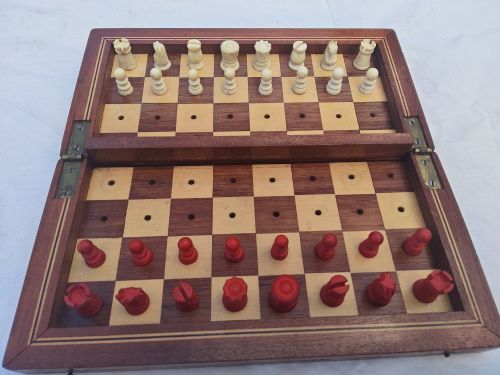
A traditional games board encompasses everything from folding leather chess surfaces and rosewood or mahogany boards to compendiums and specialised cribbage boxes. When searching for a traditional games board, collectors typically encounter pieces dating from the Georgian, Victorian, and Edwardian eras, alongside various nineteenth-century folding formats.
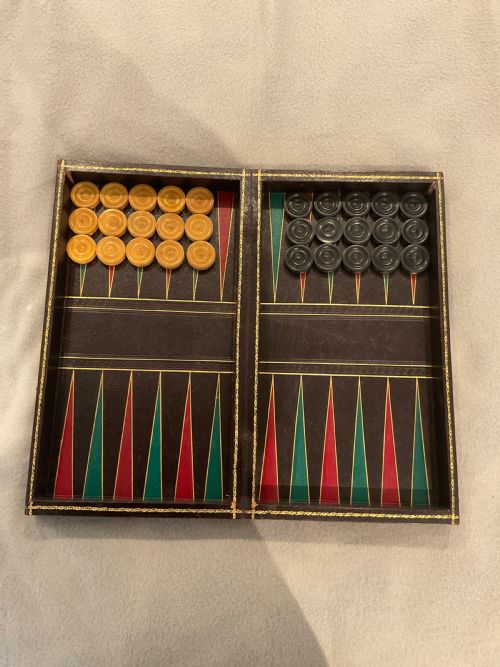
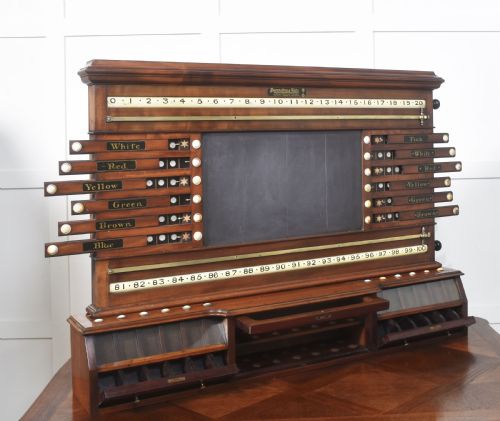
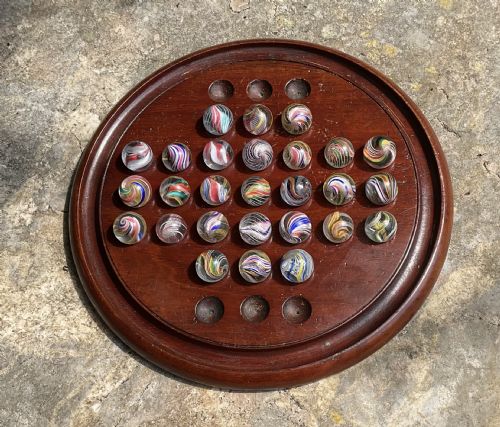
The assortment on offer extends beyond simple checkers and chess squares to include solitaire boards with glass marbles, scoreboards for billiards and snooker, and intricate Tunbridge ware. Many examples combine multiple pastimes within a single travelling box, allowing users to play backgammon alongside chess.
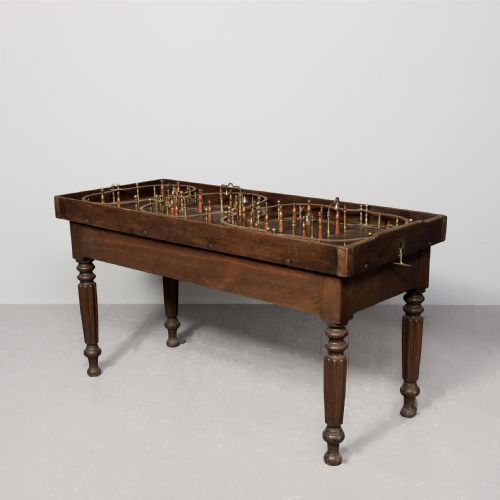
Originating largely from British workshops and traditional English makers, these boards reflect the social amusements of nineteenth-century parlours and libraries. From free-standing oak skittles games to bone travelling chess sets, each piece serves a dual purpose of utility and decorative presence.
Materials and construction methods
Cabinet makers utilised dense hardwoods such as mahogany, rosewood, boxwood, and sycamore to construct durable playing surfaces that resisted warping. Inlays of contrasting timbers defined the individual squares, while specialised items incorporated brass hardware, bone, stag horn, and leather bindings.
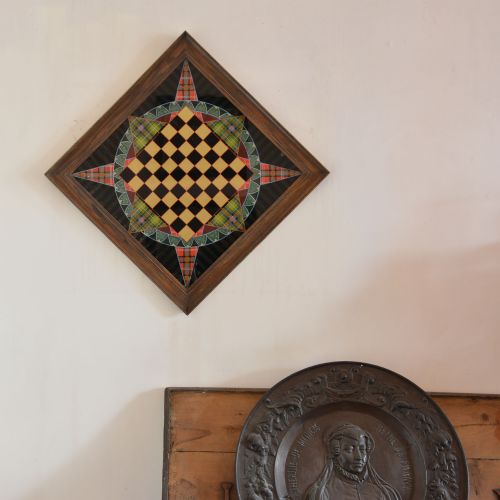
Alternative construction techniques included reverse glass painting for specialised boards and gilt tooling on leather-bound folding faux book designs. Scoreboards and cribbage boxes often featured turned wood components, applied numerals, and hand-carved elements tailored for frequent handling.
Listings feature mahogany, rosewood, and boxwood among the principal timbers used in nineteenth-century chess boards and cribbage boxes.
Factors of distinction
Quality rests upon the precision of the timber inlays, the integrity of the hinges on folding boards, and the retention of original matching pieces such as marbles or chess sets. Finer examples display meticulous attention to detail in secondary woods and specialised decorative treatments like Tunbridge ware.
The presence of maker signatures, original leather tooling, and well-preserved surface patinas elevate certain pieces above standard utility items. Conversely, heavy replacement of components or compromised structural joinery shifts an object toward the simpler end of the range.
Orme And Sons Manchester·Thurston And Co Ltd·British Chess Company
The Traditional Games Board Glossary
- Tunbridge ware
- A form of British woodworking characterised by small mosaic tiles created from naturally coloured timbers to form intricate geometric or pictorial scenes. It frequently decorates nineteenth-century cribbage boxes and small game containers.
- Cribbage board
- A scoring device used primarily for the card game cribbage, featuring rows of small holes drilled into wood, bone, or horn to track points with pegs. Victorian and Georgian examples often double as storage boxes for the cards.
- Compendium
- A multi-game box containing the equipment and boards for several different pastimes, such as chess, draughts, and backgammon, housed in a single fitted case. These portable sets became popular during the Victorian era for travelling and parlour use.
- Solitaire board
- A circular wooden board featuring a symmetrical arrangement of indentations designed to hold glass marbles or wooden balls during a single-player puzzle game. Victorian versions often employ turned mahogany with matching sets of glass marbles.
- Staunton style
- A standardised design of chess pieces characterised by conventionalized, highly recognizable symbols with weighted bases, introduced in the mid-nineteenth century. This pattern became the tournament standard and frequently accompanies period folding chess boards.
Traditional Games Board: Frequently Asked Questions
How do I date a folding chess board?
Dating relies heavily on the construction of the hinges, the choice of core materials, and the style of the outer leather or wood veneers. Nineteenth-century examples often exhibit hand-stitched leather bindings or distinct dovetail joints.
Later Edwardian versions around 1900 introduced more standardised industrial manufacturing methods and machine-stamped gilt tooling. Examining the specific timber combinations, such as rosewood paired with boxwood or sycamore, also helps narrow the production decade.
What is a games compendium?
A games compendium is a fitted box containing multiple boards and accessories designed to accommodate several different pastimes in one portable unit. They typically include folding boards for chess and backgammon alongside dominoes, cards, and cribbage score markers.
These versatile sets were popular in Victorian households and for travelling, offering varied entertainment during long journeys or evening gatherings.
How were billiard scoreboards used?
Billiard and snooker scoreboards were wall-mounted wooden panels featuring sliding brass pointers or rotating rollers to track the scores of multiple players. They served a functional role in public billiard halls and private English estate games rooms.
Cabinet makers such as Thurston or Orme constructed these boards to match the heavy mahogany or oak furnishings of Victorian and Edwardian billiard rooms.