





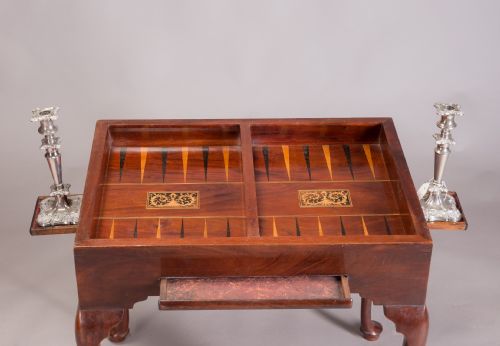
Brown Wooden Games Board
A brown wooden games board brings tactile history and centuries of parlour play straight into a modern sitting room.
Brown Wooden Games Board
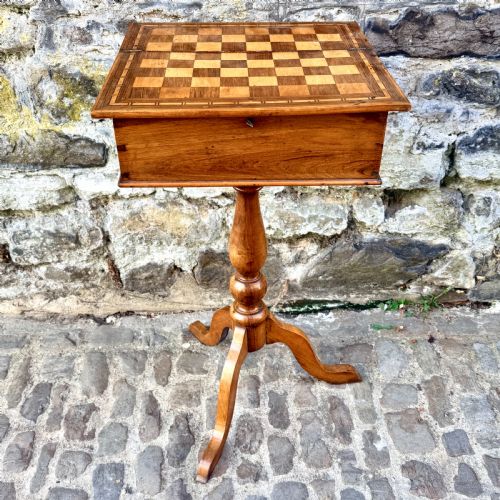
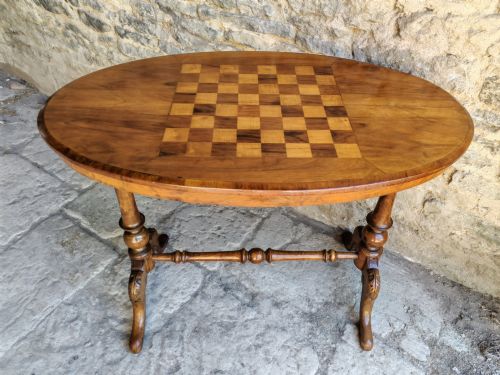
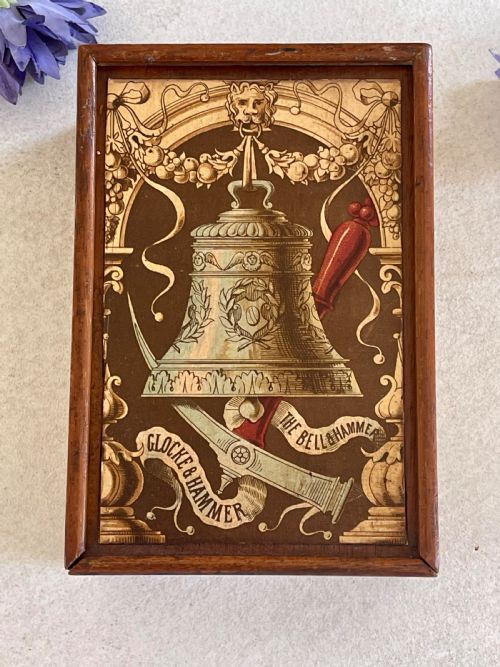
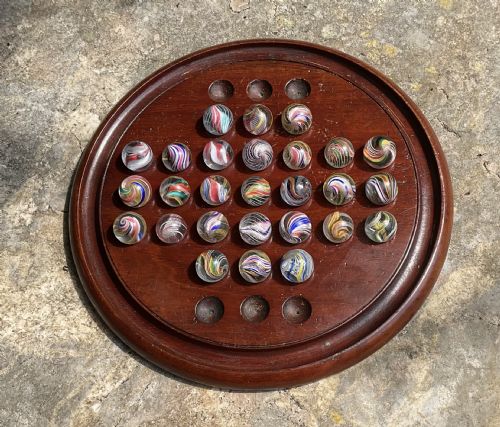
A brown wooden games board encompasses everything from folding chess boards and tripod tables to dedicated cribbage boxes and solitaire boards. These pieces emerge from the nineteenth century through the early decades of the twentieth century, reflecting domestic leisure across various traditions.
The version most commonly met on this page is the Victorian walnut or mahogany board, often configured for chess, draughts, or cribbage. Such pieces combine practical entertainment with solid cabinetry, utilising rich timbers like mahogany and walnut.
Beyond standard folding boards, the selection includes regional variations such as French Provincial chess tables, English Tunbridge Ware cribbage boxes, and Chinese mahjong sets. Each form demonstrates how different cultures adapted wood and inlay for traditional pastimes.
Materials and construction methods
Makers relied primarily on dense hardwoods like mahogany and walnut to provide a stable, durable surface for frequent play. These timbers were selected for their rich grain and ability to take a smooth finish.
Inlay techniques combined lighter woods such as boxwood and sycamore with darker bases to create sharp, contrasting playing grids. Detail work frequently incorporated bone, brass, and specialised wood inlay to accent the borders and score tracks.
Board formats range from compact cribbage boxes to large French Provincial chess tables and Chinese mahjong sets.
Assessing craftsmanship and finish
Quality rests in the precision of the timber selection and the stability of the joinery across folding hinges and table frames. Superior examples maintain flat playing surfaces without warping along the grain.
The fineness of the contrasting wood inlay and the crispness of turned components, such as tripod bases or peg markers, distinguish standard production from exceptional work.
The Brown Wooden Games Board Glossary
- Tunbridge Ware
- A form of British woodwork characterised by mosaic tile patterns made from multiple tiny wood blocks. It frequently decorates Victorian cribbage boxes and small games containers.
- Cribbage board
- A scoring device used during card games featuring parallel tracks of small holes for wooden or metal pegs. These boards appear in various configurations including three-hand layouts.
- Solitaire board
- A circular wooden board drilled with indentations to hold marbles or pegs for a single player. Examples from the nineteenth century often retain their original glass marbles.
- Bagatelle table
- An indoor table game akin to billiards where players cue balls up an inclined board into numbered cups. These represent the larger scale of parlour entertainment.
- Mahogany
- A durable, reddish-brown tropical hardwood favoured by cabinetmakers for its stability and rich grain. It forms the structure of numerous nineteenth century tables and boxes.
Brown Wooden Games Board: Frequently Asked Questions
What games were played on these boards?
These boards accommodated traditional domestic pastimes such as chess, draughts, and cribbage.
Many pieces were specifically dedicated to single games like solitaire or mahjong, reflecting the varied social habits of the nineteenth and early twentieth centuries.
How do I date a wooden games board?
Dating relies on observing timber choices, hardware types, and stylistic indicators such as Victorian turning or Edwardian inlay.
Makers marks and regional construction methods also help place an object within the nineteenth or early twentieth century.
Are these boards suitable for daily use?
Most of these antique pieces remain robust enough for gentle, regular play if handled with reasonable care.
Placing them away from direct heat sources and harsh sunlight preserves the original wood finish and delicate inlay.
What is the difference between a table and a board?
A games board is typically a portable folding or flat item designed to sit upon an existing piece of furniture.
A games table incorporates the playing surface directly into a dedicated piece of furniture, often featuring tripod legs or storage compartments underneath.