


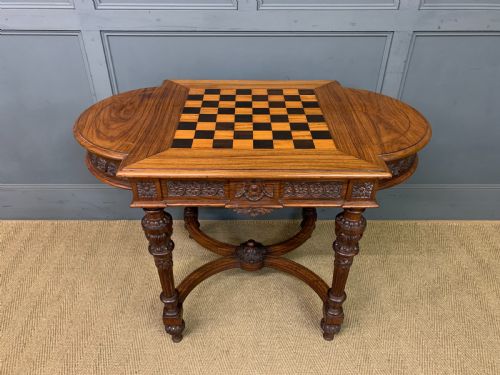

Antique Chess Board
An antique chess board gathers players around inlaid squares and clever folding boxes shaped by nineteenth-century hands.
Antique Chess Board
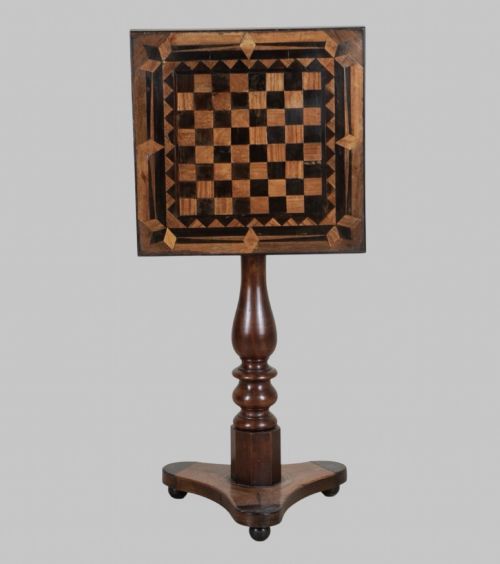
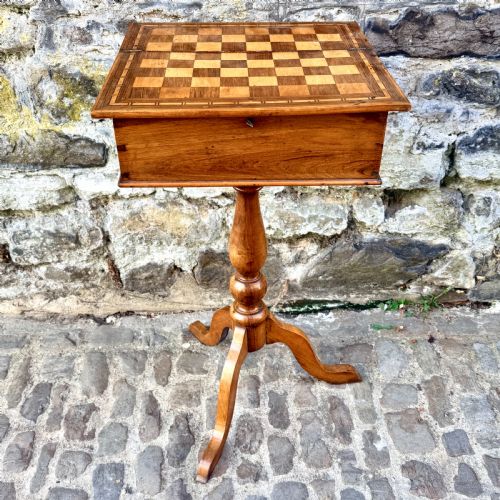
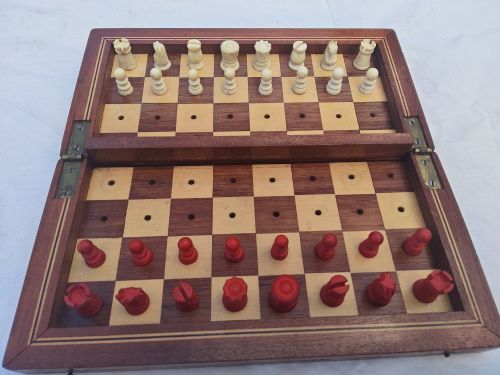
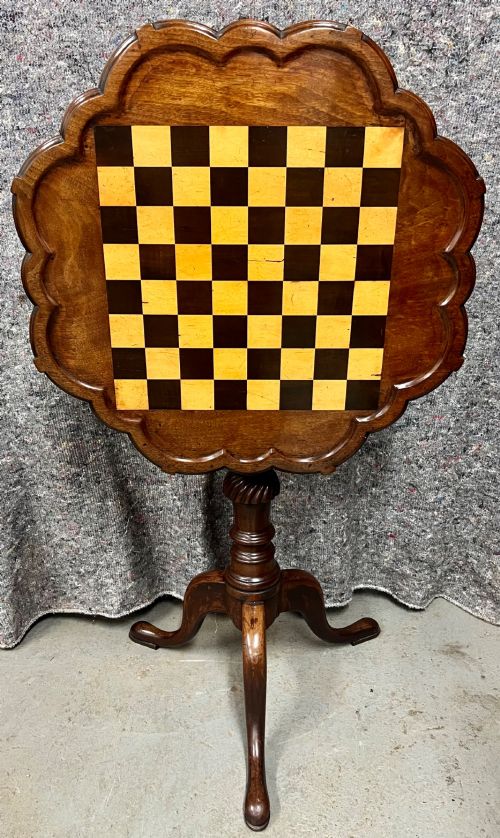
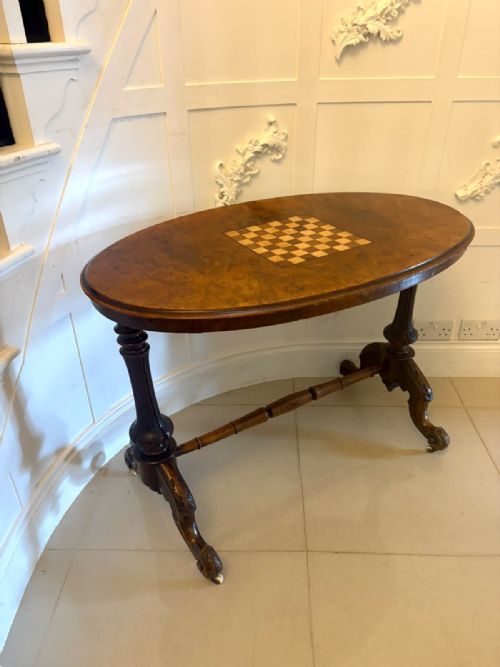
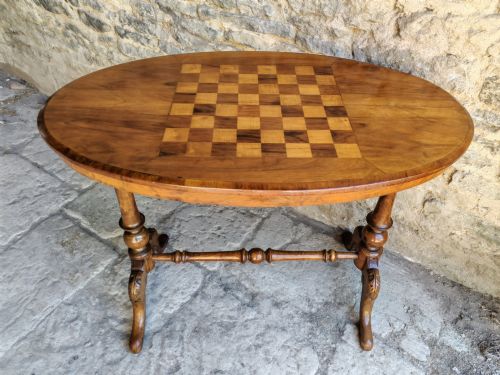
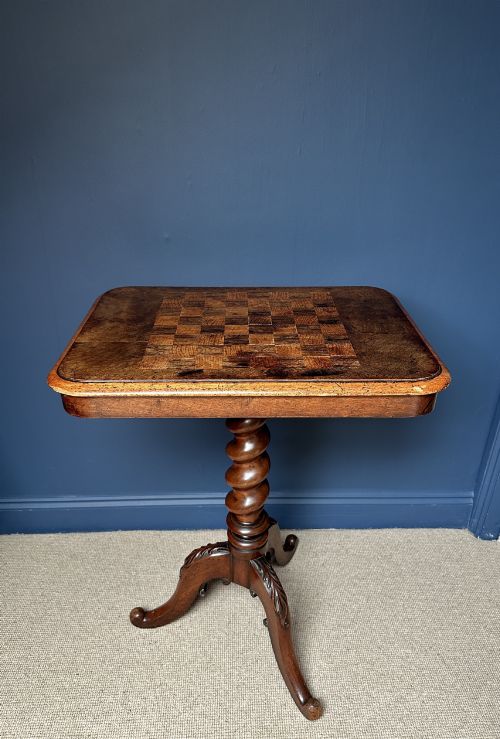
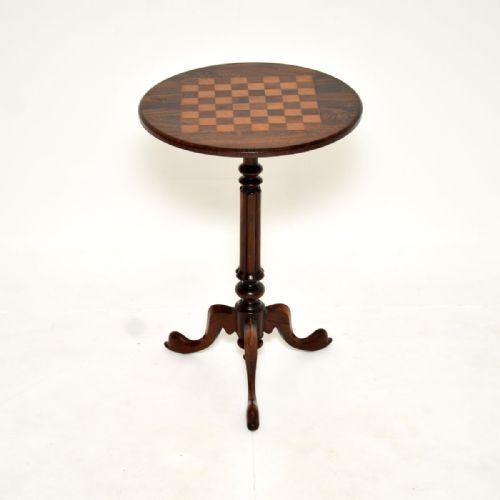
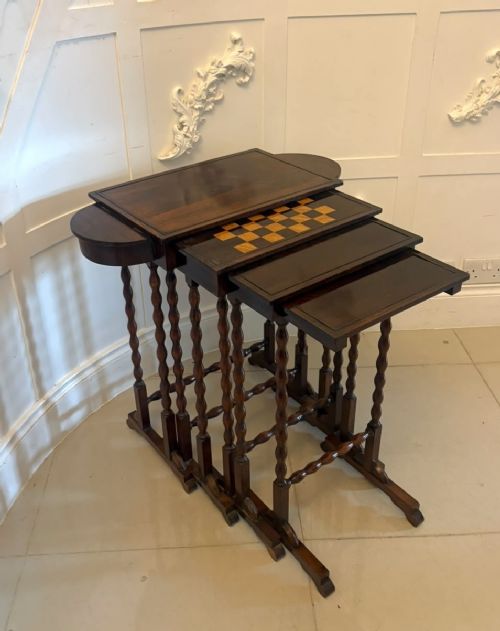
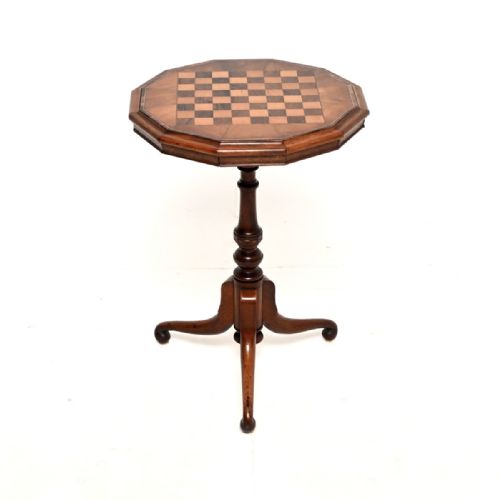
When you search for an antique chess board, you encounter a wide variety of domestic items ranging from dedicated folding boards to multifunctional furniture. The forms most frequently met on this page include freestanding games tables, hinged wooden travelling boxes, and flat boards designed for library or parlour use.
Many examples double as backgammon boards or incorporate sewing wells, drawers for pieces, and leather compendium cases. Pieces span several eras, with nineteenth-century Victorian and Regency designs appearing most often alongside Edwardian iterations.
Materials and construction
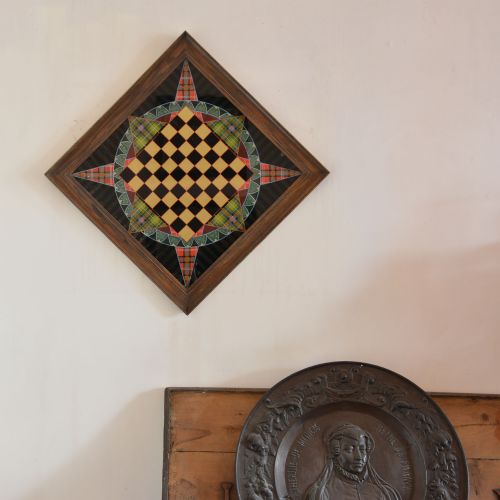
Cabinet makers utilised dense timbers such as rosewood, mahogany, walnut, and burr walnut for foundational frames and table surfaces. Contrasting light and dark squares were achieved through precise wood veneers like boxwood and sycamore, or painted onto glass, leather, and slate.
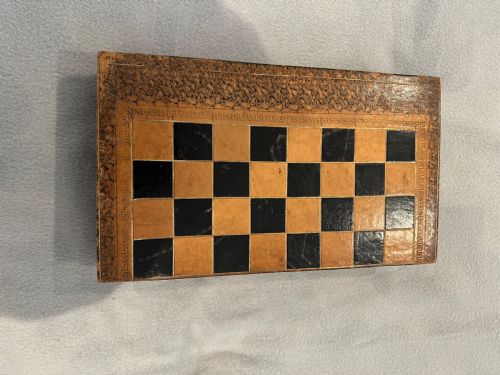
Specialised techniques include penwork detailing, reverse glass painting, and intricate parquetry inlay. Portable formats relied on sturdy brass hinges, leather bindings, and compact folding mechanisms to withstand regular travel.
Some Victorian players cleverly concealed entire chess boards inside faux leather books.
Markers of distinction
The degree of craftsmanship shows in the precision of the square inlays and the selection of figured wood veneers. Superior specimens display tight, flush joints, balanced proportions, and well-chosen secondary timbers that remain stable over centuries of use.
Design complexity further separates standard boards from exceptional works, particularly where makers integrated pivoting tops, custom drawer fittings, or penwork decoration. The retention of original finishes and matching chess pieces adds considerably to a piece's character.
Gillows·George Merrifield·The British Chess Company·Leuchars
The Antique Chess Board Glossary
- Compendium
- A fitted box containing multiple games and playing pieces within a single compartmentalised case.
- Parquetry
- A geometric mosaic of wood veneers arranged to form decorative patterns across a table top or board surface.
- Penwork
- Surface decoration created using ink applied with a quill or pen, frequently seen on Regency pieces.
- Staunton
- A standardised style of chess piece introduced in the mid-nineteenth century, defined by clear, functional forms.
- Tripod table
- A small freestanding table supported by a central pillar and three splayed legs, often fitted with a tilt-top mechanism.
Antique Chess Board: Frequently Asked Questions
How do I care for a wood board?
Keep wooden surfaces away from direct sunlight and dramatic temperature swings to prevent the veneers from lifting or splitting over time. Regular dusting with a soft, dry cloth preserves the polished finish without needing heavy chemical treatments.
Avoid placing damp items directly onto antique timber surfaces. Using coasters and maintaining a stable indoor humidity protects both the structural joints and the delicate inlay work.
Were these boards meant for travel?
Many nineteenth-century examples were specifically built for journeys, featuring folding hinges, locking mechanisms, and secure internal compartments for pieces. Leather-bound book formats and compact travelling sets allowed players to continue matches while on the move.
Larger tabletop versions and pedestal games tables remained stationary in parlours and libraries. These heavier pieces were integrated into everyday domestic life as occasional furniture when not in active use.
How do I identify a Regency board?
Regency pieces often display rich rosewood or mahogany timbers paired with meticulous penwork decoration and brass mounts. The aesthetic favours clean classical lines, slender pillar supports, and refined parquetry chequer boards.
Proportions tend to be elegant and restrained, reflecting the neoclassical tastes of the early nineteenth century. Cabinet makers during this period frequently combined chess playing surfaces with sewing wells or writing drawers.
What is a games compendium?
A games compendium is a comprehensive wooden box designed to hold equipment for multiple pastimes in one unified housing. Interiors typically feature tiered trays and velvet-lined slots for chess pieces, draughts, backgammon boards, and card games.
Victorian households favoured these versatile sets for entertaining guests during winter evenings. They represent a high point in nineteenth-century utilitarian cabinet making and interior organisation.