




Mahogany Games Board
A mahogany games board brings centuries of social play into the room, combining fine cabinet timbers with folding leaves, inlaid chess squares and fitted storage for scoreboards or counters.
Mahogany Games Board
When you search for a mahogany games board, you encounter various formats designed for domestic leisure across the Georgian, Victorian and Edwardian eras. These range from folding travel boards and table-top solitaire circles to multi-game occasional tables with reversible surfaces.
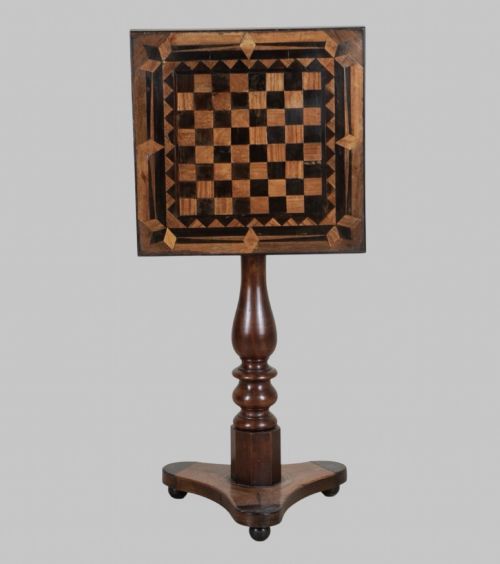
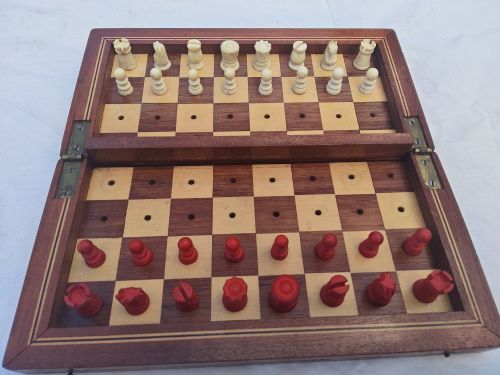
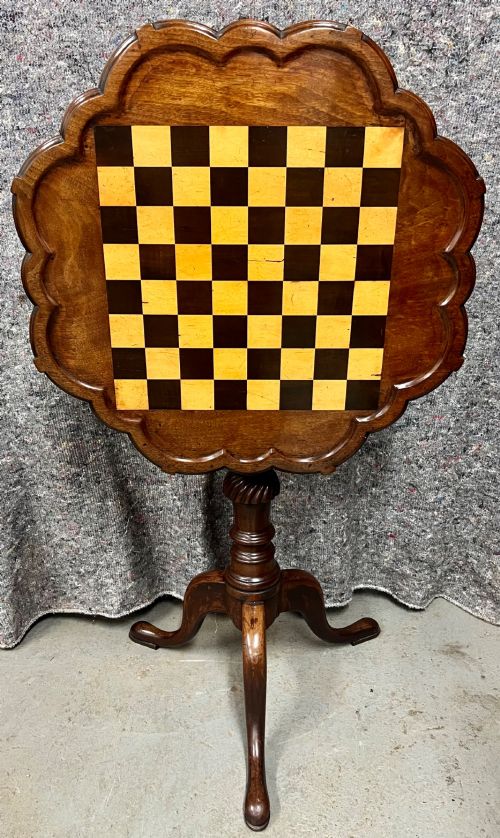
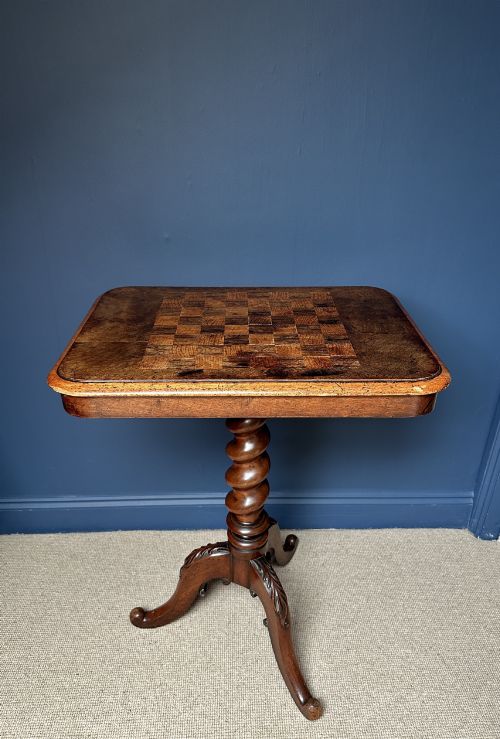
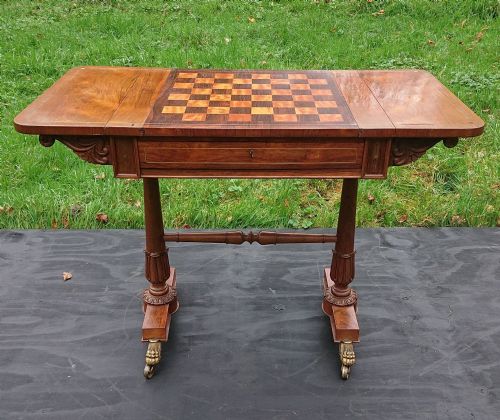
The most common versions on this page are the versatile fold-out boards and dedicated occasional tables featuring inlaid wooden squares. They often integrate contrasting woods like boxwood alongside the rich red-brown ground of the primary timber.
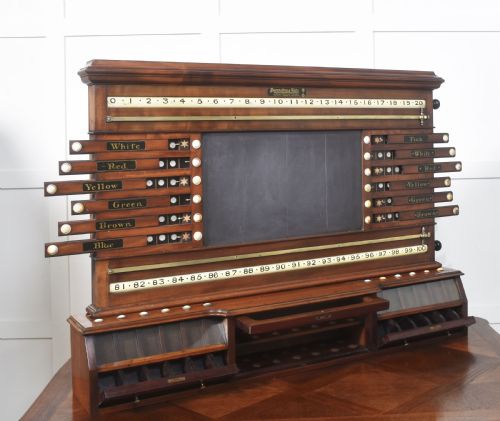
Beyond flat boards, the selection encompasses specialised equipment boxes, cribbage slide boxes and wall-mounted billiards or snooker scoreboards made of the same dense material. Each piece reflects the structured pastime traditions of British homes.
How they were made
Cabinet makers utilised solid mahogany and veneers over secondary woods, building sturdy carcasses and hinged leaves designed to withstand frequent opening and closing during play. The surfaces frequently incorporate precision-cut boxwood, sycamore or walnut to delineate playing squares.
Secondary materials add functionality and contrast, with brass hinges, bone playing pieces, glass marbles and slate beds appearing across different types. Tables and scoreboards often feature turned tripod supports, tapering legs or internal baize linings.
Listings span the Georgian, Victorian, and Edwardian periods, utilising mahogany alongside brass, bone, slate, boxwood, glass, walnut, and rosewood.
What varies in quality
The distinction between standard utility items and finer pieces lies in the precision of the wood inlay and the selection of figured mahogany veneer. Sharp, flush joints on folding leaves and well-matched grains indicate superior workshop execution.
Hardware and secondary detailing separate ordinary boards from exceptional ones. Original brass hinges, intact score sliding mechanisms, and the retention of matched components such as bone chess sets or glass marbles elevate the piece.
Orme & Sons Manchester·Thurston & Co Ltd·Cox & Yeman London·Burroughes and Watts·A British Chess Company
The Mahogany Games Board Glossary
- Cribbage board
- A traditional scoring board drilled with small holes to track points during card games using wooden pegs. These often take the form of small sliding boxes.
- Solitaire board
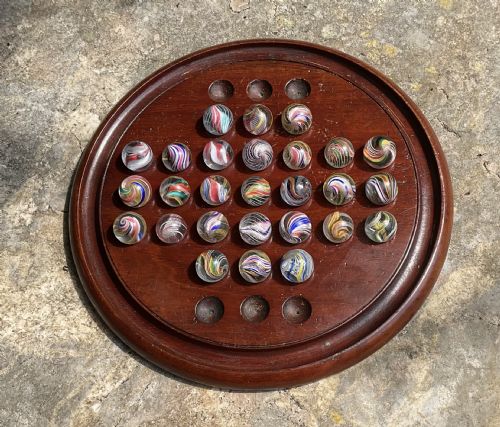
- A circular wooden board featuring indented depressions arranged in a pattern to hold glass marbles or wooden balls during a single-player puzzle game.
- Bagatelle table
- An early precursor to modern cue sports featuring a baize-covered playing surface where balls are propelled into numbered wooden cups.
- Tripod table
- A small occasional table supported by a central pillar resting on three spreading legs, frequently adapted to hold chess or game tops.
- Baize
- A coarse woolen fabric, typically green, utilised to line card tables and interior gaming surfaces to cushion pieces and ease movement.
Mahogany Games Board: Frequently Asked Questions
What games were played on these boards?
These pieces accommodated a wide variety of domestic pastimes popular in British households, including chess, backgammon, cribbage, solitaire and card games.
Many tables and folding boards featured reversible tops or hidden compartments to switch between different rules and equipment easily.
How do I date a mahogany games board?
Dating relies on architectural styles, furniture legs such as tripod supports or tapering legs, and construction methods associated with the Georgian and Victorian periods.
Makers' marks on scoreboards or stylistic indicators like specific inlay patterns also help narrow down the decade of manufacture.
Were scoreboards used in homes?
Large wall-mounted scoreboards were produced for domestic billiard rooms, gentleman's clubs and public establishments as cue sports grew in popularity during the nineteenth century.
They featured sliding wooden markers and brass pointers to track scores for snooker, billiards and life pool.
Can I use antique games boards for play?
Most antique folding boards and table tops remain structurally stable for regular use provided they are handled with care and kept away from extreme humidity.
Care should be taken with delicate boxwood inlays and aged brass hinges during opening and folding.