


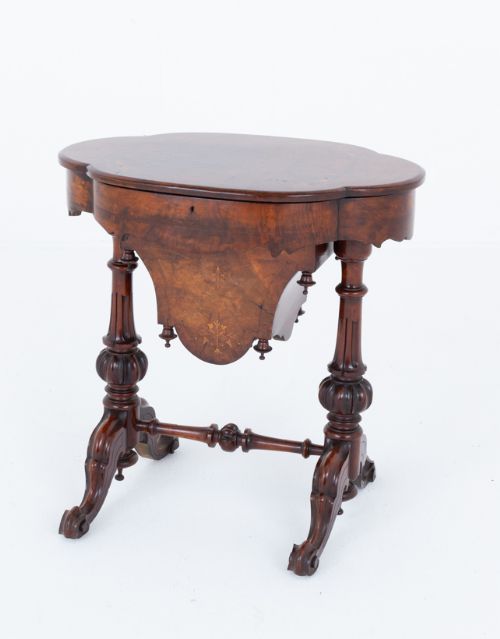


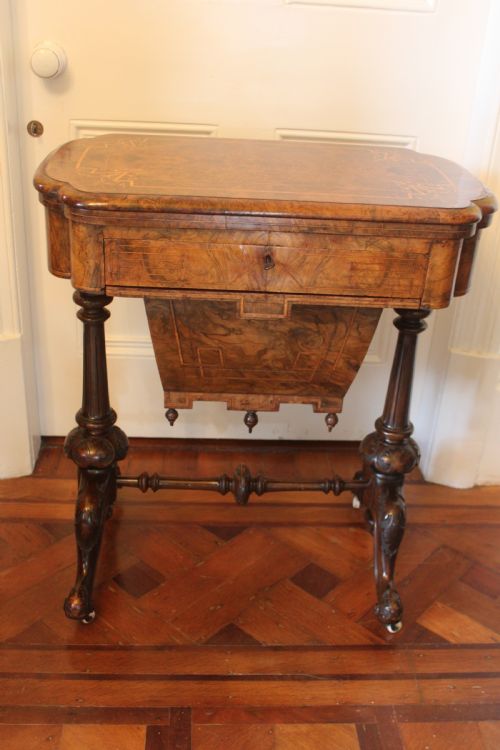


Inlaid Games Box
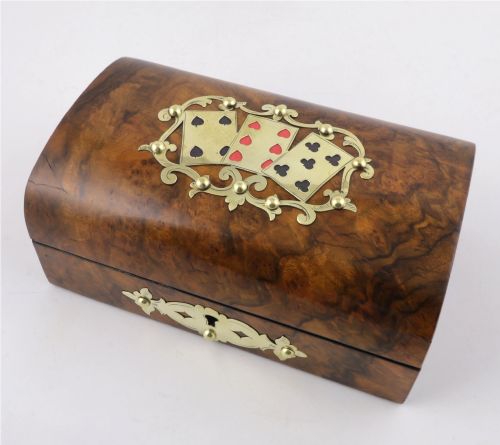
An inlaid games box brings together fine cabinet timbers and centuries of leisure, offering fitted compartments for cards, chess or cribbage.
Inlaid Games Box
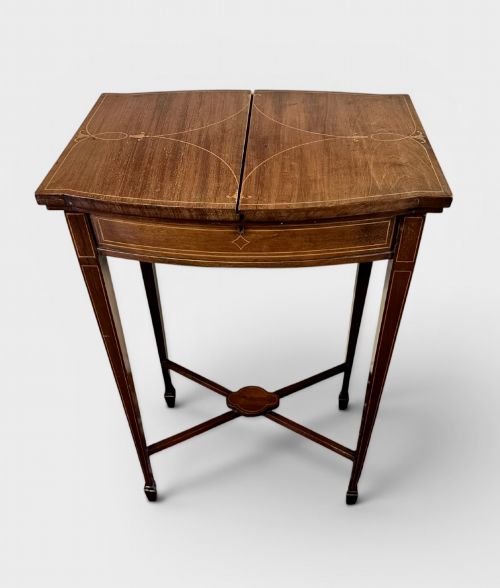
An inlaid games box appears in various formats across the Regency, Victorian and Edwardian periods, ranging from table-top caskets to larger combination work tables.
You are most likely to encounter Victorian walnut and burr walnut boxes featuring marquetry, alongside rosewood and mahogany pieces designed for card games, backgammon and chess.
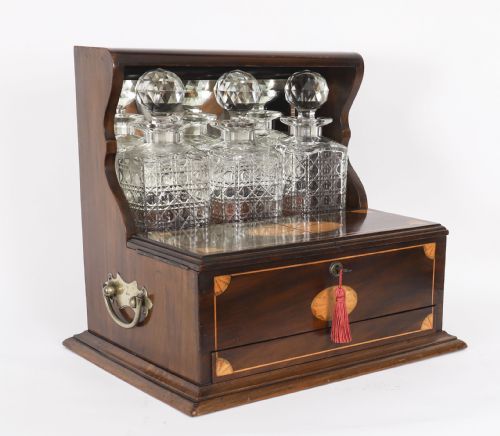
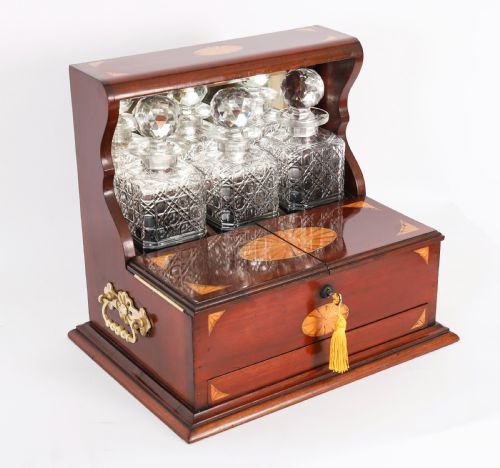
Many examples combine storage for playing cards and dice with folding boards or fitted interiors, while larger specimens incorporate decanters or sewing compartments.
Materials and construction
Cabinet makers utilised dense hardwoods such as walnut, burr walnut, rosewood, mahogany and satinwood as the primary carcase materials for these caskets and tables.
Decoration relied on contrasting timbers, boxwood stringing, brass inlay, mother of pearl and marquetry work, alongside specialist techniques like Tunbridge Ware.
Interiors were constructed with dedicated slots for bone counters, cribbage pegs, playing cards and dice, often lined with velvet or paper.
Walnut, rosewood and mahogany dominate the timber selection, frequently enhanced by brass, boxwood, bone and mother of pearl inlay.
Judging the work
The distinction between ordinary and superior pieces lies in the precision of the timber matching and the crispness of the inlay work, particularly around geometric banding and pictorial marquetry.
Fitted internal architecture, original hardware such as brass locks and handles, and the condition of integrated folding boards elevate the standing of a piece.
The Inlaid Games Box Glossary
- Marquetry
- Decorative veneer work arranged in pictorial or geometric patterns. Makers applied thin slices of various coloured woods onto the primary carcase.
- Tunbridge Ware
- Wood mosaic work originating from Kent, forming microscopic tiled patterns. Small geometric motifs adorn the surfaces of specific Victorian boxes.
- Parquetry
- Geometric mosaic woodwork using contrasting wood blocks. It creates repeating patterns across lids and playing surfaces.
- Cribbage Box
- A small container specifically designed for card playing, featuring sliding lids or internal slots for pegs and cards.
- Tantalus
- A locking beverage stand holding decanters, frequently combined with games compendiums in late nineteenth-century pieces.
Inlaid Games Box: Frequently Asked Questions
What games were played with these boxes?
These boxes accommodated social pastimes of the nineteenth century, most notably chess, backgammon, cribbage and card games like whist or poker.
Interiors typically housed folding boards, bone or wooden counters, dice, and dedicated compartments for standard playing cards.
How do I date an inlaid games box?
Dating relies on the combination of timber choices, decorative styles and construction methods visible across the piece. Regency examples often display bold brass inlay in rosewood, whilst mid-Victorian pieces favour burr walnut with marquetry.
Edwardian specimens tend to utilise lighter mahogany with simpler satinwood banding and more utilitarian fitted interiors.
Were these boxes made for travel?
Certain examples were specifically engineered for transit, housing compact folding boards and secure lids to contain pieces on the move.
Larger table forms and heavy caskets remained static in drawing rooms and libraries for evening entertainment.
What is Tunbridge Ware?
Tunbridge Ware is a specialised form of mosaic woodwork where thousands of tiny blocks of naturally coloured timber are glued together to form a pictorial motif.
This technique appears on specific Victorian boxes, usually depicting architectural scenes or floral patterns on the lid.