

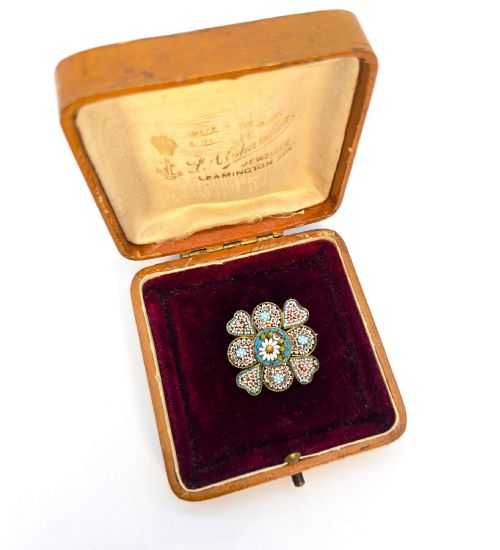


Victorian Micro Mosaic Box
These Victorian micro mosaic box examples bring together intricate tilework and turned wood, offering a tangible piece of nineteenth-century craftsmanship.

Victorian Micro Mosaic Box
A victorian micro mosaic box represents a specialised category of nineteenth-century container, incorporating tiny glass tesserae or geometric wood veneers. Buyers searching for this phrase encounter items designed to hold trinkets, tea, or stationery, reflecting the refined storage habits of the period.
The selections on this page span several distinct traditions, notably English Tunbridge ware and Anglo-Indian Sadeli work. These pieces utilise rosewood, walnut, and boxwood as foundations for detailed surface decoration.
Most pieces date from the Victorian era, spanning the nineteenth century up to nineteen hundred. Forms range from tea caddies and cribbage boxes to small trinket containers and stationery boxes.
How they were made
Constructed primarily from hardwoods such as rosewood and walnut, these boxes often incorporate lighter woods like boxwood, holly, and sycamore to create contrasting geometric patterns. Artisans meticulously arranged these elements to form elaborate pictorial or abstract surface designs.
Specialised techniques include Tunbridge Ware mosaic work, which involved gluing thousands of minuscule wood prisms together before slicing them into veneer. Other examples utilise bone and carved wood in the Anglo-Indian Sadeli tradition to line and decorate the exterior surfaces.
Victorian Micro Mosaic Box Retail Price Guide 2026
Typical asking prices for victorian micro mosaic box among the pieces listed under this phrase on Sellingantiques today, from the lower quarter to the upper quarter. They describe what is for sale here now, not the wider market.
What varies in quality
The standard of execution in the mosaic work dictates the overall calibre of the piece. Finer items display an exceptionally high density of tesserae or wood elements, creating precise, seamless geometric motifs without visible gaps.
Material selection also defines the upper tier of these objects. Dense, well-figured rosewood foundations and intricate internal linings distinguish superior examples from simpler utilitarian containers.
Henry Hollamby
The Victorian Micro Mosaic Box Glossary
- Micro mosaic
- An intricate form of decoration using microscopic glass tesserae or tiny wood pieces to form detailed pictorial scenes or geometric patterns. This technique required immense patience and steady eyesight from the artisan.
- Tunbridge Ware
- A distinct style of nineteenth-century woodworking originating from Tunbridge Wells, characterised by mosaic designs made from numerous natural coloured woods. Craftsmen sliced bundled wood threads to produce identical patterned veneers.
- Sadeli mosaic
- An intricate form of mosaic work originating in India, using alternating slivers of horn, bone, ivory, and metal. Artisans bound these materials together into geometric strips to adorn boxes and caddies.
- Tessera
- An individual small block of stone, glass, or other material used in the construction of a mosaic. The size and uniformity of these elements often indicate the skill level of the maker.
- Tea caddy
- A container designed originally to store loose tea leaves securely, often featuring internal compartments and locking lids. These boxes were prized possessions in Victorian households.
Victorian Micro Mosaic Box: Frequently Asked Questions
What were these boxes used for?
Victorian households utilised these containers for storing valuable personal items, stationery, playing cards, or dry tea leaves. Their decorative nature meant they were usually displayed prominently on parlour tables or dressing chests.
Because tea and correspondence were central to nineteenth-century social life, dedicated caddies and stationery boxes were both practical and ornamental.
How do I date a Victorian box?
Dating relies on examining the timber species, construction methods, and style of the mosaic decoration. Pieces from the middle of the nineteenth century often exhibit distinct Tunbridge Ware geometric patterns utilising native and exotic woods.
Later Victorian examples may incorporate different manufacturing techniques or broader use of contrasting veneers like rosewood and walnut. Comparing hardware such as hinges and locks also helps narrow down the period of production.
How should I care for mosaic wood?
Maintain these boxes in stable indoor conditions away from direct sunlight and excessive humidity. Sudden temperature changes can cause the delicate wood veneers or tiny mosaic tesserae to lift from the foundation.
Dust the surfaces gently with a soft, dry cloth rather than applying liquid polishes or cleaners. Preserving the original finish safeguards the integrity of the intricate surface patterns.
What is the difference between Tunbridge and Sadeli work?
Tunbridge Ware relies exclusively on meticulously arranged wood prisms to create pictorial or geometric motifs. Craftsmen in Kent sliced these bundled woods to form veneers depicting castles, flowers, or geometric tiling.
Sadeli work originates from the Indian subcontinent and incorporates contrasting materials such as bone, horn, and metal alongside wood. This tradition produces dense, shimmering geometric bandings with a distinct visual texture.