



Antique Scent Bottle Box
An antique scent bottle box safeguards fragile glass and precious metal fragrances within fitted timber or leather caskets.
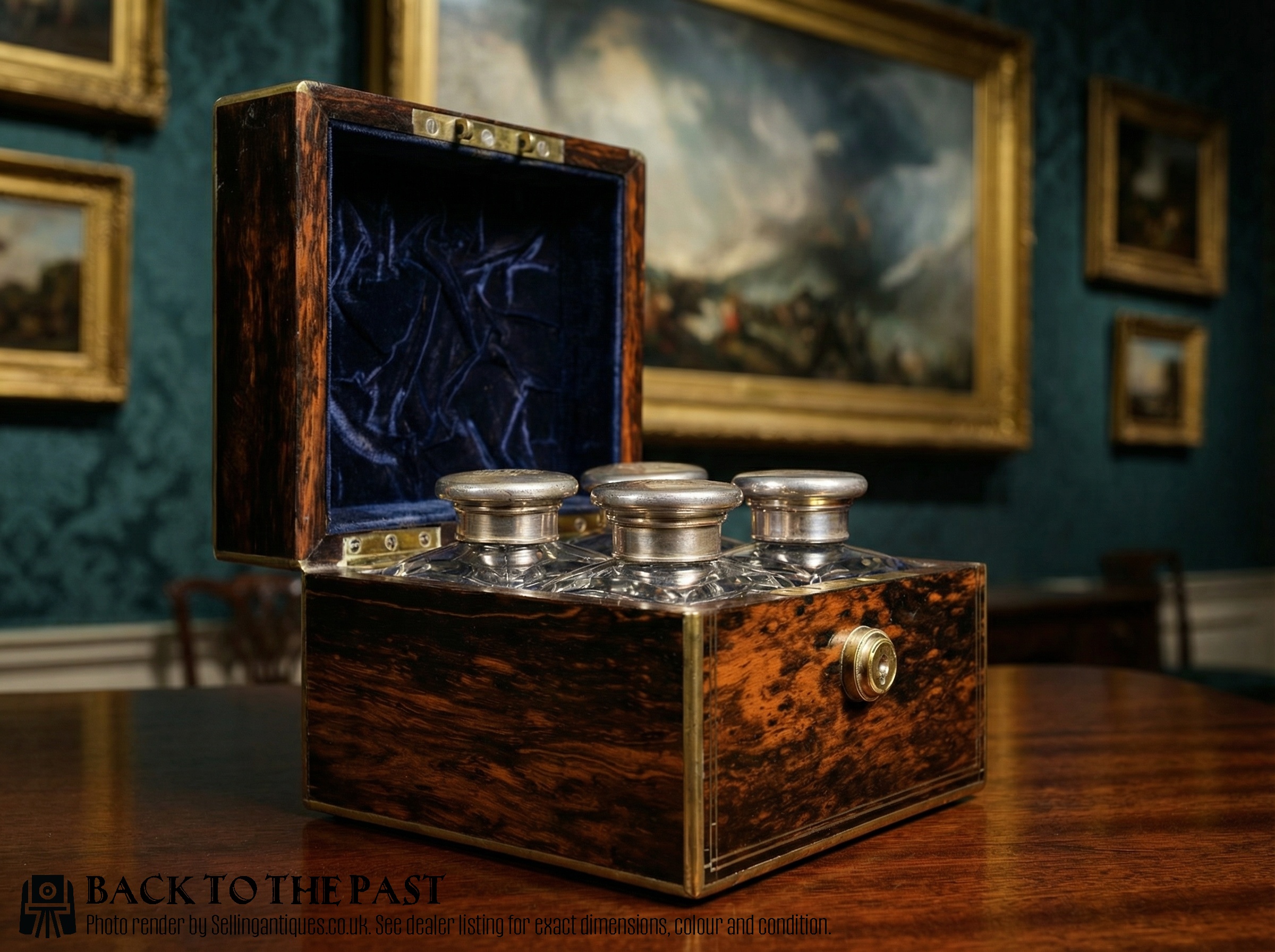
Antique Scent Bottle Box
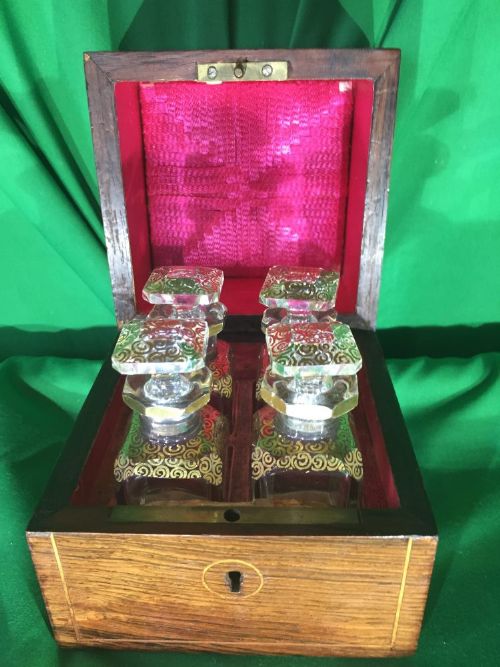
When you search for an antique scent bottle box, you encounter fitted enclosures designed to house delicate perfume flasks and vinaigrettes during travel or display. These pieces range from compact Georgian holders to elaborate Victorian and French caskets lined in silk and velvet.
The most common examples on this page are nineteenth-century wooden boxes housing multiple cut glass or silver-topped bottles. Walnut, rosewood, coromandel and burr maple frequently appear alongside embossed leather and papier-mache.
Materials and construction methods
Cabinetmakers constructed these enclosures using dense exotic timbers like coromandel and rosewood, often mounting them with brass hinges, locks and decorative plaques. Interior compartments were then precision-shaped to hold specific glass flasks, lined delicately with plush velvet or pleated silk.
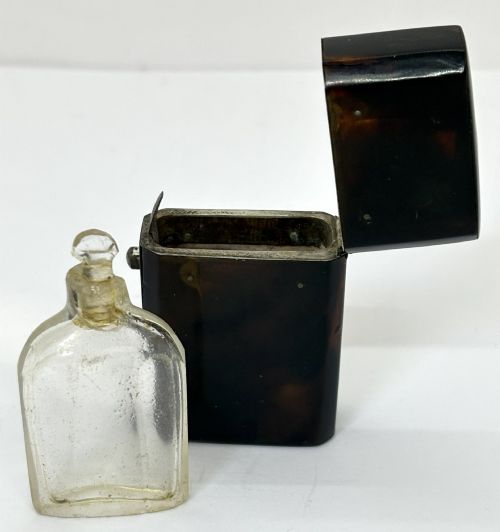
Glass bottles housed within these caskets utilised heavy-cut crystal techniques, frequently fitted with sterling silver or silver-gilt screw caps and hinged stoppers. Metalwork components on the boxes themselves incorporated casting, chasing, or tortoiseshell and mother-of-pearl inlay.
Antique Scent Bottle Box Retail Price Guide 2026
Typical asking prices for scent bottle box among the pieces listed under this phrase on Sellingantiques today, from the lower quarter to the upper quarter. They describe what is for sale here now, not the wider market.
Certain nineteenth-century travelling sets include tiny matching glass funnels so owners could decant their favourite perfumes while on the move.
Distinguishing grades of craftsmanship
Quality in these containers rests upon the integrity of the fitted interior and the precision of the exterior cabinetry. Finer examples retain their complete set of matching original cut glass bottles, funnels and stoppers rather than later replacement glass.
The sophistication of the outer materials dictates the tier of the piece, moving from simple brass-mounted timber to intricate Boulle marquetry, tortoiseshell or hand-painted papier-mache. Superior hardware, original working locks and intact silk linings separate standard travel sets from exhibition-grade French caskets.
Horton and Allday·Edward Smith·Tonnel Paris·Rene Lalique
The Antique Scent Bottle Box Glossary
- Vinaigrette
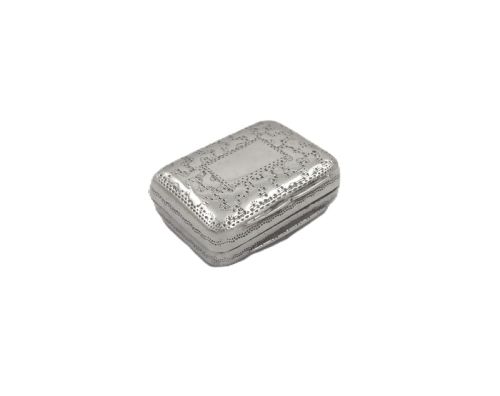
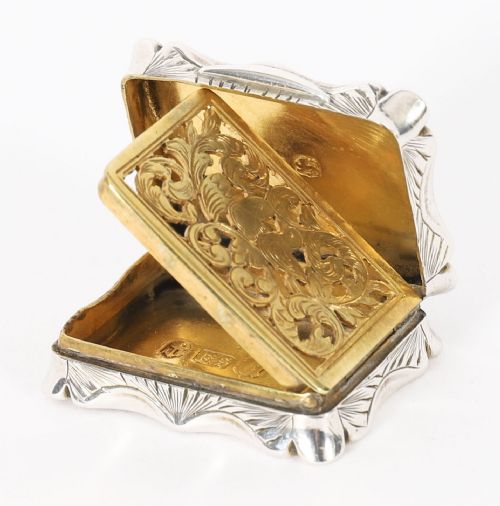
- A small ornamental box containing a perforated grill, originally holding a sponge soaked in aromatic vinegar. These sterling silver pieces frequently date from the Georgian and Victorian eras.
- Casket
- A decorative box or chest designed for holding valuables or perfume bottles. French and English examples often feature specialised internal framing to secure glass flasks.
- Cut Glass
- Glass shaped and patterned by abrasive wheel cutting, creating deep facets that catch the light. This material forms the primary body of the perfume bottles housed inside these boxes.
- Boulle
- A form of marquetry utilising tortoiseshell and brass inlay developed in France. This decorative technique appears on high-status nineteenth-century perfume caskets.
- Guilloche
- An intricate mechanical engraving technique producing precise, repeating geometric patterns on metal surfaces. Silver-gilt etuis and boxes frequently display this detailed ornamentation.
Antique Scent Bottle Box: Frequently Asked Questions
What is an antique scent bottle box?
These items are specialised storage containers built to protect fragile perfume flasks, smelling salts, and vinaigrettes during transport or display on a dressing table.
They combine fine cabinetmaking with fitted internal compartments lined in silk or velvet to secure each individual glass bottle.
How were these boxes used?
Owners kept them in bedchambers or carried them during travel to maintain personal fragrances and refresh the senses using smelling salts or vinegar.
The fitted bottles inside held various perfumes, oils, and medicinal liquids securely sealed with ground glass stoppers and metal caps.
How do I care for velvet interiors?
Keep these boxes away from direct sunlight and damp environments to protect the fragile wooden veneers and historical silk or velvet linings.
Dust the interior compartments gently with a dry artist brush and avoid applying moisture or modern cleaning products to the historic fabrics.
How do I identify a Georgian box?
Georgian examples generally display simpler, cleaner architectural lines in timbers like mahogany or tortoiseshell, often housing single bottles or small vinaigrettes.
Later Victorian versions tend towards heavier ornamentation, utilising exotic woods like coromandel and housing multiple matching cut glass bottles in elaborate tiered trays.