


Victorian Coromandel Vanity Box
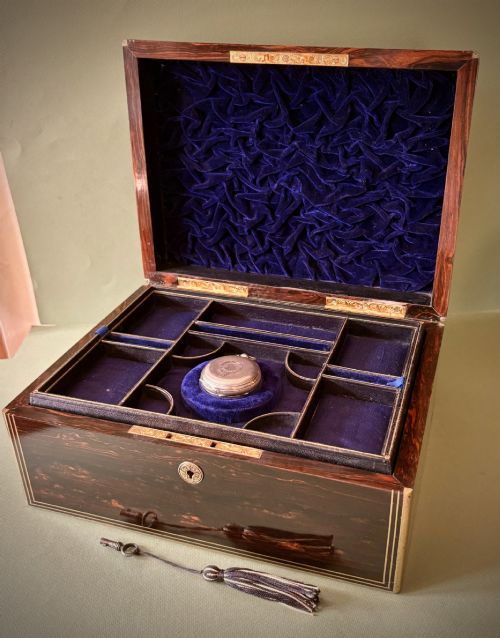
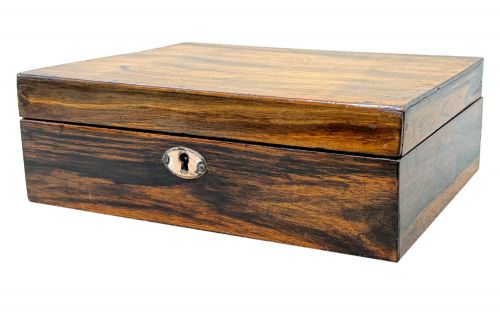
These Victorian coromandel vanity boxes are heavy, richly grained dressing cases designed for travel and daily toilette.
Victorian Coromandel Vanity Box
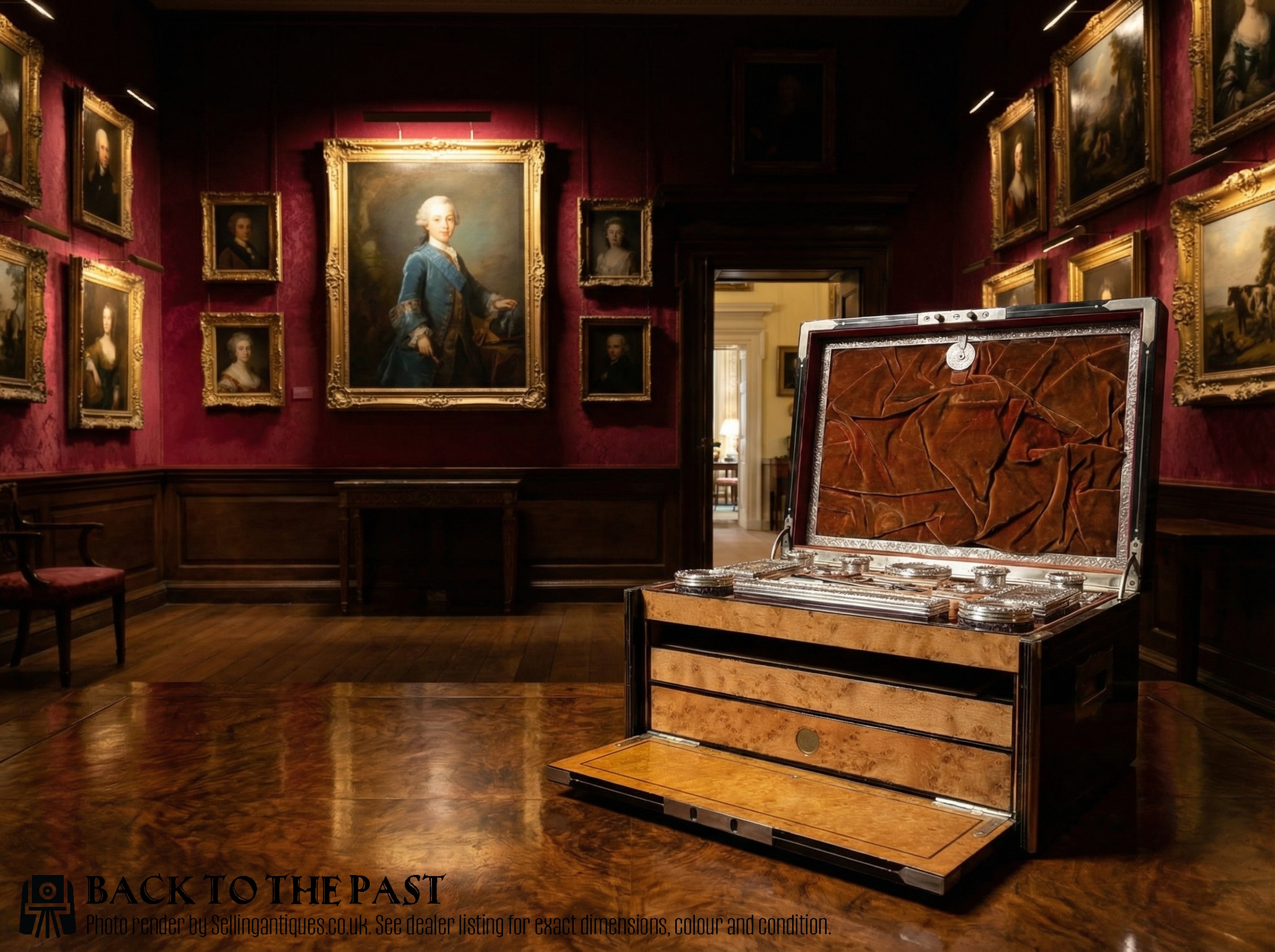
A victorian coromandel vanity box is a substantial timber casket constructed to hold jewellery, cosmetics, and writing implements during the nineteenth century. These pieces emerge in forms such as dressing cases, work boxes, and scent bottle caskets dating from eighteen fifty to nineteen hundred.
The versions most commonly met on this page are rectangular travelling cases featuring fitted interiors with velvet linings, glass bottles, and sometimes silver mounts. They span early Victorian examples through the Aesthetic Period.
Makers housed these containers in exotic coromandel wood, often embellished with brass banding or mother-of-pearl inlay to suit wealthy Victorian households.
Materials and construction
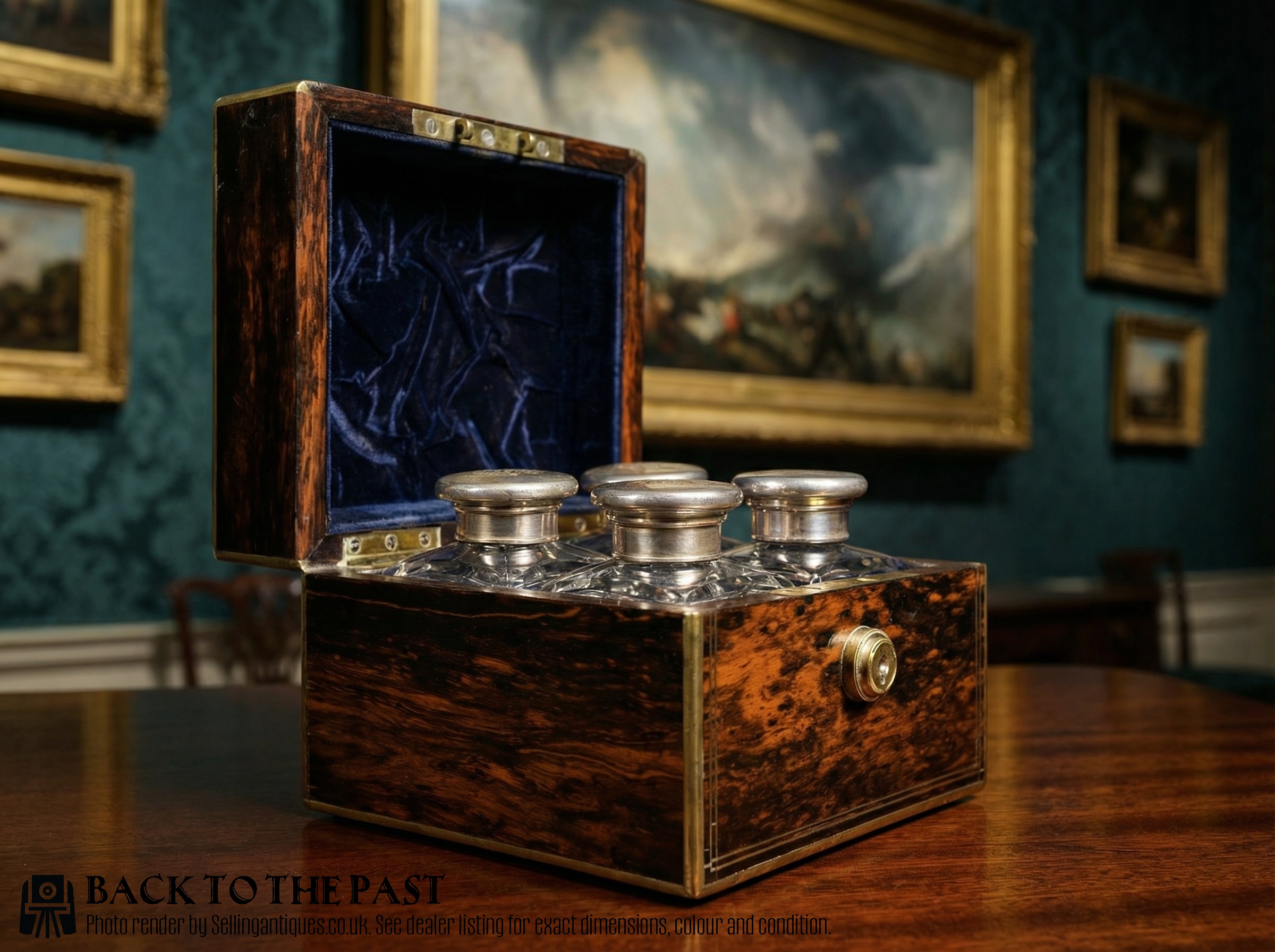
Makers built these caskets using dense coromandel wood over a sturdy timber carcass, prized for its dark grain and striped figure. Surfaces were polished to a high lustre and frequently reinforced with brass corners and strapwork.
Interiors utilised velvet and silk linings to protect crystal cut glass bottles, silver fittings, and jewellery trays. Mother-of-pearl inlay and precision locking mechanisms demonstrate nineteenth-century cabinet-making skill.
Listings feature pieces spanning from eighteen forty through the Aesthetic Movement, incorporating coromandel wood, brass, and mother-of-pearl.
Determinants of quality
The standard of a victorian coromandel vanity box rests on the complexity of its internal fitments and the integrity of the coromandel timber. Comprehensive sets containing original cut glass bottles with silver tops and working keys command greater interest.
Superior examples display precise brass inlay, unblemished wood veneers, and intact velvet interiors without replacement partitions.
H Mitchell·Asprey·Edwards
The Victorian Coromandel Vanity Box Glossary
- Coromandel wood
- A dense, heavily figured tropical timber imported from South Asia and used extensively for high-end nineteenth-century boxes. Its dark brown colour and contrasting lighter stripes give it a distinctive appearance.
- Tantalus
- A locking drink or scent bottle cabinet that restrains bottles behind a secure wooden bar. The term derives from Greek mythology, as the contents are visible yet physically withheld.
- Aesthetic Period
- A late nineteenth-century design movement that emphasised visual beauty over narrative meaning. Pieces from this era often show simplified lines and refined decorative motifs.
- Vanity case
- A portable dressing box equipped with compartments for cosmetics, brushes, and jewellery. These cases were essential accessories for wealthy travellers in the Victorian period.
Victorian Coromandel Vanity Box: Frequently Asked Questions
What is a coromandel vanity box?
A coromandel vanity box is a luxury nineteenth-century wooden container designed to hold personal grooming items, cosmetics, and jewellery.
These pieces typically feature fitted interiors with compartments for glass bottles, small tools, and lift-out trays.
How do I date a vanity box?
Dating relies on stylistic clues, lock stamps, and the materials used in the internal fittings and exterior mounts.
Early Victorian examples often incorporate mother-of-pearl inlay, whereas later pieces align with Aesthetic Period design preferences.
Were these boxes used for travel?
Yes, these caskets were built as travelling cases for wealthy Victorians moving between townhouses and country estates.
Their robust timber carcasses and heavy brass locks protected delicate glass and silver bottles during transit.
What fittings are usually inside?
Interiors commonly house cut-crystal glass bottles with silver or plated lids, velvet-lined jewellery trays, and secret compartments.
Some examples also incorporate compartments configured for sewing or letter writing.