
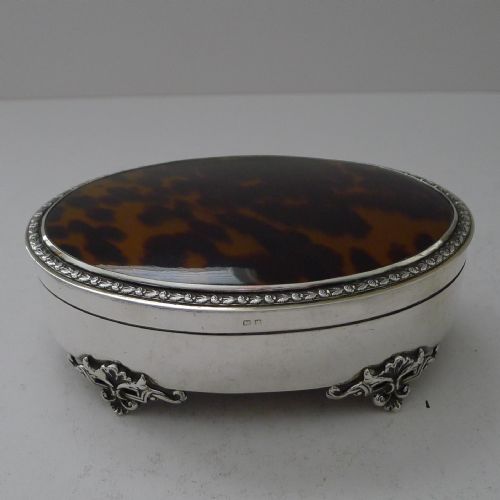


Fitted Jewellery Chest
These fitted jewellery chests offer segmented internal compartments and rich wood grains to keep small valuables secure.
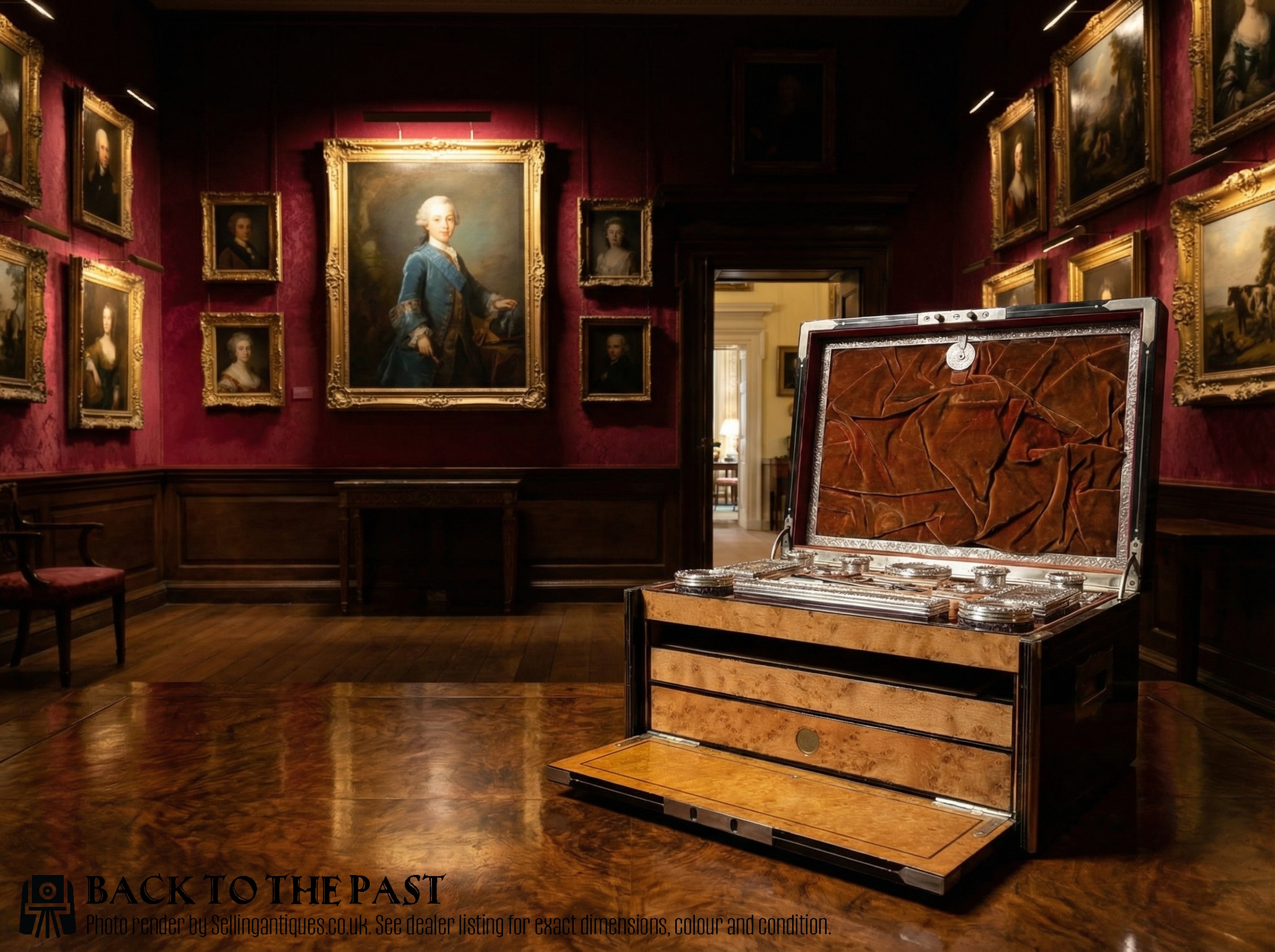
Fitted Jewellery Chest
A fitted jewellery chest is a compact box or table cabinet designed to organise rings, necklaces, and small trinkets within lined interior compartments. The examples on this page span the nineteenth century and the early twentieth century, including Victorian, Edwardian, Qing Dynasty, and Scandinavian pieces.
Buyers encounter forms ranging from small display chests and miniature campaign trunks to travelling vanity cases and table cabinets. Materials include burr walnut, rosewood, teak, coromandel, and silver, alongside occasional leather, glass, and brass hardware.
How they were made
Cabinet makers utilised dense hardwoods such as rosewood, walnut, and teak, often selecting burr veneers to highlight natural grain patterns across the exterior surfaces. Brass mounts, hinges, and lock plates reinforce corners and secure lids on travelling and campaign variants.
Interiors feature velvet linings and tailored partitions designed to hold specific items such as dressing accessories, tiaras, and rings. More elaborate chests incorporate swing-out cases and lift-out trays to maximise internal storage.
One extraordinary box arrived wrapped in the heritage of a princess, holding space for a tiara alongside everyday jewels.
What varies in quality
Quality rests upon the selection of timber veneers, the precision of internal joinery, and the integrity of the original velvet linings and compartmental fittings. Finer examples display carefully matched burr walnut or figured rosewood alongside substantial brass hardware that sits flush with the wood.
The sophistication of the internal mechanism distinguishes standard storage boxes from elaborate dressing cases. Swing-out trays, integrated silver components, and signed maker plaques indicate higher craftsmanship during production.
Parkins and Gotto
The Fitted Jewellery Chest Glossary
- Campaign trunk
- A portable chest built with recessed brass handles and reinforced corners for travel. These pieces dismantle or fold to ease transport.
- Coromandel
- A dense, heavily figured tropical hardwood prized for dark brown coloration and contrasting stripes. Makers utilised it for luxury nineteenth-century dressing boxes.
- Hongmu
- A category of dense Chinese hardwoods used for traditional furniture and travelling boxes. The timber yields a dark, polished finish.
- Burr walnut
- Wood grain featuring twisted, knotted growth patterns that create mottled patterns. Cabinet makers prized it for decorative exterior veneers.
- Dressing case
- A fitted box containing compartments for cosmetics, brushes, and jewellery. Many include glass jars with silver lids alongside the main storage tiers.
Fitted Jewellery Chest: Frequently Asked Questions
What is a fitted jewellery chest?
A fitted jewellery chest is an antique storage box featuring internal compartments, trays, and velvet linings designed to hold small valuables and trinkets.
These pieces range from portable travelling vanity cases to small table cabinets constructed from woods like walnut, rosewood, and teak.
How were antique jewellery boxes used?
Owners kept them on dressing tables or packed them for travel to protect rings, necklaces, and grooming tools.
Interior trays and swing-out cases kept items separated and secure during movement.
What materials are common?
Exteriors feature hardwoods such as burr walnut, rosewood, teak, and coromandel, often accented with brass handles and locks.
Interiors rely on velvet linings, leather trim, and fitted glass or silver components.
How do I date a chest?
Dating relies on stylistic clues, construction methods, and materials associated with periods like the Victorian era or the early twentieth century.
Maker signatures and specific regional forms, such as campaign trunks or Qing Dynasty travelling boxes, offer further chronological markers.