


Ladies Dressing Box
These ladies dressing box examples range from Victorian burr walnut travel cases to Art Deco ceramic powder bowls, offering fitted interiors for personal possessions.
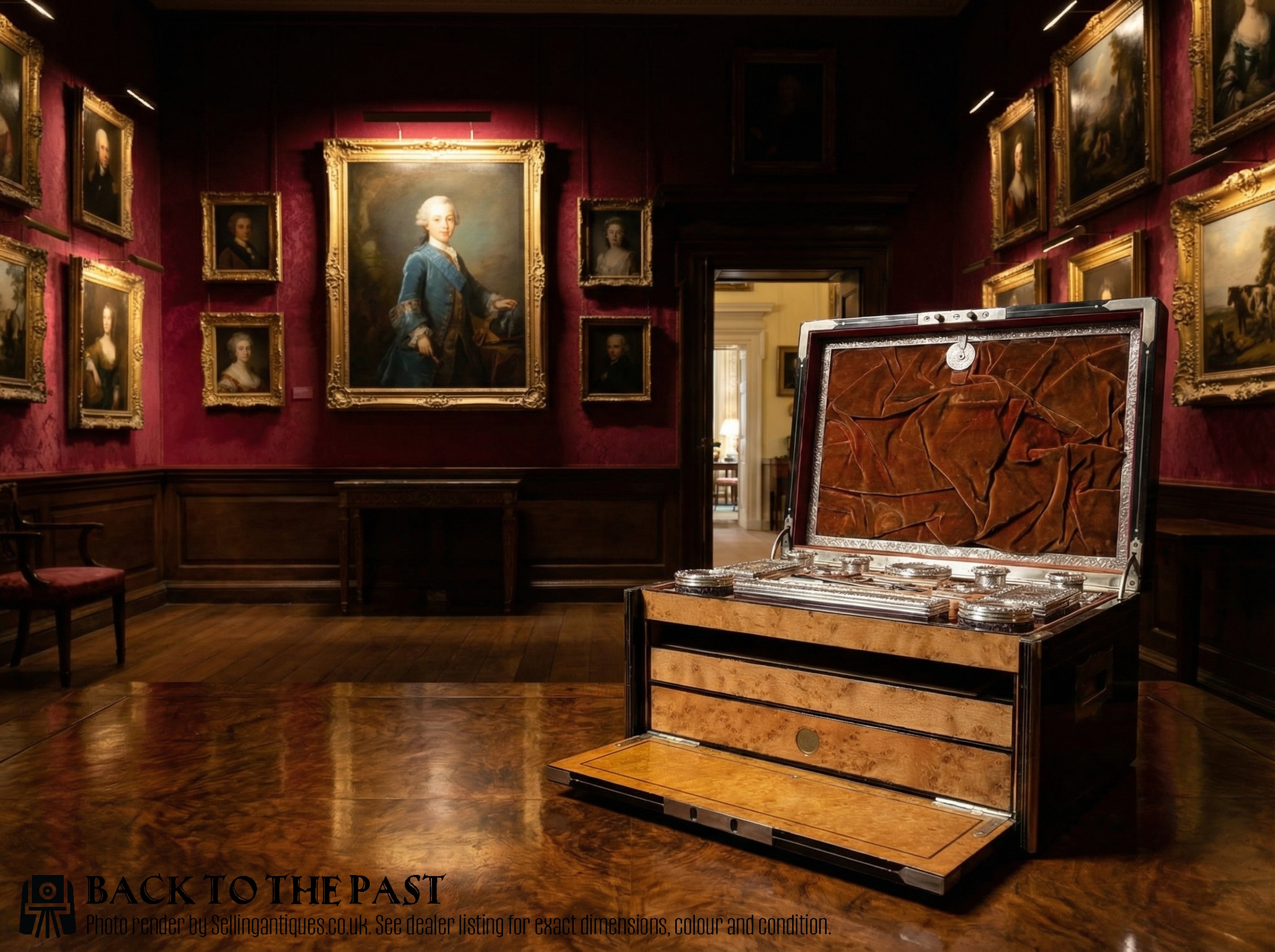
Ladies Dressing Box
A ladies dressing box is a fitted container designed to hold grooming implements, cosmetics, jewellery, and writing materials during travel or for display on a dressing table.
The pieces on this page span several periods, including Regency, Victorian, Edwardian, and Art Deco, alongside mid-century examples.
Buyers will encounter travelling vanity cases with internal compartments alongside stationary table-top boxes made for the home.
What varies in quality
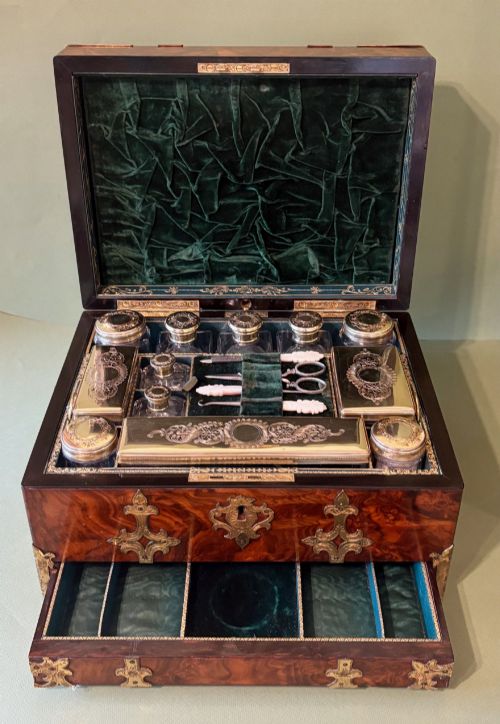
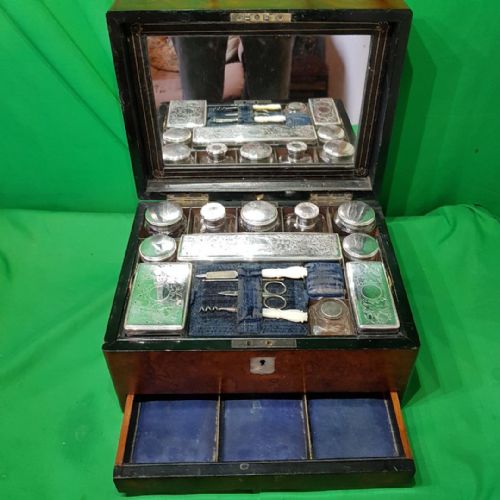
Quality rests in the selection of figured timber veneers, the precision of brass inlay, and the completeness of the internal fittings, such as original silver-mounted glass bottles.
Superior examples retain their original working locks, keys, secret drawers, and fitted velvet trays, showing minimal wear to the internal compartments.
Object forms range from nineteenth-century travelling vanity cases to 1930s ceramic powder bowls and tabletop keepsake boxes.
Halstaff and Hannaford
The Ladies Dressing Box Glossary
- Burr walnut
- A timber prized for its swirling, highly figured grain patterns, frequently utilised for Victorian veneer work.
- Coromandel
- A dense, dark exotic hardwood imported from Asia, often selected for luxury nineteenth-century travelling cases.
- Tunbridge Ware
- Small wooden items decorated with microscopic mosaic patterns built from tiny blocks of naturally coloured woods.
- Vanity box
- A portable container outfitted specifically for holding cosmetics, brushes, and personal grooming accessories.
- Travelling case
- A secure box fitted with a drop-front or lifting lid designed to transport personal effects safely on journeys.
Ladies Dressing Box: Frequently Asked Questions
What is inside a ladies dressing box?
These boxes typically contain a fitted interior with compartments for jewellery, glass bottles with silver caps, and sometimes a folding mirror or writing slope.
Many examples retain their original velvet or leather-lined trays designed to keep personal items organised.
How do I date a dressing box?
Dating relies on timber choices, construction methods, and hardware styles, such as Victorian brass-bound corners or Art Deco ceramic forms.
Silver hallmarked internal components also provide precise year markers for the manufacture of the piece.
Were these boxes meant for travel?
Travelling vanity cases were built robustly with heavy timber frames and brass reinforcement to withstand the rigours of nineteenth-century journeys.
Table-top versions remained stationary in bedrooms or dressing rooms to hold daily jewellery and powder.
How do I care for wood and velvet?
Timber surfaces require occasional cleaning with a dry or lightly waxed cloth to maintain the grain and prevent the wood from drying out.
Velvet interiors should be kept away from direct sunlight and moisture to preserve the pile and original colour.