
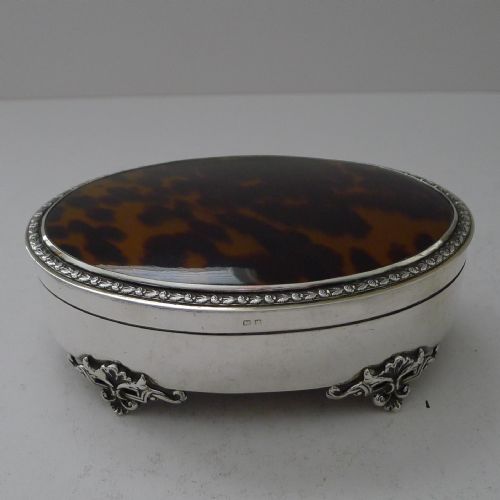


Silver Fitted Jewellery Box
A silver fitted jewellery box is a portable case for keeping trinkets and cosmetics, prized for its intricate internal compartments and precious metals.
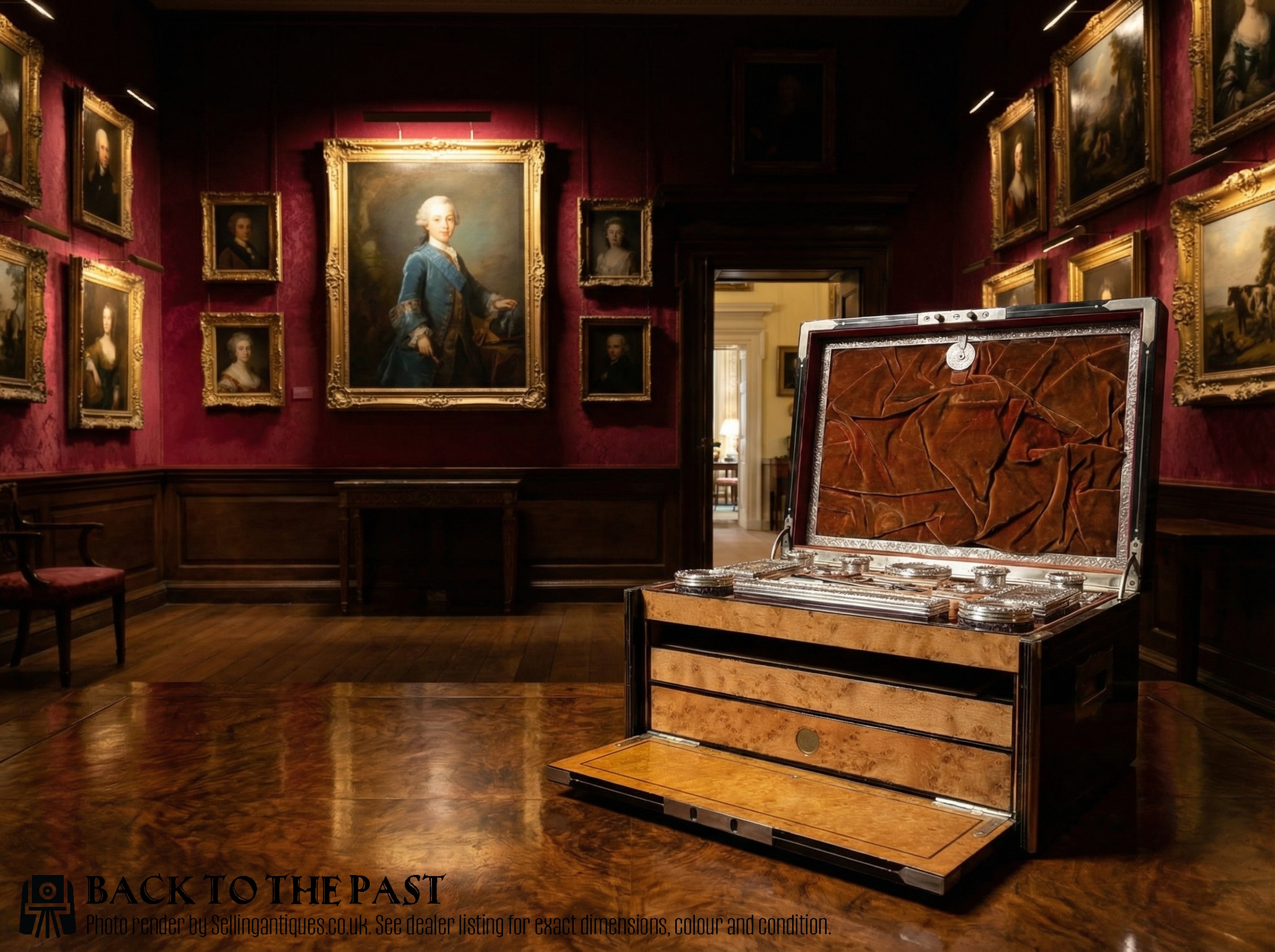
Silver Fitted Jewellery Box
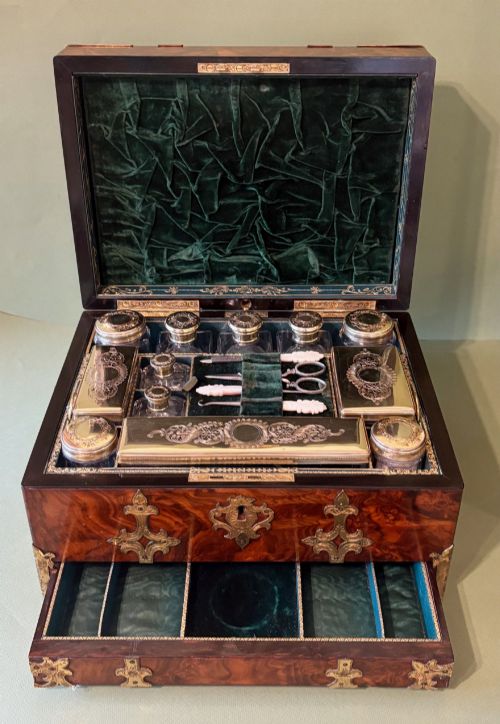
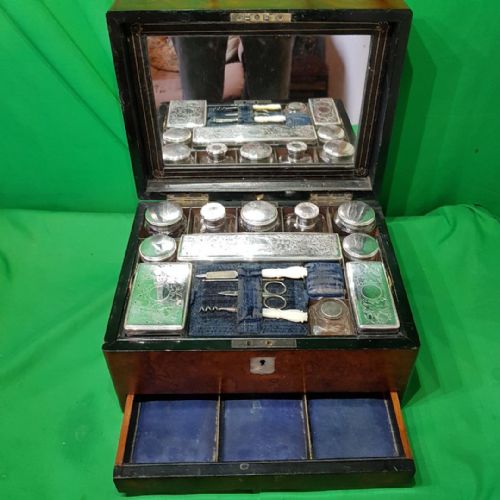
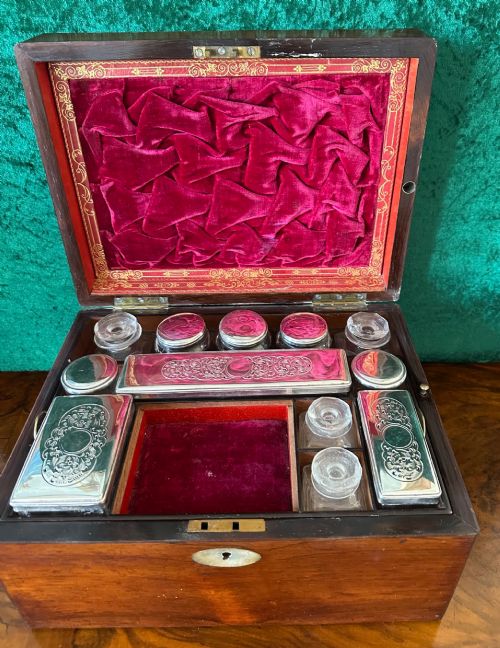
A silver fitted jewellery box is a compartmented container designed to hold small valuables, trinkets, and grooming accessories securely during travel or for display on a dressing table. When exploring this selection, buyers encounter various forms including traditional dressing boxes, vanity cases, and dedicated jewellery boxes dating from the Victorian and Edwardian eras through to the Art Deco period.
The pieces appearing on this page span several decades of British craftsmanship, showcasing domestic forms executed in sturdy timbers and precious metals. Burr walnut, coromandel wood, and rosewood frequently form the external carcass, while sterling silver provides internal mounts, hinges, and accompanying containers. Velvet and leather line the interior trays to protect delicate items from damage.
Victorian examples dominate the selection, often taking the form of substantial travelling sets or combined dressing cases with hinged lids and secret drawers. Edwardian and later pieces introduce streamlined Art Deco silhouettes, guilloche enamel details, and tortoiseshell inlays alongside the enduring combination of solid silver and cut crystal glass.
How they were made
Cabinet makers constructed the foundational carcass of each silver fitted jewellery box from dense hardwoods like burr walnut and coromandel, applying careful joinery to ensure stability. Timber surfaces underwent extensive sanding and polishing to reveal natural grain patterns before metal mounts were attached.
Silversmiths shaped sterling silver components through casting, hammering, and engraving, creating matching lids, bottle caps, and brush backs. Glass bottles and jars featured hand-cut facets, pairing with velvet or leather linings that were glued and stitched precisely into internal trays.
Some Victorian boxes hide secret drawers accessible only by pressing concealed wooden springs inside the case.
What varies in quality
The choice of primary timber and secondary materials dictates the baseline standard of a silver fitted jewellery box, with dense exotic woods and heavy sterling silver components marking superior examples. Makers who employed solid burr walnut or coromandel rather than simpler veneers produced sturdier cases that survived decades of regular handling.
Internal organisation and the completeness of the original fittings distinguish finer pieces from simpler variants. Boxes containing matching sets of crystal cut bottles with intact silver tops, original velvet linings, and functioning locks by renowned makers represent the pinnacle of period craftsmanship.
Parkins and Gotto·Asprey
The Silver Fitted Jewellery Box Glossary
- Burr walnut
- A figured timber derived from the wart or burl growths of walnut trees, prized for its swirling grain patterns on box exteriors. Cabinet makers sliced this wood into thin veneers to adorn the lids and sides of luxury cases.
- Coromandel wood
- A dense, dark East Indian timber featuring striking brown and black stripes, frequently utilised for high-end Victorian vanity and dressing boxes. Its weight and hardness contributed significantly to the durability of nineteenth-century travelling cases.
- Guilloche enamel
- A decorative technique where geometric patterns are engine-turned into a metal surface before translucent coloured enamel is applied over the top. This finish appears frequently on vanity items and compacts from the Art Deco period.
- Sterling silver
- An alloy consisting of ninety-two point five percent silver by mass, with the remainder comprising copper or other metals to improve hardness. British pieces typically bear hallmarks indicating the assay office, standard, and date of manufacture.
- Vanity case
- A portable container outfitted specifically for cosmetics, brushes, and small grooming tools rather than jewellery alone. These cases often incorporate internal mirrors and lift-out trays lined with velvet or silk.
Silver Fitted Jewellery Box: Frequently Asked Questions
What is inside a silver fitted jewellery box?
These boxes typically contain velvet-lined trays, secret compartments, and various glass jars or bottles with sterling silver lids. Many retain their original internal fittings for rings, brooches, and grooming implements.
Makers arranged these compartments to secure loose valuables during travel while keeping dressing table accessories organised and accessible.
How do I date a Victorian dressing box?
Dating relies on architectural styles, timber choices, hallmark stamps on the silver components, and manufacturing labels left inside the lid. Burr walnut and coromandel cases are typical of the mid to late nineteenth century.
Examining the locks, hinges, and construction methods also helps narrow down the production decade within the Victorian era.
Were these boxes used for travel?
Yes, many larger examples were designed as travelling vanity cases or dressing boxes for affluent Victorians on the move. They featured robust wooden carcasses and secure locks to protect fragile glass and silver contents during transit.
Over time, many transitioned from travelling companions to static dressing table accessories in private homes.
How do I clean the velvet interior?
Gentle dusting with a soft, dry brush is the safest method for clearing debris from antique velvet linings. Avoid using water or liquid cleaners, which can damage the underlying wood and fabric adhesives.
Professional conservators recommend minimal intervention to preserve the original patina and structural integrity of the fabric.