


Burr Walnut Dressing Case
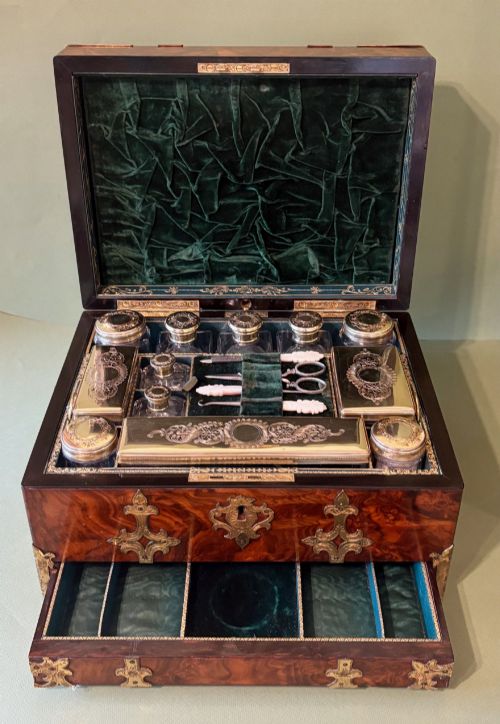
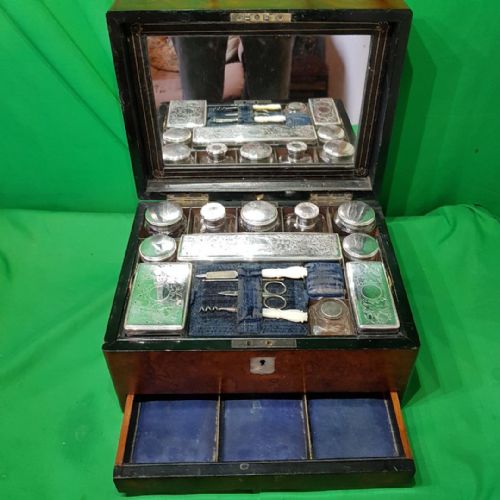
A burr walnut dressing case is a fitted travelling box for cosmetics and trinkets, prized for its swirling grain and brass-bound edges.
Burr Walnut Dressing Case
A burr walnut dressing case is a fitted travelling box designed for ladies and gentlemen to house cosmetics, jewellery and grooming implements during transit or upon a dressing table. The pieces found on this page span the Victorian and Art Deco eras, with 19th-century examples dominating the selection.
Most items present as vanity boxes, dressing boxes or jewellery cases constructed from richly figured walnut veneers. Interiors typically feature fitted compartments, lift-out trays, and built-in mirrors suited to the daily routines of past centuries.
Origins stretch from standard Victorian travelling sets to specific specialised containers like the Art Deco seven-day razor set. Collectors encounter various forms ranging from compact jewellery boxes to spacious boxes and caskets.
How they were made
Makers utilised decorative burr walnut veneers applied over solid timber carcasses to achieve the characteristic swirling grain patterns on the exterior lids and panels. Brass banding, corner reinforcement and lock escutcheons were frequently integrated to protect the edges during travel.
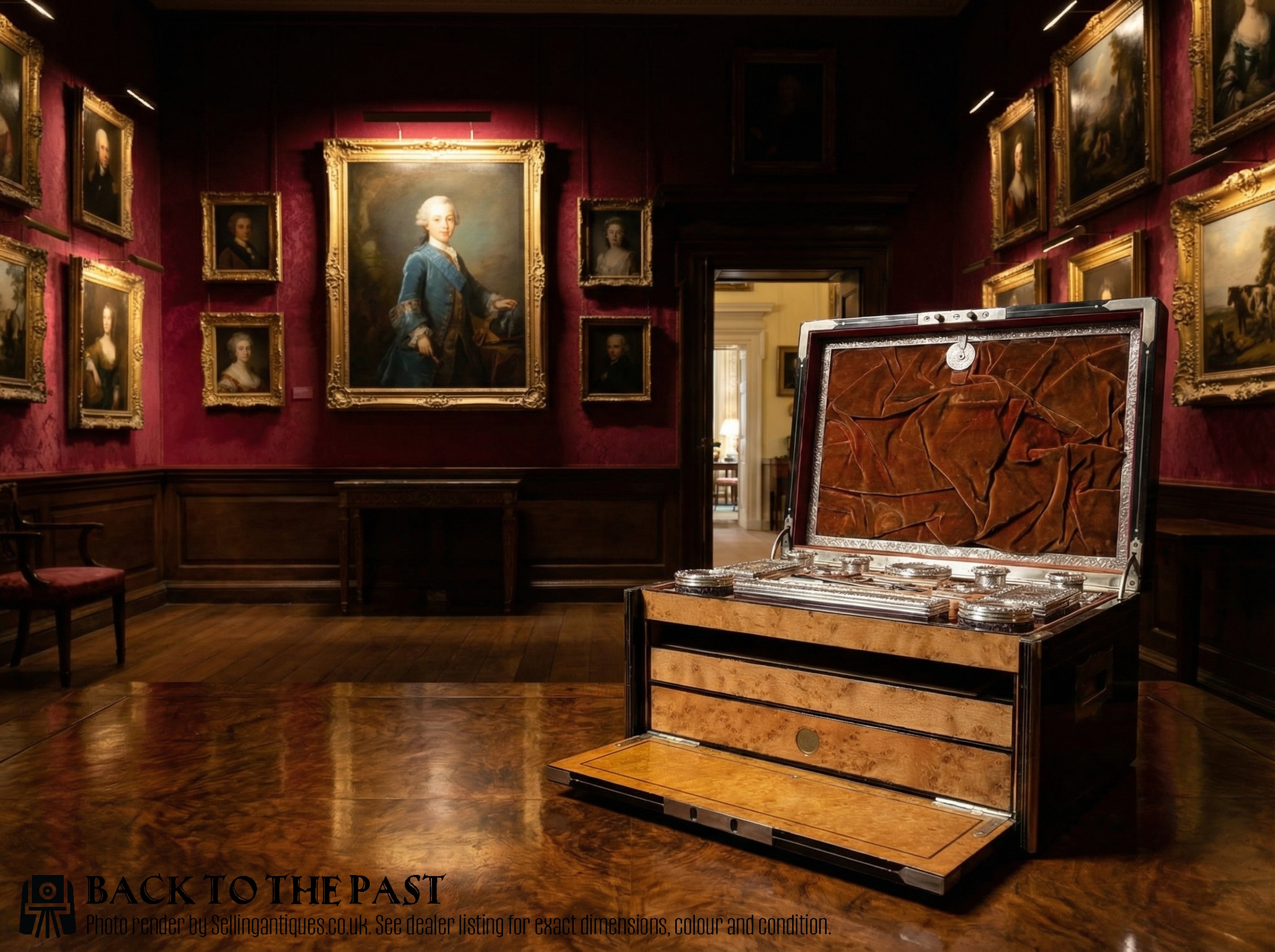
Interiors were laboriously lined with velvet, silk and occasionally leather to cushion fragile glass and silver containers. Fitted compartments often incorporated hidden secret drawers accessed via small wooden pins or spring mechanisms.
Periods represented in this selection span the Georgian era, the 19th Century, Victorian times, 1860, 1880, 1900 and the Art Deco period of 1920.
What varies in quality
Quality rests upon the selection and matching of the burr walnut veneer across the top and sides of the box. Superior examples display symmetrical, highly figured grain patterns that wrap seamlessly around the corners.
The sophistication of the internal fittings defines the tier of the piece, distinguishing plain compartments from complete sets retaining original silver-capped glass jars, mother of pearl implements and working brass locks with functional keys.
Parkins and Gotto·JH Browne
The Burr Walnut Dressing Case Glossary
- Burr walnut
- A veneer sliced from the knotty growth of a walnut tree, producing swirling, highly decorative grain patterns. It forms the primary decorative surface of these cases.
- Escutcheon
- A protective metal plate surrounding a keyhole, usually made of brass on these boxes. It prevents the wood from splintering around the lock.
- Veneer
- A thin slice of ornamental wood applied over a secondary timber base. This technique allowed cabinetmakers to display expensive burr walnut surfaces economically.
- Travelling set
- A fitted case equipped with matching glass bottles, jars and grooming tools for use on journeys. These sets ensured travellers maintained personal hygiene away from home.
- Fitted interior
- An internal layout featuring specific compartments, trays and slots designed to hold designated bottles and accessories. It keeps contents secure and organised during transit.
Burr Walnut Dressing Case: Frequently Asked Questions
What is inside a dressing case?
A dressing case typically contains a fitted interior with compartments designed for jewellery, cosmetics and hair brushes. Many include lift-out trays and small glass bottles with matching silver lids.
Some examples also feature built-in vanity mirrors mounted inside the lid and hidden secret drawers for valuable trinkets.
How do I date a burr walnut box?
Dating relies on construction methods, hardware styles and materials present in the lining and internal fittings. Victorian pieces often use brass banding and velvet, while Art Deco items show geometric styling.
Maker marks stamped onto locks or leather surfaces provide the most precise indication of the production period.
Were these boxes meant for travel?
These cases served as portable vanity units for wealthy travellers taking extended journeys by carriage or train. Sturdy brass bindings and secure locks protected the contents while moving.
Over time, many transitioned into static dressing table pieces used solely for home storage of jewellery and small valuables.
How should I clean burr walnut?
Maintenance requires gentle dusting with a soft, dry cloth to prevent scratching the polished wood surface. Avoid using harsh chemical sprays or excessive water which can damage the delicate veneer and antique polish.
Occasional application of high-quality beeswax nourishes the walnut and maintains its natural sheen.