
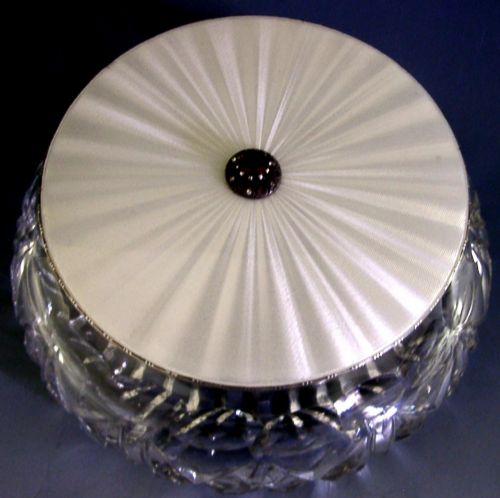


Antique Silver Top Jar Box
An antique silver top jar box brings dressing table elegance into focus, combining tactile glass and metal for everyday display.
Antique Silver Top Jar Box
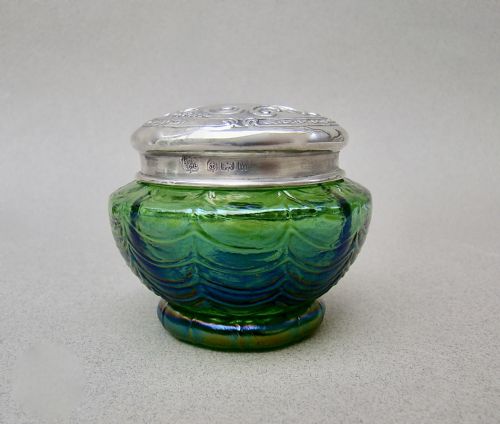
An antique silver top jar box encompasses dresser containers, vanity jars, and trinket boxes featuring precious metal lids mounted on glass, crystal, or wood bodies. These pieces originate across Victorian, Edwardian, and Art Deco periods, spanning the nineteenth and early twentieth centuries.
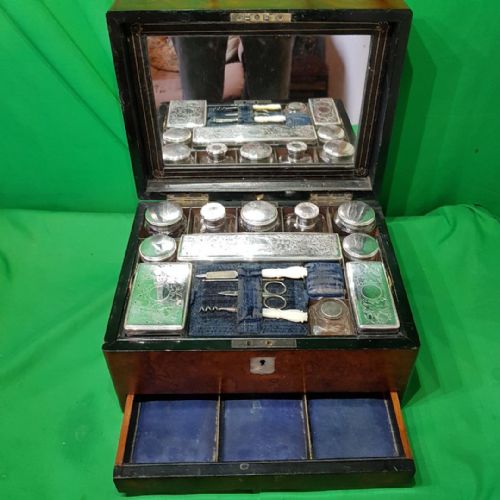
The most common forms on this page include cut glass dressing table jars, silver lidded trinket boxes, and larger biscuit barrels with sterling silver or silver plate mounts. Makers housed these items in fitted travelling cases, vanity boxes, and dressing table sets for domestic or travel use.
How they were made
Craftsmen shaped bodies from clear cut glass, heavy cut crystal, or moulded glass, sometimes incorporating coloured glass such as cranberry or frosted varieties, alongside wooden frames like oak, walnut, and rosewood. Lids and mounts utilise sterling silver or silver plate, frequently hallmarked in assay offices such as Birmingham, London, and Chester.
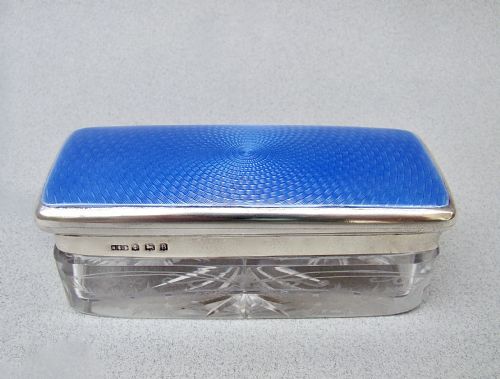
Surface decoration relies on techniques including guilloché enamel, hand etching, and tortoiseshell inlays set into the metal lids. Glass bodies feature deep faceting, twisted profiles, and heart shapes designed to catch the light on dressing furniture.
Some gentlemen travelled with fully kitted boxes containing dedicated jars for soap, strings, and biscuits, ensuring afternoon tea standards followed them anywhere.
What varies in quality
Quality rests upon the weight and clarity of the glass or crystal body, where deep hand cutting and crisp faceting distinguish superior pieces from moulded alternatives. The thickness of the silver lid and the intricacy of any applied guilloché enamel or hallmarks indicate the workshop's standing.
The integration between the metal mount and the glass vessel dictates structural success, alongside the survival of internal velvet linings or fitted compartments within larger travel cases and dressing boxes.
A. J. Pepper & Co·Henry Clifford Davis·Walker & Hall·Jonathan Douglas·Goldsmith's and Silversmith's Co.·James Dixon and Sons
The Antique Silver Top Jar Box Glossary
- Guilloché enamel
- A decorative technique where a geometric pattern is mechanically engraved beneath translucent enamel paint. It appears frequently on Art Deco vanity jar lids.
- Sterling silver
- An alloy containing a high proportion of pure silver, denoted by British hallmarks. It provides the durable metal tops for many Edwardian and Georgian dressing pots.
- Biscuit barrel
- A cylindrical container, often featuring a silver plated mount and cut glass body, designed for serving dry goods. Examples from the Victorian era use drum forms.
- Trinket box
- A small receptacle intended for holding rings and small jewellery items. These often display heart shapes or hinged silver lids.
- Hallmark
- An official stamp indicating metal purity and origin. Assay marks on these lids reveal the year and city of manufacture.
Antique Silver Top Jar Box: Frequently Asked Questions
How were these jars used?
These jars served as functional containers on dressing tables for creams, powders, soaps, and pins. Ladies and gentlemen also utilised them within fitted travel cases and vanity boxes during transit.
Larger variations, such as biscuit barrels, sat on dining sideboards to hold dry provisions. They combined practical storage with decorative display.
How do I date a silver top jar?
Dating relies heavily on the hallmarks stamped into the silver lids, which indicate specific assay years and towns. Stylistic clues like Art Deco geometric enamel or Victorian cut crystal also point to a decade.
Matching the overall form to periods like the Edwardian era or Georgian times helps narrow down the manufacturing window.
How do I care for silver and glass?
Glass bodies respond well to warm soapy water and gentle brushing to clear dust from deep cuts. Silver lids require careful polishing with a soft cloth to avoid damaging any surrounding glass or enamel.
Keep enamel and tortoiseshell away from harsh chemical dips. Store items away from direct sunlight to preserve coloured glass and interior velvet.
What is the difference between a trinket box and a vanity jar?
Trinket boxes generally feature shallower proportions designed specifically for loose jewellery, rings, and small keepsakes. They often take geometric or heart shapes with hinged lids.
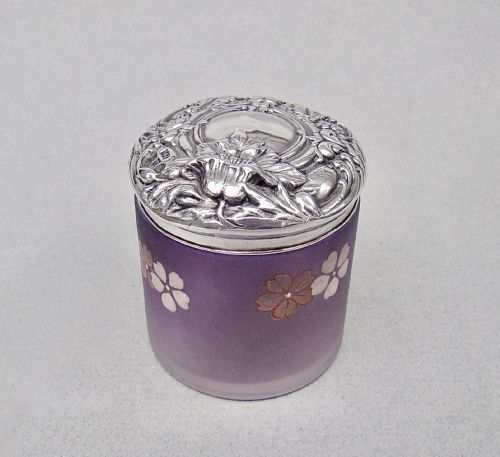
Vanity jars are taller, vertical containers meant for holding cosmetics, creams, or dressing table accessories. Their screw-on or lift-off silver tops seal deeper glass vessels.