



Inlaid Wooden Desk Box
An inlaid wooden desk box brings together rich timber and meticulous hand-craft to organise correspondence and papers.
Inlaid Wooden Desk Box
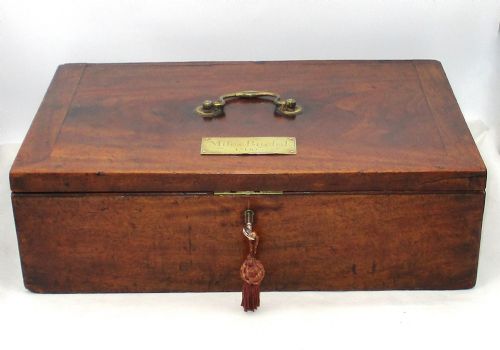
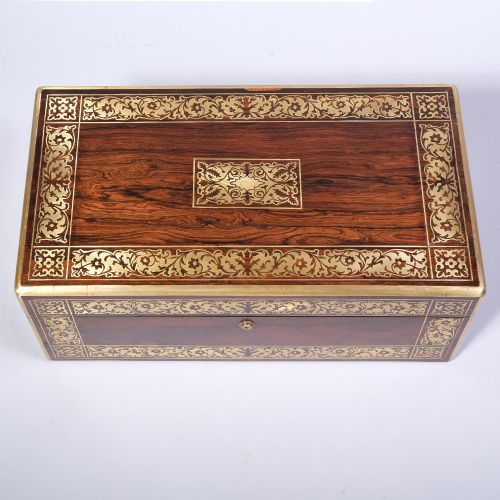
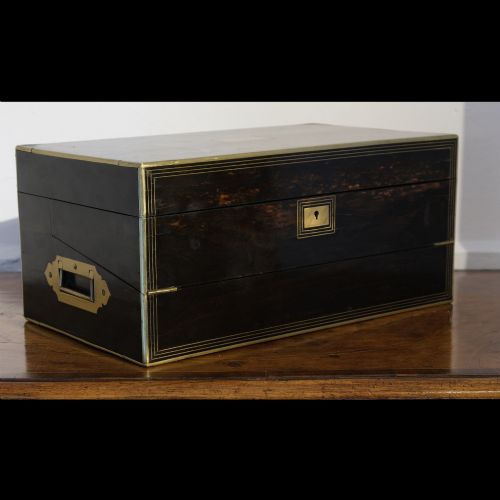
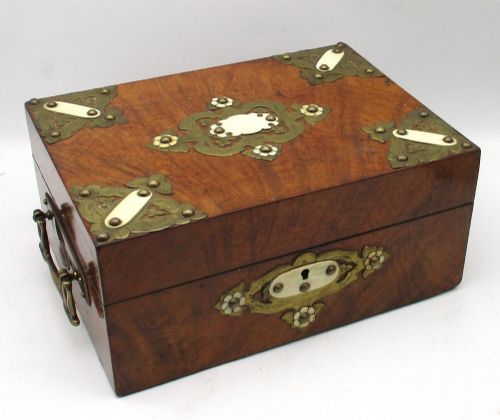
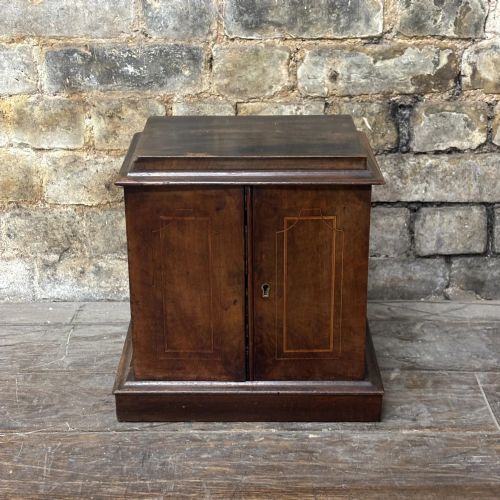
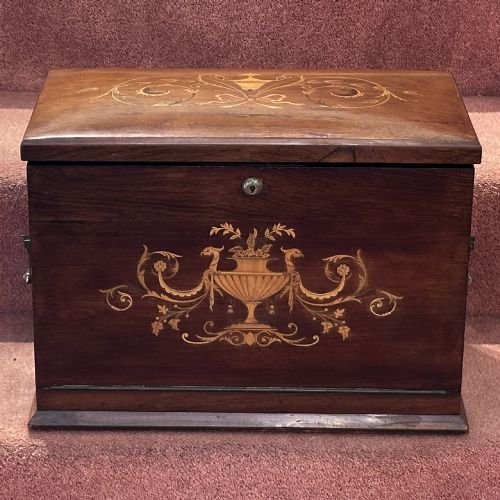
An inlaid wooden desk box spans several distinct centuries, with Georgian, Regency, and Victorian periods dominating the selection. Buyers seeking an inlaid wooden desk box will frequently encounter writing slopes, stationery boxes, and document caskets designed for portable or desktop use.
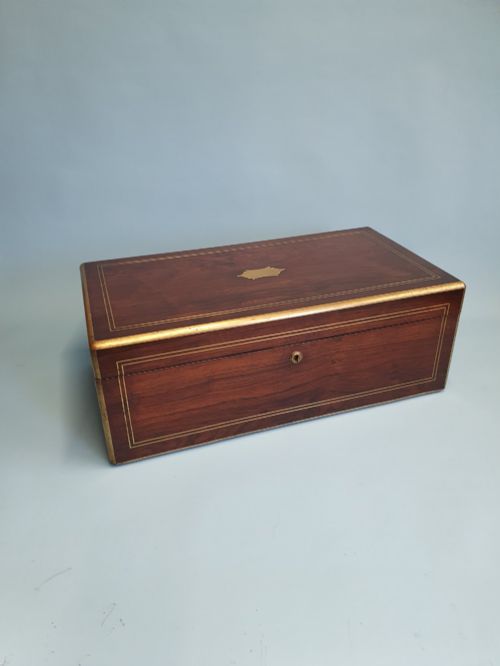
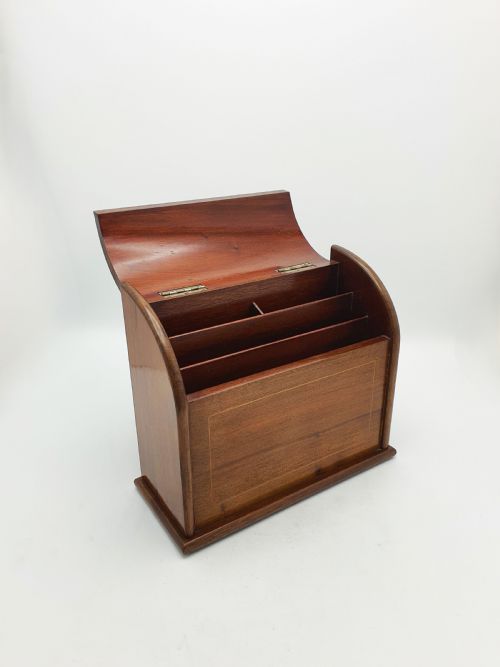
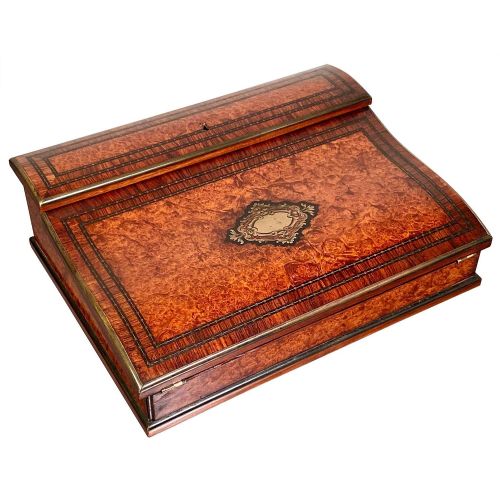
The objects take many forms, from compact rosewood and mahogany writing boxes to larger campaign slopes bound in brass. Examples range from mid eighteenth-century document boxes to Edwardian stationery cabinets and desk tidies.
Origins vary across the pieces, incorporating traditional British cabinet work alongside specific regional interpretations such as Anglo-Indian and Chinese rosewood items. Many incorporate fitted interiors with secret drawers, inkwells, and compartmented storage for correspondence.
Materials and construction methods
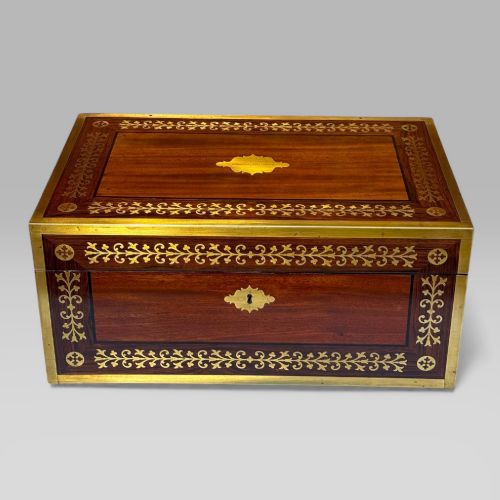
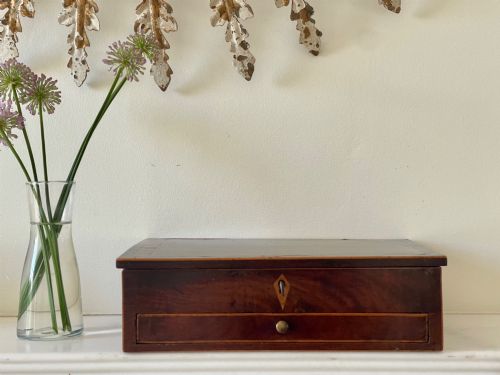
Cabinet makers utilised dense exotic and native timbers including rosewood, mahogany, walnut, burr walnut, and coromandel as the structural foundation. Surfaces were frequently embellished with contrasting inlay materials such as boxwood, satinwood, brass, and mother of pearl.
Specialised decorative techniques like Tunbridge ware mosaic and boulle work appear on select pieces, creating intricate geometric patterns or tortoiseshell and brass motifs. Construction often involved secure locking mechanisms, such as Bramah locks, paired with brass bound edges for durability during travel.
Listings feature woods like coromandel and boxwood alongside traditional mahogany and rosewood.
Markers of superior execution
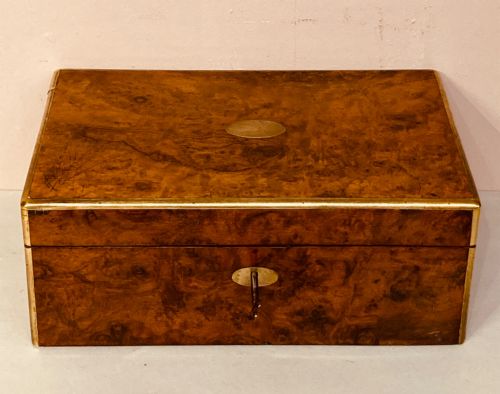
Quality rests in the precision of the timber selection and the crispness of the inlay work. Finer examples display carefully matched grain patterns, such as figured walnut or flame mahogany, combined with tightly fitted brass stringing and mother of pearl details.
Internal complexity further distinguishes the work, as superior boxes feature secret drawers, fitted pen trays, and original glass inkwells intact. The integration of robust locking hardware and well-preserved hinges indicates higher standards of original manufacture.
Edmund Nye
The Inlaid Wooden Desk Box Glossary
- Writing slope
- A portable box with a hinged sloping lid designed to provide a slanted writing surface when opened. Inside, compartments hold stationery and writing implements.
- Campaign writing slope
- A sturdy box reinforced with brass corners and straps, built for travel and military use. These boxes often feature flush-fitting carrying handles.
- Tunbridge ware
- Small wooden objects decorated with mosaic patterns formed from thousands of tiny tinted wood blocks. This technique originated in Kent during the nineteenth century.
- Bramah lock
- A high-security cylindrical lock patented in the eighteenth century by Joseph Bramah. They are typically found on better quality nineteenth-century boxes.
- Document box
- A lidded chest or container intended for storing important papers, deeds, and letters. They predate dedicated writing slopes and often lack internal writing surfaces.
Inlaid Wooden Desk Box: Frequently Asked Questions
What is a writing slope box?
A writing slope box is a portable desk that opens to reveal a slanted surface for writing and internal compartments for paper and pens.
Many examples fold flat to create a stable writing plane while concealing storage underneath for inkwells and correspondence.
How do I identify a Regency box?
Regency boxes typically feature dark timbers like rosewood accented by precise brass inlay or brass banding along the edges.
They frequently date from the early nineteenth century and rely on clean architectural lines rather than heavy carving.
What are secret drawers used for?
Secret drawers were built into wooden boxes to safely store valuables, money, or confidential letters.
They are usually concealed behind false partitions or released by hidden wooden catches within the main compartment.
How do I care for rosewood and walnut?
Rosewood and walnut surfaces require gentle cleaning with a soft, dry cloth to remove dust.
Keep the timber away from direct sunlight and extreme heat sources to prevent the wood from drying out or warping.