

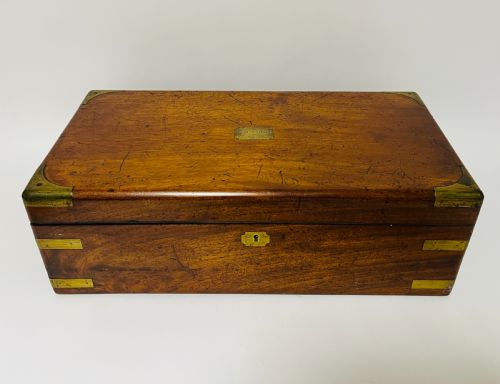


Victorian Wooden Document Box
A victorian wooden document box is a practical desktop chest designed to hold letters and deeds, prized for fine cabinet timbers and brass work.
Victorian Wooden Document Box
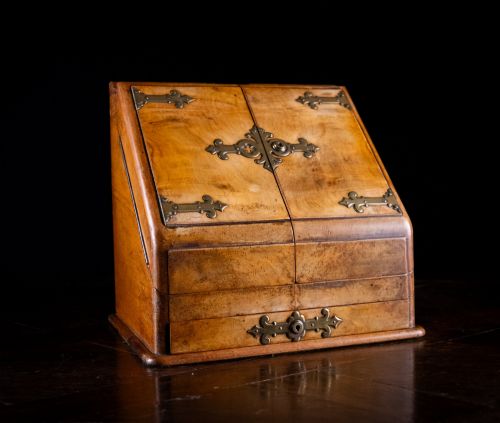
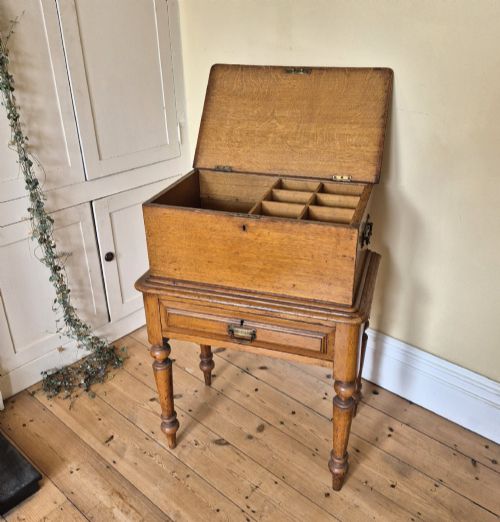
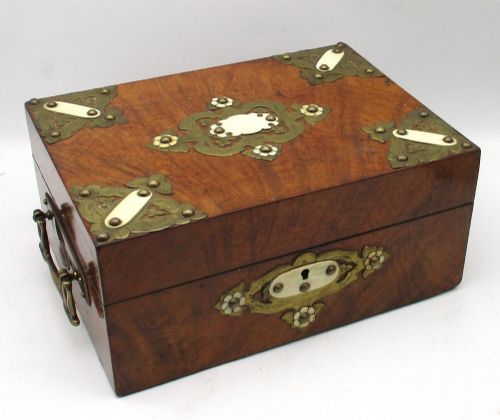
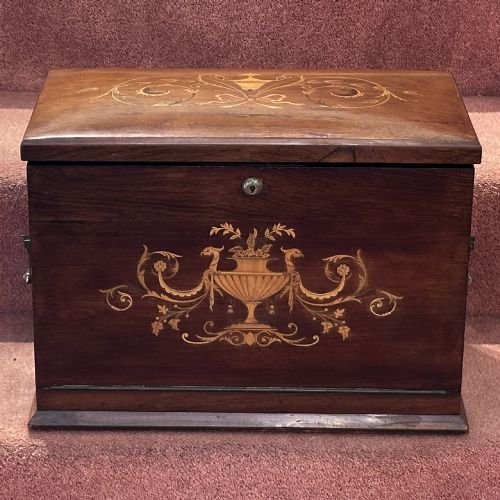
A victorian wooden document box encompasses utilitarian deed chests, portable writing slopes, and stationery cabinets designed for the nineteenth-century desk. Buyers seek these objects for their robust construction and clever internal compartments intended for correspondence and valuables.
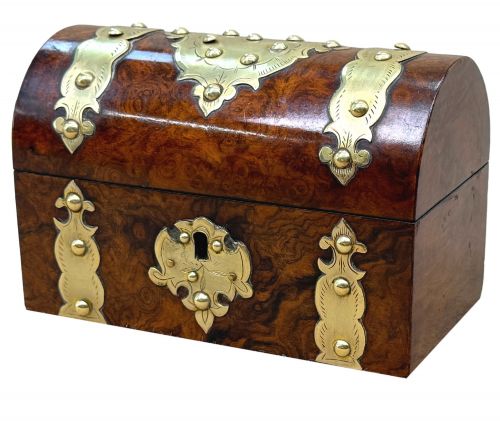
The selection here draws heavily from the Victorian period alongside nineteenth-century examples, featuring forms ranging from brass-bound campaign boxes to inlaid walnut stationery cabinets. Most pieces met on this page are domestic or campaign items constructed from dense timbers.
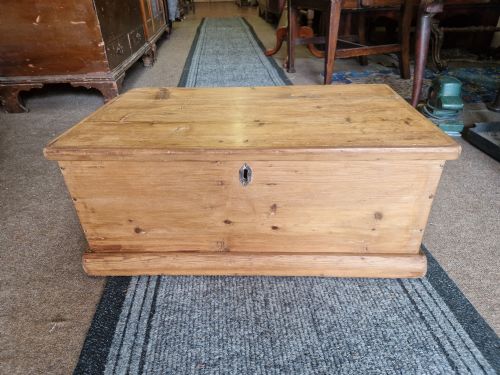
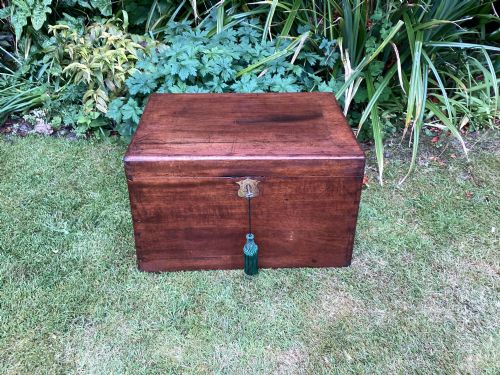
Makers and workshops utilised exotic and native woods to produce items varying from plain pine deed boxes to heavily decorated Tunbridge Ware and Anglo-Indian carved pieces. The survival of secret drawers and working locks adds notable utility to these surviving desktop accessories.
How they were made
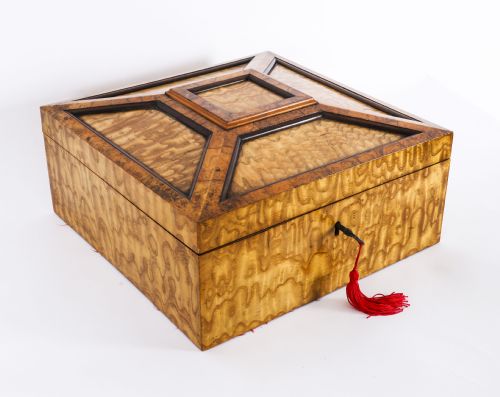
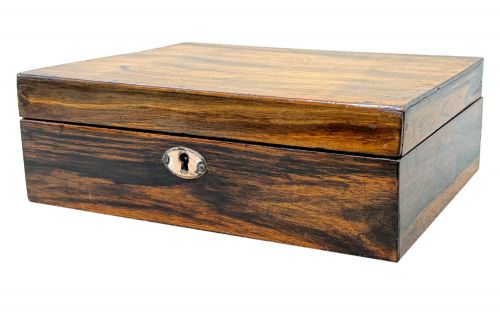
Cabinet makers constructed these boxes using structural hardwoods like mahogany, oak, and teak, often veneered with highly figured rosewood, walnut, and burr maple. These timbers provided a stable core capable of taking fine polish and enduring heavy daily use.
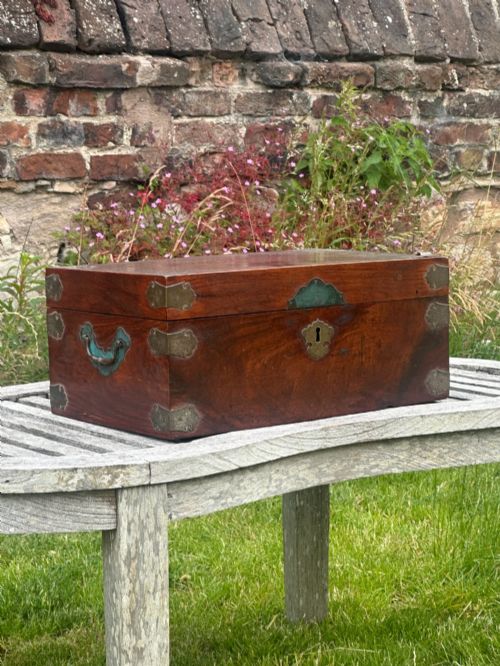
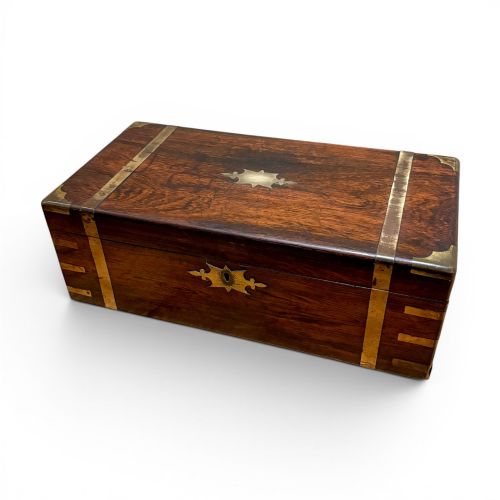
Brass corners, straps, and flush carrying handles reinforced the joints for travel, a technique standard in campaign and deed boxes. Interiors frequently incorporated satinwood, velvet writing surfaces, and concealed compartments secured by quality locks.
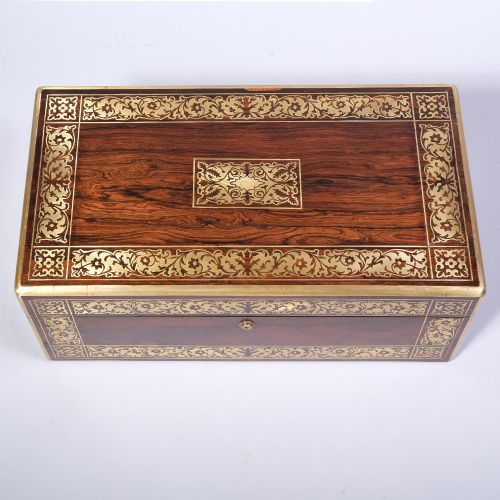
Decorative surfaces relied on brass inlay, mother-of-pearl, bone, and intricate marquetry such as Sorrento work or Tunbridge Ware mosaic tiling. These applied finishes transformed utilitarian storage into decorative desktop furniture.
Listings demonstrate a heavy reliance on rosewood and walnut timbers, frequently enhanced with brass banding and secret drawers.
What varies in quality
Quality in a victorian wooden document box rests on the selection of timber veneers and the precision of the brass hardware integration. Superior examples exhibit tightly figured burr walnut, rosewood, or coromandel matched across the lid and sides.
Internal complexity separates standard desk accessories from finer pieces fitted with secret drawers, spring-release mechanisms, and branded locks by makers like Bramah. The crispness of hand-cut dovetails and the survival of original fitted interiors dictate the standing of a box.
Edmund Nye
The Victorian Wooden Document Box Glossary
- Writing slope
- A portable desk featuring a hinged, slanted writing surface that folds down to reveal compartments for stationery, inkwells, and pens. These slope downwards towards the user.
- Deed box
- A stout wooden chest, frequently lined and reinforced with brass banding, built to store legal documents and land indentures safely. They prioritize secure locking mechanisms over internal writing surfaces.
- Tunbridge Ware
- A type of decorative woodwork produced in Kent utilising thousands of tiny dyed wood blocks to form mosaic pictorial patterns. These geometric designs typically decorate small trinket and correspondence boxes.
- Campaign style
- Furniture and accessories designed for military travel, characterised by brass corners, inset handles, and sturdy construction. Pieces built in this manner easily withstand transit.
- Bramah lock
- A high-security cylindrical lock patented by Joseph Bramah in the eighteenth century, commonly found on superior nineteenth-century boxes. They required specialised tubular keys to operate.
Victorian Wooden Document Box: Frequently Asked Questions
What is a Victorian document box?
A Victorian document box is a covered wooden chest built in the nineteenth century to store letters, legal papers, and writing materials securely. They range from plain utility deed boxes to luxurious inlaid cabinets.
Many examples double as writing slopes or stationery holders designed for nineteenth-century home desks and campaign use.
How were writing slopes used?
Writing slopes served as portable desks where users could store paper, ink, and pens inside a folding compartment. The hinged lid opened to create a slanted surface covered in leather or velvet for writing letters.
Secret drawers hidden beneath internal wells often kept private correspondence and valuables safe from casual view.
What woods are common?
Makers utilised a variety of dense timbers including mahogany, walnut, rosewood, and oak for structural stability. Finer boxes featured decorative veneers like burr walnut, coromandel, and satinwood.
Regional variations introduced exotic materials such as padouk, camphor wood, and teak, particularly on pieces with overseas or colonial connections.
How do I identify a campaign box?
Campaign boxes feature protective brass corners, flush-fitting inset carrying handles, and robust structural joinery meant for military travel. These elements prevented the wood from splitting during transit across the empire.
They are distinguished from stationary domestic boxes by their heavy hardware and practical durability.