



Brass Inlaid Writing Box
A brass inlaid writing box offers a portable desk surface, bringing period timber and metalwork together for correspondence.
Brass Inlaid Writing Box
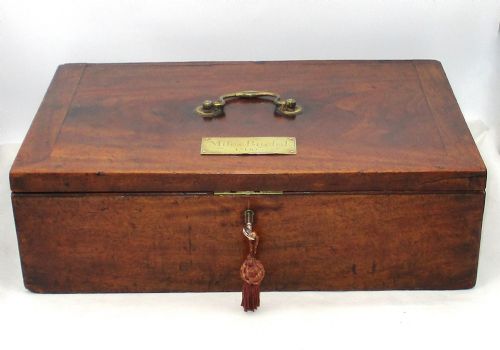
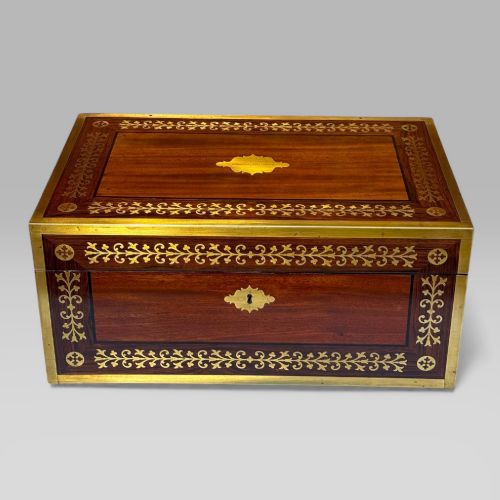
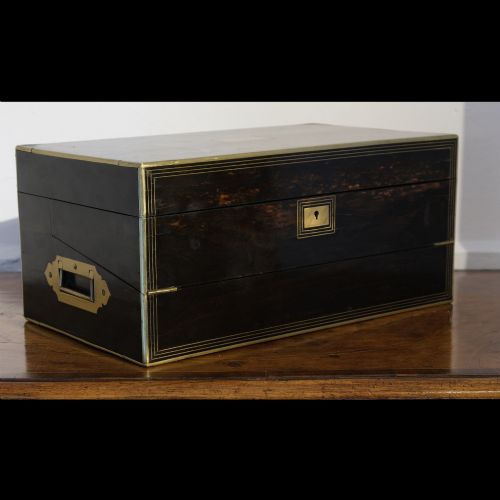
A brass inlaid writing box is a portable desk designed for correspondence and document storage, frequently appearing in forms such as writing slopes, document boxes, and desk stands. These pieces span the Georgian, Regency, and Victorian periods, along with continental European and Anglo-Indian variants.
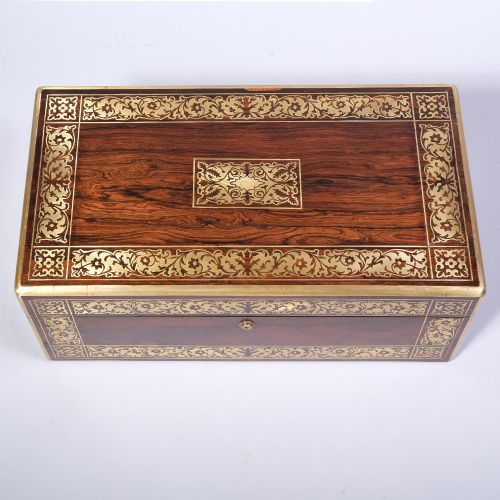
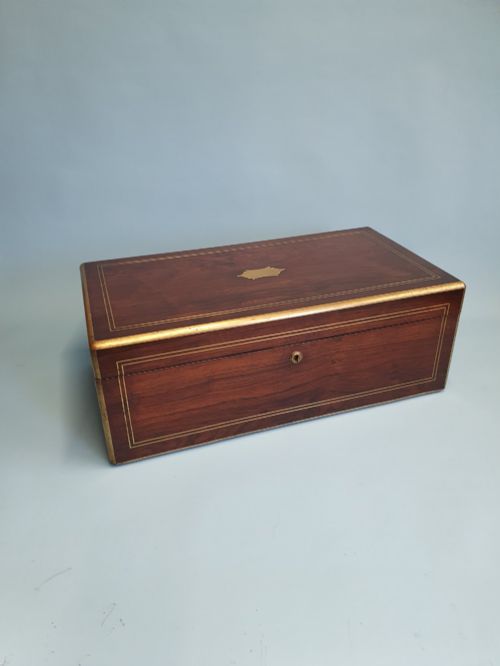
The most common examples on this page are rosewood and walnut writing slopes featuring brass stringing or bound edges. They open to reveal slanted writing surfaces, inkwells, and secret drawers intended for private papers.
Makers produced these boxes for travel and home use alike, leading to variations from compact campaign models to substantial presentation pieces. Woods like mahogany, coromandel, and teak also appear alongside the dominant rosewood and walnut.
How they were made
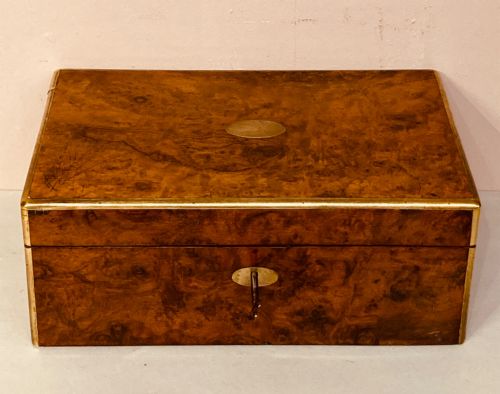
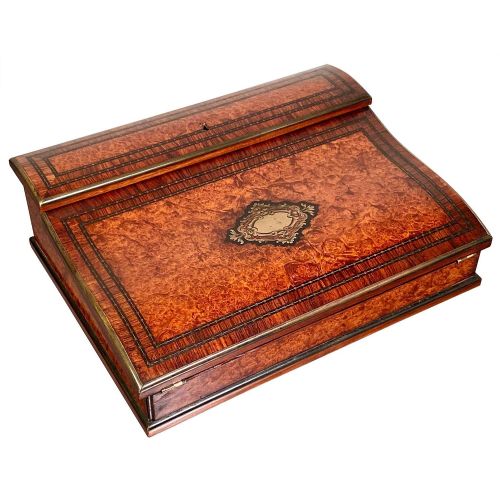
Cabinetmakers constructed these boxes from dense hardwoods such as rosewood, walnut, and mahogany, often selecting figured veneers like burr walnut or coromandel for the exterior surfaces. Brass was then channelled into the wood as fine stringing, escutcheons, corner brackets, or banding.
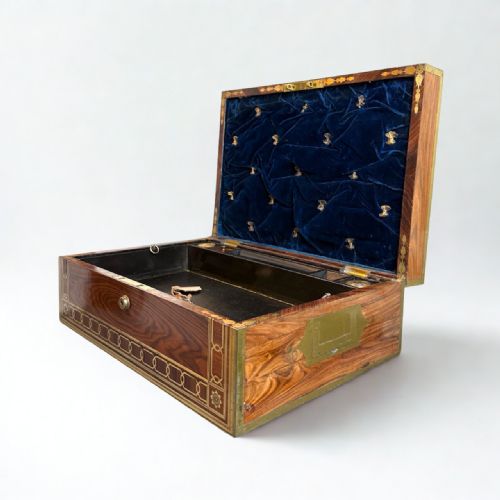
Interiors combined secondary timbers with leather writing surfaces, glass inkwells, and occasionally mother of pearl or ivory detailing. Mechanics such as secret drawers, double hinges, and specialised locks by makers like Bramah added security and utility to the construction.
Brass Inlaid Writing Box Retail Price Guide 2026
Typical asking prices for brass inlaid writing box among the pieces listed under this phrase on Sellingantiques today, from the lower quarter to the upper quarter. They describe what is for sale here now, not the wider market.
Listings feature rosewood, walnut, and mahogany, alongside exotic timbers like coromandel and teak across the Regency and Victorian periods.
What varies in quality
The distinction between standard pieces and the top of the range lies in the selection of timbers and the precision of the metalwork. Highly figured burr walnut, coromandel, or rich rosewood paired with intricate, flush-fitted brass inlay indicates superior craftsmanship.
Internal complexity further separates the pieces, with finer examples incorporating concealed compartments, spring-loaded secret drawers, and high-specification locks. Original components such as matched glass inkwells and well-preserved brass hardware elevate the standing of a box.
George Austin of Dublin
The Brass Inlaid Writing Box Glossary
- Writing slope
- A box with a hinged lid that opens to form an angled writing surface lined with leather or velvet. Inside, compartments hold pens, ink, and stationery.
- Campaign box
- A portable piece of furniture designed for travel, often featuring flush brass carrying handles, reinforced corners, and robust construction to withstand journeys.
- Escutcheon
- A decorative brass plate surrounding a keyhole, designed to protect the surrounding wood from wear and to secure the lock mechanism.
- Bramah lock
- A high-security lock patented by Joseph Bramah in the late eighteenth century, commonly found on better quality nineteenth-century boxes.
- Stringing
- Narrow strips of contrasting wood or metal, such as brass, inlaid into the surface of the timber in geometric lines or decorative patterns.
Brass Inlaid Writing Box: Frequently Asked Questions
How were brass inlaid writing boxes used?
These boxes served as portable desks for writing letters, storing important documents, and keeping ink and pens organised during travel or at home.
The sloping lid provided a comfortable angle for handwriting, while compartments kept stationery secure when the box was closed.
What woods are most common?
Rosewood and walnut dominate the surviving examples, often chosen for their rich grain and dark colour.
Mahogany, coromandel, and teak also appear, particularly in earlier Georgian pieces or colonial campaign boxes.
What are secret drawers?
Secret drawers are hidden compartments built into the interior of a writing box, usually accessed by removing a false panel or partition.
They were used to store valuables, jewellery, and private papers away from casual view.
How do I date a writing box?
Dating relies on the primary timber, the style of the brass inlay, construction methods, and internal hardware like locks.
Regency boxes frequently feature clean brass banding in rosewood, while Victorian pieces often showcase burr walnut and more elaborate internal fittings.