


Antique Desk Slope
An antique desk slope brings portable craftsmanship and historical writing surfaces to a modern study.
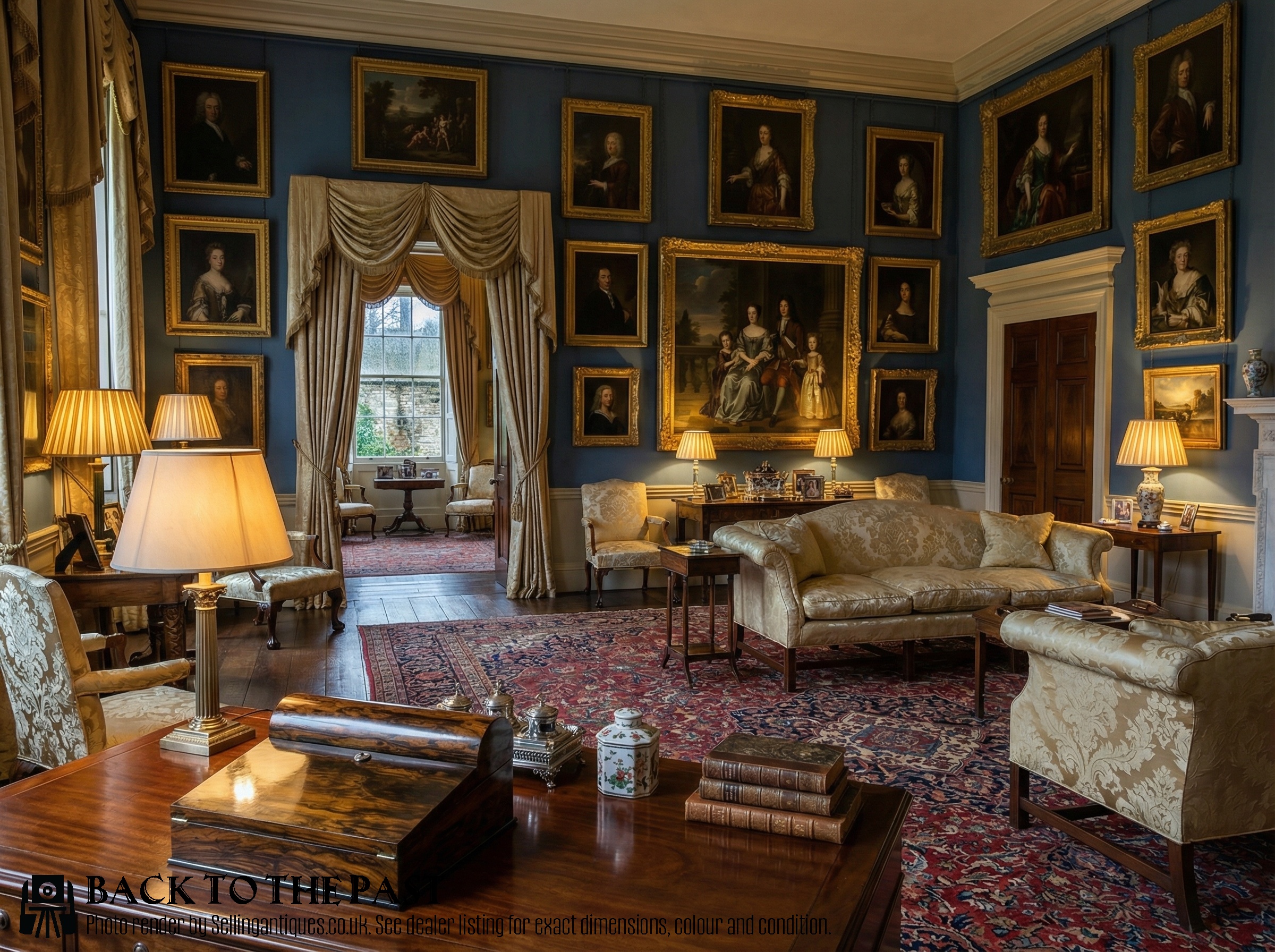
The Form and Origin of Writing Slopes
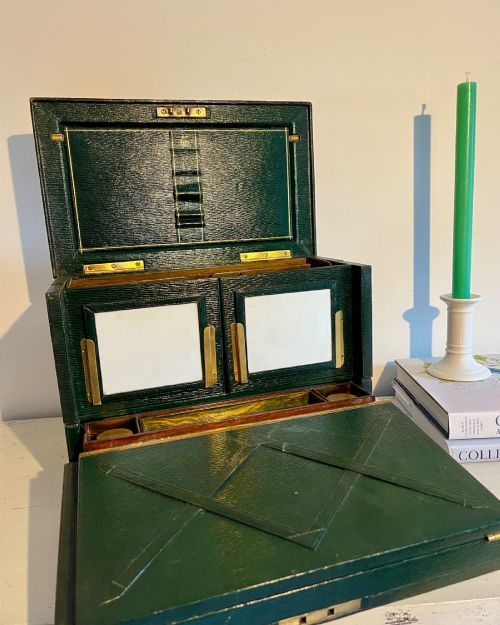
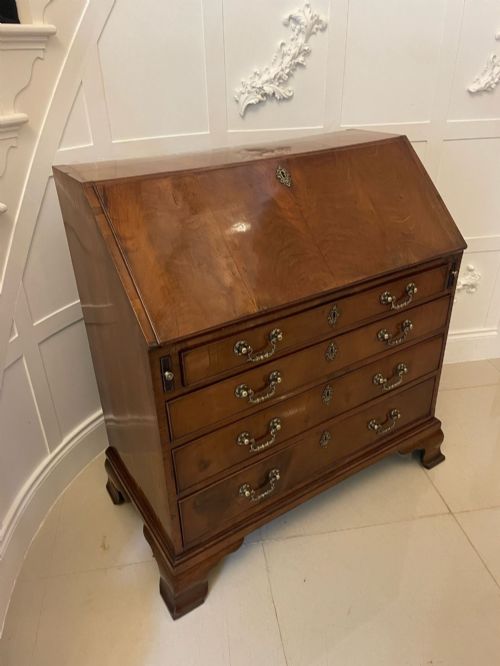
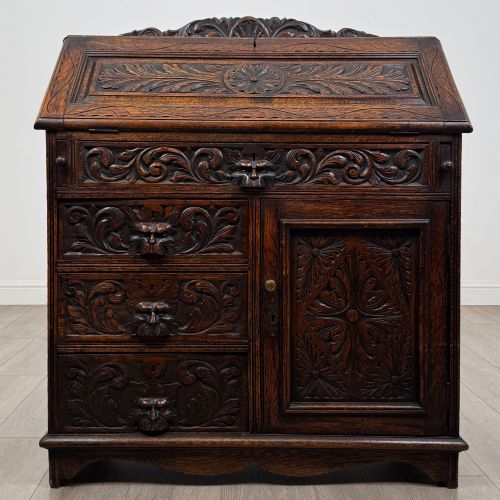
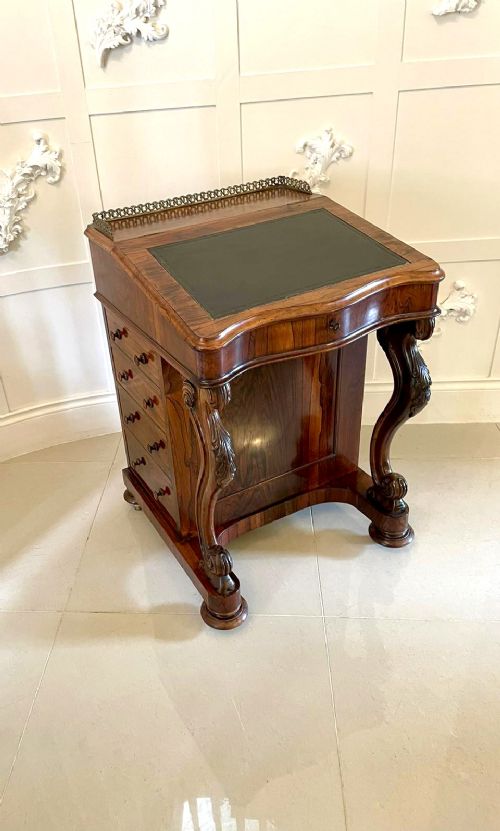
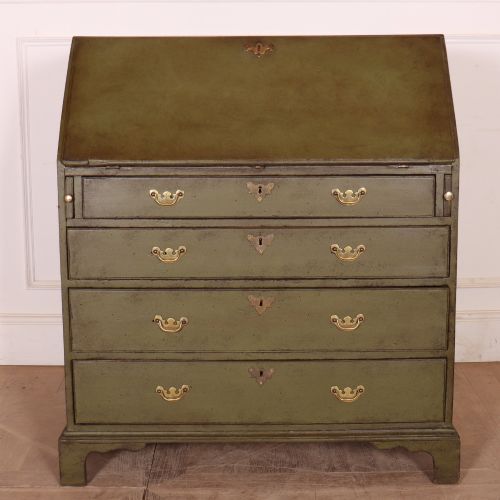
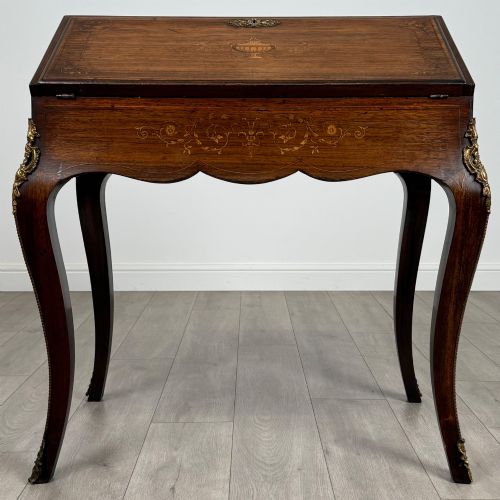
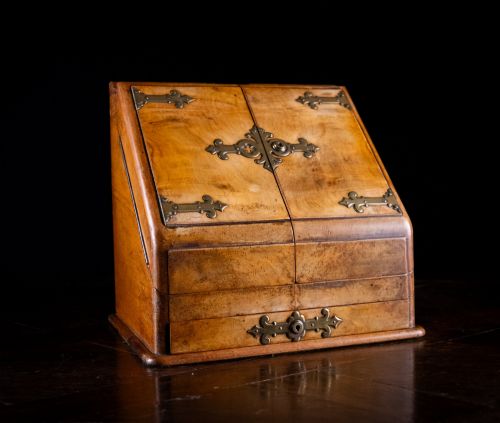
An antique desk slope is a portable writing box designed with an angled lid that folds down to create a writing surface. These pieces appear frequently as compact lap desks, correspondence boxes, and larger Davenport desks originating from Victorian, Georgian, and seventeenth-century periods.
Makers constructed these items to store paper, inkwells, and pens while travelling or moving between rooms in large houses. The selection ranges from simple oak desk boxes to elaborate campaign pieces and double-action writing slopes fitted with secret drawers.
The objects combine cabinet making with utilitarian stationery storage, resulting in pieces that function as both desktop furniture and portable containers.
Materials and Construction Methods
Craftsmen built the carcases of these slopes using native and exotic timbers including mahogany, walnut, burr walnut, rosewood, coromandel, oak, and padouk. Many examples incorporate brass banding, iron hardware, and leather writing surfaces inset into the folding lids.
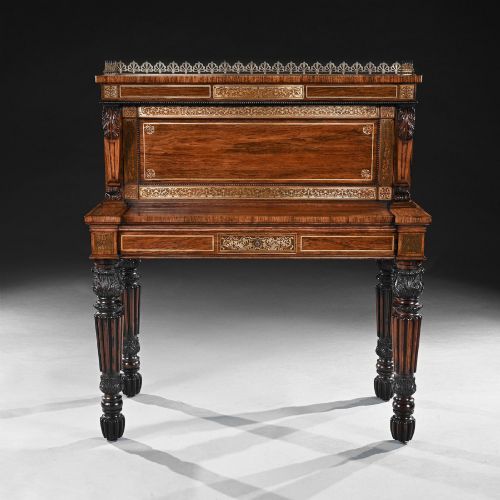
Decoration involved intricate techniques such as Tunbridge ware inlay, parquetry, marquetry, mother of pearl, tortoiseshell and brass boullework, ivory, and wedgwood plaques. Secret compartments and hidden drawers required precise joinery concealed within the internal fittings of the box.
Retail Price Guide 2026
Typical UK retail prices for desk slope, calculated from the Sellingantiques database of over a million retail prices indexed since 2003. This retail price guide relies exclusively on Sellingantiques data; no external sources or auction records are used, so the figures do not describe the wider market.
Secret drawers operated by stubborn wooden springs have kept owner letters hidden for nearly two centuries.
Judging Quality in Desk Slopes
The distinction between standard examples and the finest pieces rests on the choice of timber and the precision of the secondary decoration. Dense burr veneers, thick brass corners, and complex internal secret mechanisms separate standard portable boxes from luxury presentation pieces.
Makers who incorporated specialised details such as double-action mechanisms, fitted stationery sections, and signed maker plaques achieved a higher standard of execution. The preservation of original leather, working locks, and intact interior velvet or silk linings influences the integrity of the piece.
Mechi & Bazin·Lund of London·ROBERT GILLOWS II·Sampson Mordan & Co·Nicholas Middleton
The Antique Desk Slope Glossary
- Writing Slope
- A portable box with an inclined lid designed for writing letters. It typically opens to reveal compartments for pens and ink.
- Campaign Desk
- Furniture built in sections or fitted for military use during travel. These pieces often feature brass corners and recessed handles.
- Tunbridge Ware
- Woodworking involving small mosaic tiles assembled to form pictorial or geometric patterns. It was applied as veneer on boxes and lap desks.
- Coromandel
- A dense, heavily grained exotic hardwood used for luxury nineteenth-century boxes. Its dark coloration and striped figure made it popular for high-end writing slopes.
- Davenport Desk
- A compact pedestal desk featuring a sloped writing surface above a set of drawers. It gained popularity during the Victorian era.
Frequently Asked Questions
What is an antique desk slope?
An antique desk slope is a portable wooden box featuring an angled hinged lid designed to provide a solid writing surface while sitting or travelling.
Inside, these pieces contain fitted compartments for inkwells, nibs, and stationery, often concealing secret drawers beneath the primary writing platform.
How were writing slopes used historically?
These boxes served as portable writing desks for correspondence before the widespread use of fitted study furniture. Owners placed them on tables or laps to write letters while at home or travelling.
Campaign versions accompanied officers and travellers on ships and military expeditions, holding important documents and writing supplies securely.
How do I identify a Victorian writing slope?
Victorian slopes frequently employ walnut, coromandel, or rosewood, often embellished with brass banding, mother of pearl inlay, or marquetry. The interior fittings typically include velvet or leather writing surfaces and glass inkwells.
Earlier Georgian and seventeenth-century examples rely more heavily on solid mahogany or oak with simpler internal arrangements and less decorative veneering.
What are secret drawers in a desk slope?
Secret drawers are concealed compartments built into the interior framework of the box, accessed by lifting false bottoms or removing specific dividers. Cabinet makers used them to protect valuables, private letters, and money.
Finding these hidden compartments usually requires operating small spring-loaded catches or sliding panels within the stationery well.